San Pedro Sochiapam: First the birdsong, then the whistles
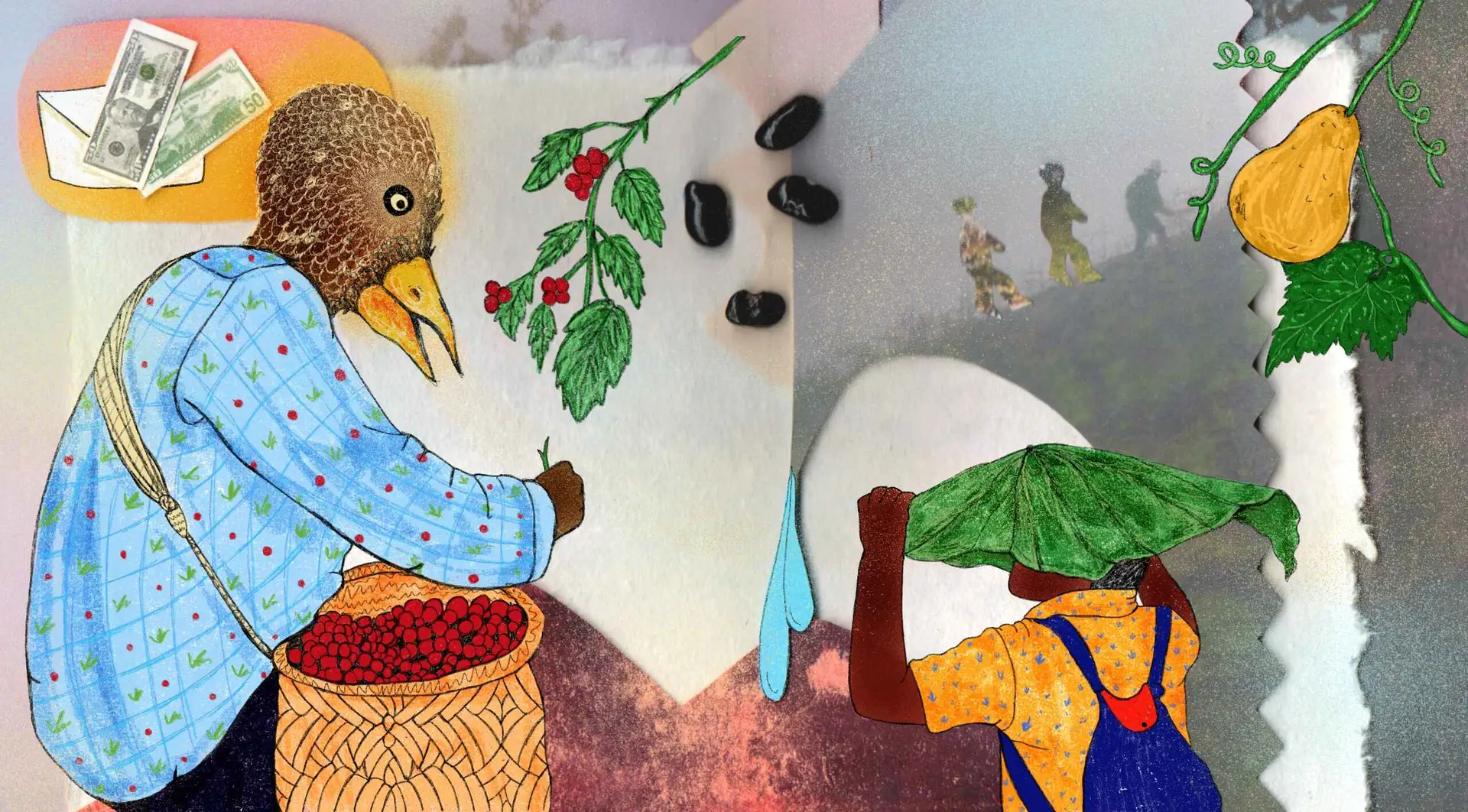
In a remote community enveloped in cloudforest, a whistled form of the Indigenous Chinantec language is perfectly adapted to the land and its weather. But who needs whistles when you can use WhatsApp?
Written by
Magdalena Rojo
Photography by Noel Rojo
Edited by Ruby Russell
Illustrated by Aminta Espinoza Ulloa Félix
Multimedia editing by Gabriela Ramírez
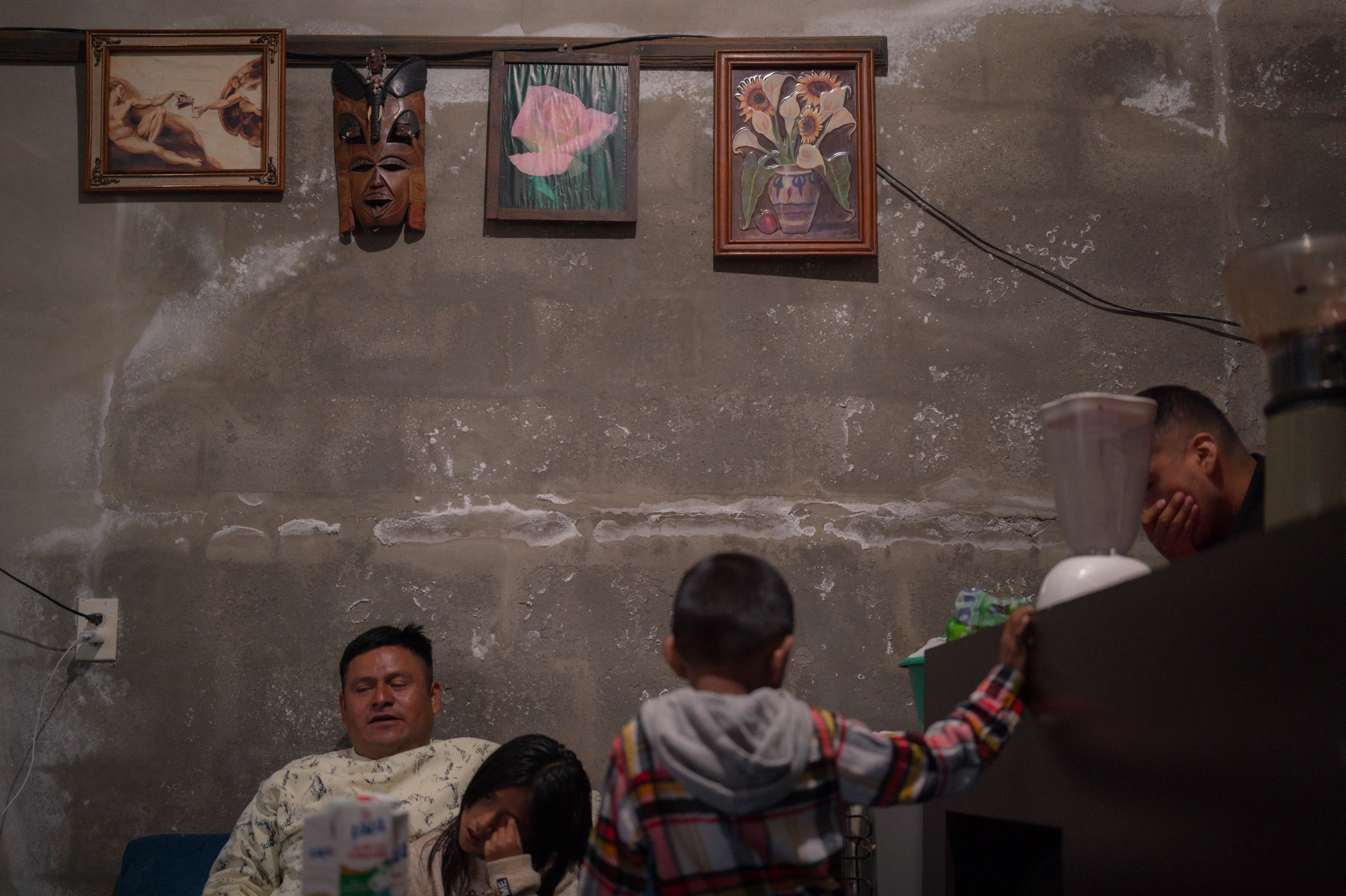
Marcos Pantoja Jiménez invites us into his home and after a few welcoming words, he disappears outside. A few minutes later, he’s back holding an avocado of a variety that grows wild around the village. “It’s a creamy avocado that we eat with handmade tortillas and salt,” he explains enthusiastically. He goes back outside and whistles to his wife Carina Mariscal for tortillas. Whistling at a woman might be considered rude elsewhere, but here it’s just an extension of normal speech – replicating the tones of the local Chinantec language that is still spoken by most people in San Pedro Sochiapam, a community of little more than 5,000 people in the Chinantla region of Oaxaca.
Marcos Pantoja Jiménez at home with his daughter and her friends.
There are 11 regional variants of Chinantec, most spoken in Oaxaca and a few by communities in the neighboring state of Veracruz. It belongs to the Oto-Manguen group of tonal languages; the pitch at which a word is pronounced determines its meaning.
Whistling is a form of Chinantec used mostly by men to communicate between themselves. There are other places in the world where people speak in whistles – communities in Greece, the Canary Islands and Turkey, for example. What most of their locales have in common is mountainous terrain where sound carries over distances and across valleys, and often dense vegetation. The Chinantla highlands are no exception.
Waiting for tortillas, Pantoja Jiménez explains his role as president of the Secretariat of Communal Resources: the municipal office responsible for managing the community’s collective resources. Traditionally, these cargos – positions within the community’s system of self-government – are held by older people. But like the language, social structures here are shaped by topography. “In San Pedro Sochiapam, younger people take the role at the Secretariat because our territory is so mountainous and steep. It requires someone who can walk long distances.”
The following day, we’ll find out for ourselves – but now Carina Mariscal has brought the tortillas. Her husband splits the avocado with a knife and shares it around, spread like butter on the warm bread.
Logging, ranching, and agroforestry
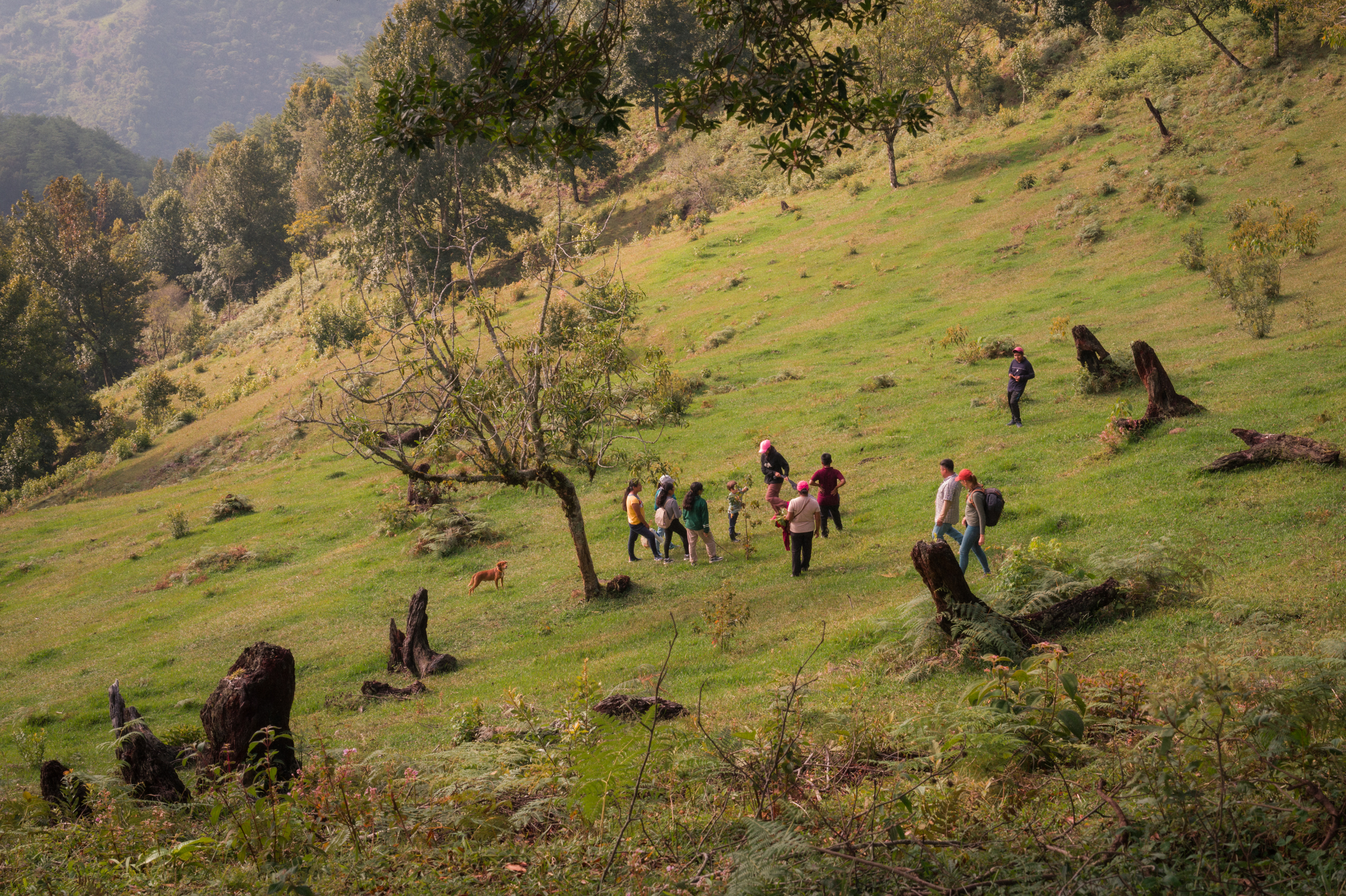
San Pedro Sochiapam’s cloudforests are at an average altitude of about 1,200 meters, deep in one of Mexico’s rainiest regions – and one of its most biodiverse. The air is humid and vegetation is green throughout the year. As we climb a narrow path out of the village, the surrounding mountains come into view. Reaching an area of open pasture, we can see across to similar pastures on other hillsides. “When I was a child, all this was a wild forest,” says one of the women who has joined our hike. A herd of cattle of different colors run down the hill toward us, hoping we have food, and wander away disappointed. Cattle ranching is one of the reasons for deforestation around the village. Another problem is illegal logging.
There was a time when most people here lived off agriculture. But transporting their produce to the city was difficult and over time no longer economically viable. Locals say a dirt road leading to the village was created in the 1990s, but in the rainy season travel was still uncertain. Until a new road was constructed a few years ago, Sochiapam was a very remote community. The elderly remember walking for two days to reach the nearest town of San Juan Bautista Cuicatlán, sleeping in the cabins along the way.
Those who do still farm milpa – mixed fields of beans, corn and squash common in Mesoamerica – do so only to feed their own families. There is one crop, however, that has been commercially viable. In the 1970s, Sochiapam began to cultivate coffee. These days, the community’s remaining coffee producers – including Marcos Pantoja Jiménez – practice agroforestry, planting in the forest under trees that provide shade and nutrients. The crop itself may not be traditional, but its farmers retain practices that go back many generations.
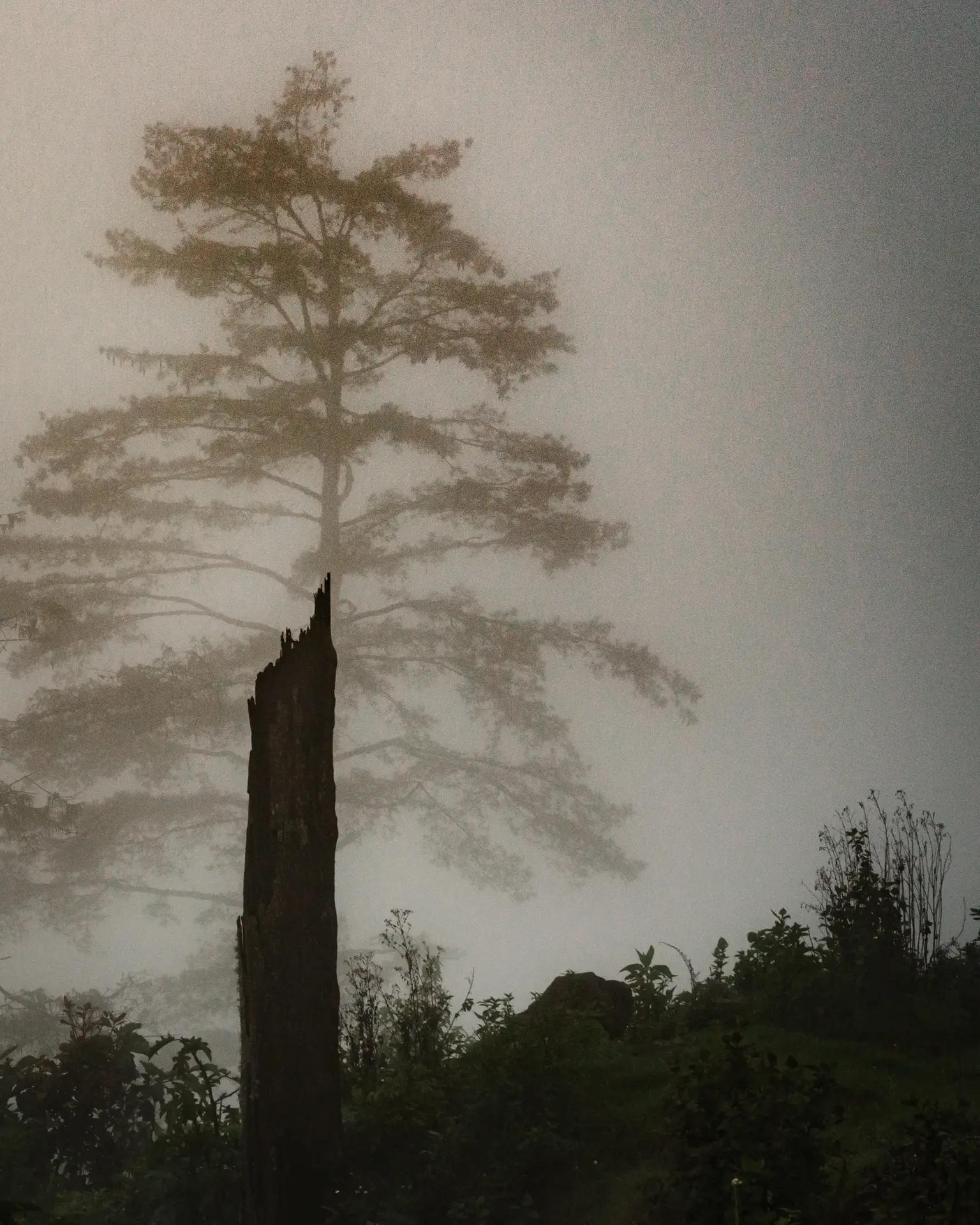
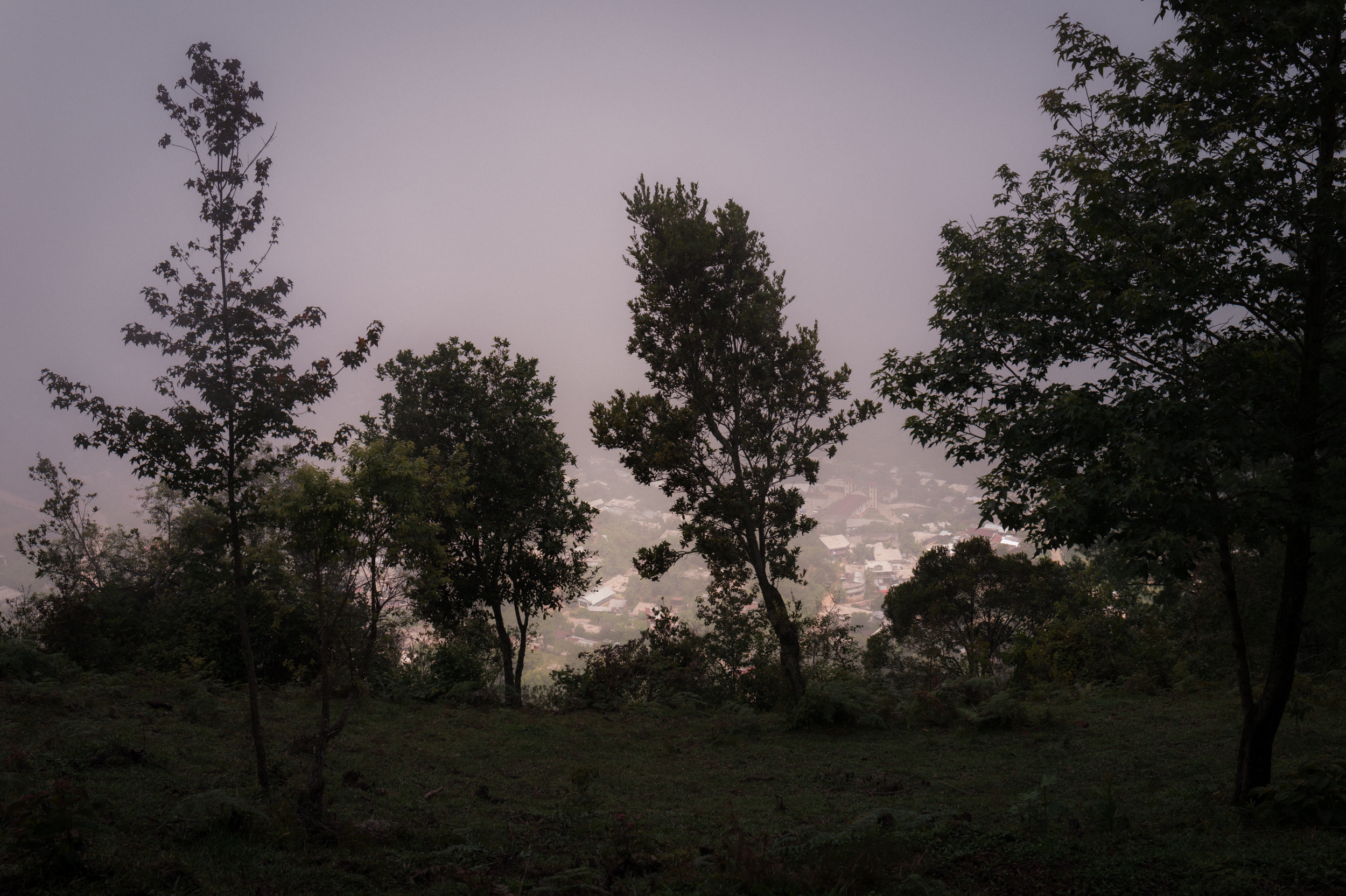
The forests above San Pedro Sochiapam are often shrouded in heavy mist.
Crossing a cattle pasture that was once a dense, lush forest.
“When I come to my coffee plantation, I whistle to ask whether somebody is out there,” Pantoja Jiménez says. Farmers whistling to communicate as they work agroecological plantations is what keeps this form of speech in use. When it’s time to eat, men agree to head back to the village in whistles. You can whistle to someone too far away to see or shout to, someone beyond a mountain ridge or hidden in the forest. But these days, you can also just WhatsApp them.
An understanding with water
From our lookout over the cattle pasture, Pantoja Jiménez gazes across the hills. He explains that the community is running reforestation projects – particularly in places with natural springs, which bring water not only to the local community but, via the streams they feed, to the whole region.
The language reflects how important water is to the people of San Pedro Sochiapam. Several Chinantec words name different forms and flows of water. “Some of the words cannot be translated into Spanish,” says Diego Saul Zárate, who advises local farmers on sustainable coffee production. Mtaa is the word for special pools created around natural springs as meeting places. Each neighborhood used to gather around a local water source for nixtamalization – a traditional process where corn is steeped in an alkaline solution to make it more digestible – to wash clothes, or simply to fetch water before there were pipes to deliver water to their homes. “These places have their owners, spirits that one had to ask for permission to be there and use the water,” Saul Zárate explains. If a family found that a sick or disobedient child had been playing by a spring without permission, a local healer would perform a purification ritual to resolve the problem.
We cross the lush pasture, passing a pond where the cattle are drinking, our walk accompanied by the chirping of birds and the melody of the Chinantec our guides speak. Ascending a steep incline, we see the whole village on one side and hills on the other. The village is lost in the mist – and then its colorful buildings appear again. And again. In three days, this is the first afternoon without rain. For a moment, a rainbow is born of droplets of mist and rays of sun. Moisture in the air helps carry sound – another way in which the language of whistles is perhaps shaped by the relationship between people and their environment. “You know where to stand to carry the sound far,” the men explain.
As we start to make our way back to the village, Pantoja Jiménez goes ahead while a fellow coffee farmer, Rigoberto Mariscal Perez, waits on the hilltop. From the pond where we saw the cattle, about 150 meters away, Pantoja Jiménez whistles and Mariscal Perez whistles back. But when Pantoja Jiménez whistles to his wife, and Mariscal Perez to his son, the boy understands only his own name and neither he nor Carina Mariscal can respond.
There was a time when every man in Sochiapam could communicate fluently in whistles. Topiles – the volunteer police appointed by municipality’s general assembly – called people for meetings in whistles. Now there is a municipal police force trained by the federal government. The new road also brought new technology. While not everyone has wi-fi at home, most have cell phones.
If we lose our language, we lose many things
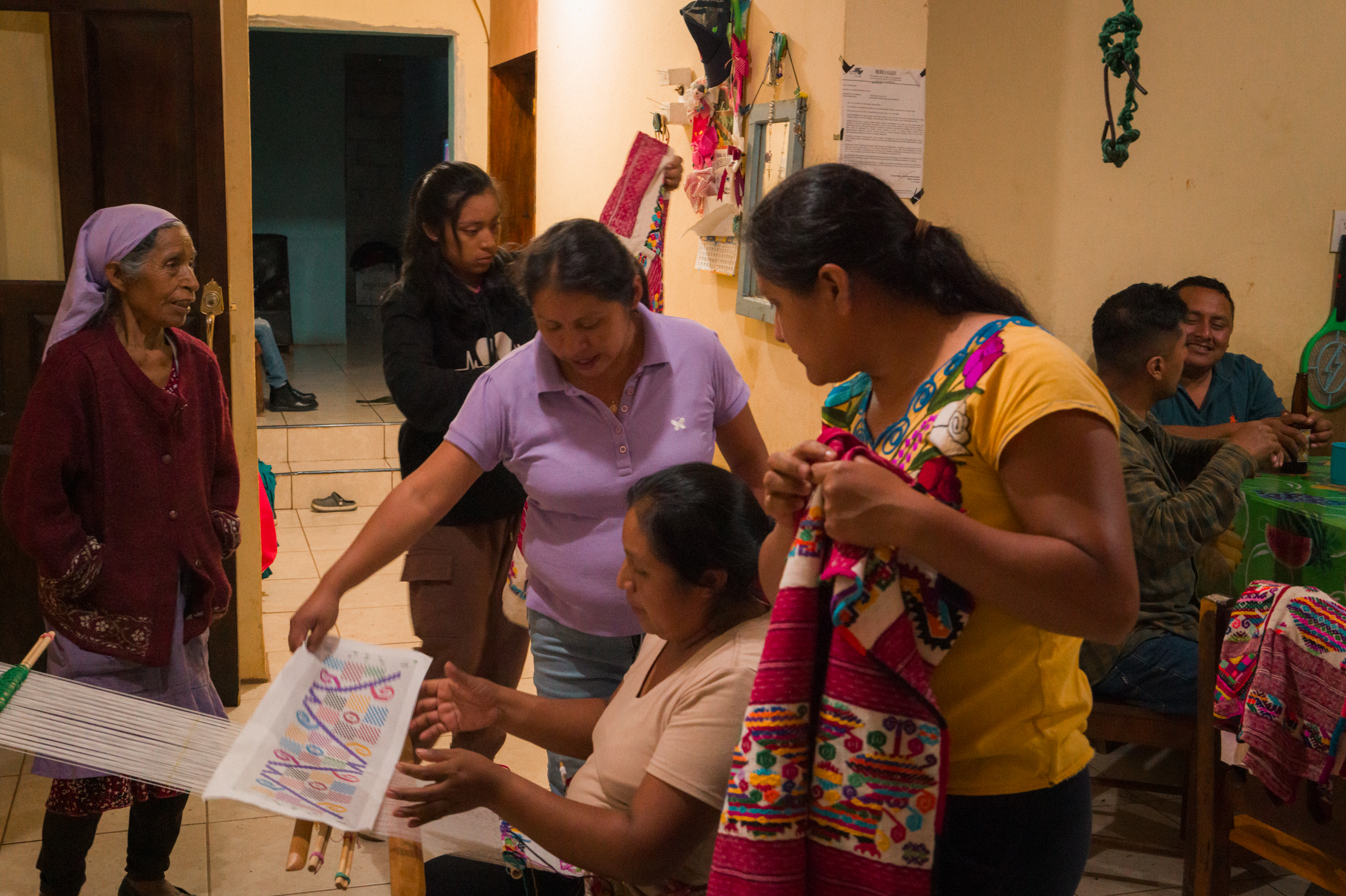
After a long afternoon hike, Rigoberto Mariscal Perez invites us to his family home, where women begin preparing omelets wrapped in banana leaves and seasoned with the local herb hoja santa. Among them is Silvia Hernández López, a teacher who has been learning to weave the huipil, a traditional blouse, helping to recover a craft that for years only one abuela in the village still practiced. Spreading the blouse across her lap, Hernández López explains the meanings of patterns woven into the fabric, most of them drawn from the natural world. “The variety of Chinantec huipiles reflects the variety of local flora and fauna, as well as the crops that sustain each community,” she says, pointing to the tiny squirrels, milpa fields and bursts of wildflowers that adorn Sochiapam’s traditional blouse. “Just like landscapes, huipiles also change from town to town.”
And just as the weaving from each village reflects what its people hold important, so each local language is also shaped by its environment. According to the last census, there are more than 144,000 Chinantec speakers in Mexico. The Endangered Languages Project, which documents the use of the Indigenous languages around the world, lists some variants of Chinantec as threatened. San Pedro Sochiapam’s isn’t one of them – though the whistled form is dying out, most people here do still speak the local Indigenous language. When the general assembly meets on Sunday mornings, everything is discussed and agreed upon in Chinantec.
The village’s remoteness is one reason its local tongue has endured. But the community is under pressure. The new road has eased the transport of coffee to customers, but the climate crisis presents new threats. “We lost a lot of production to coffee rust a few years ago,” Diego Saul Zárate says. The disease, as well as unstable coffee prices, have driven much of the community to leave for one Mexico’s big cities – or to the United States. “Five of my family members are there,” says Pantoja Jiménez. “Sochiapam lives off remittances – not of coffee or agriculture, but off remittances.”
Evening draws in over San Pedro Sochiapam.
Silvia Hernández López and friends weave a sense of place into huipil, whose designs reflect local flora and fauna.
Saul Zárate’s family, including his teenage daughter, have left to work and study in Oaxaca City, where Spanish prevails. While his daughter still understands Chinantec, she no longer speaks it. There are ways in which migration can support the preservation of a language: migrant communities often group together and continue speaking their native tongue as a way of maintaining a connection to home. But as the community back home is depleted, the language is uprooted from land only it can fully describe.
“The moment you do not speak your language, you lose many things,” says Eusebio Roldan Mariscal, a local farmer. “If we stop speaking Chinantec, we lose the knowledge of our ancestors – knowledge about everything that is here.”
An ear for chirps and whistles
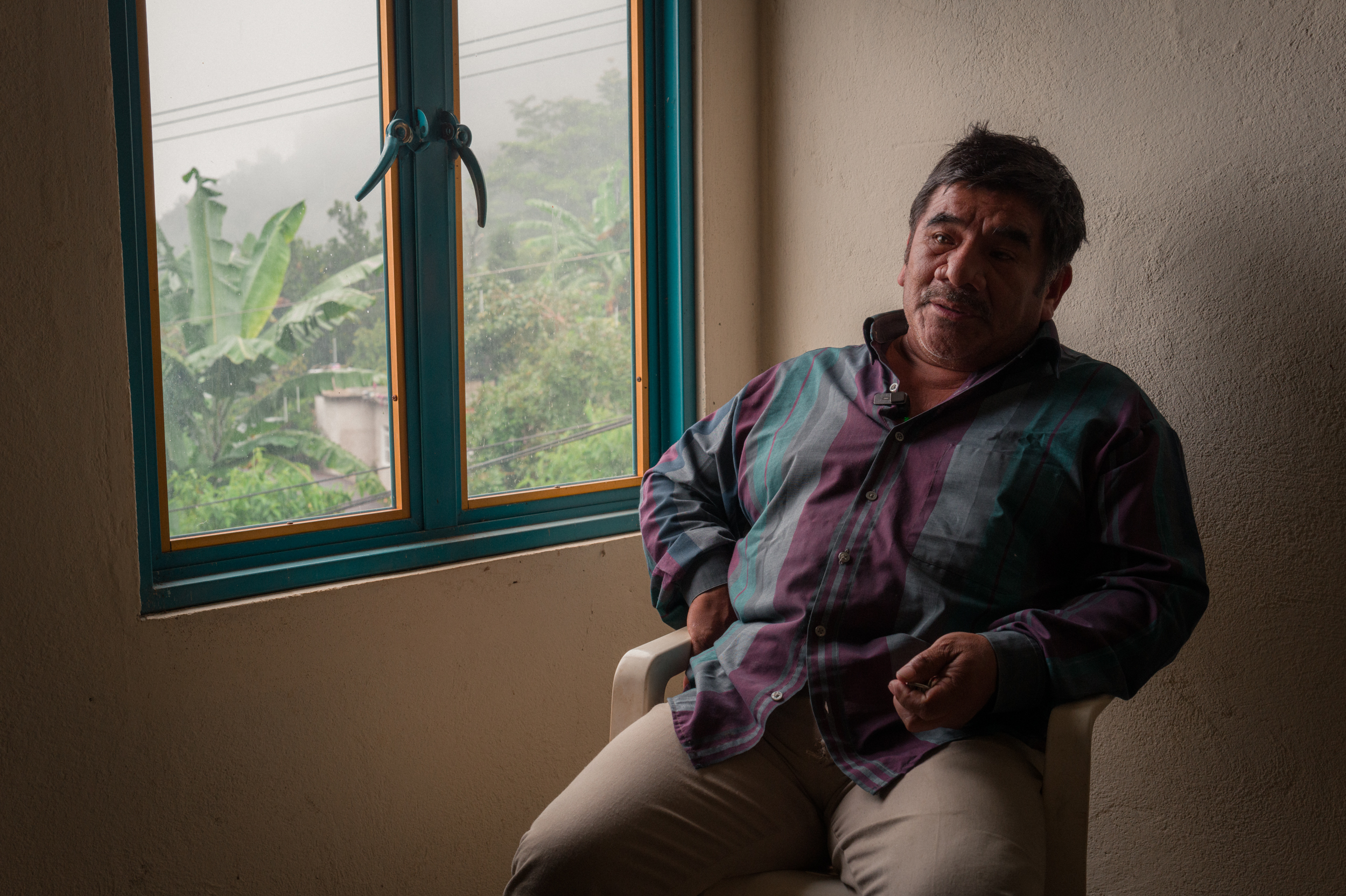
The day after our sun-blessed hike, the rain is back and many of the farmers stay home. Eusebio Roldan Mariscal sits at a second-floor window watching the downpour. Framed by the window’s turquoise woodwork, a woman hurries across the main street under a red umbrella. “It would be nice to preserve the whistled speech,” he says, “but not even us, the elderly, are using it anymore.”
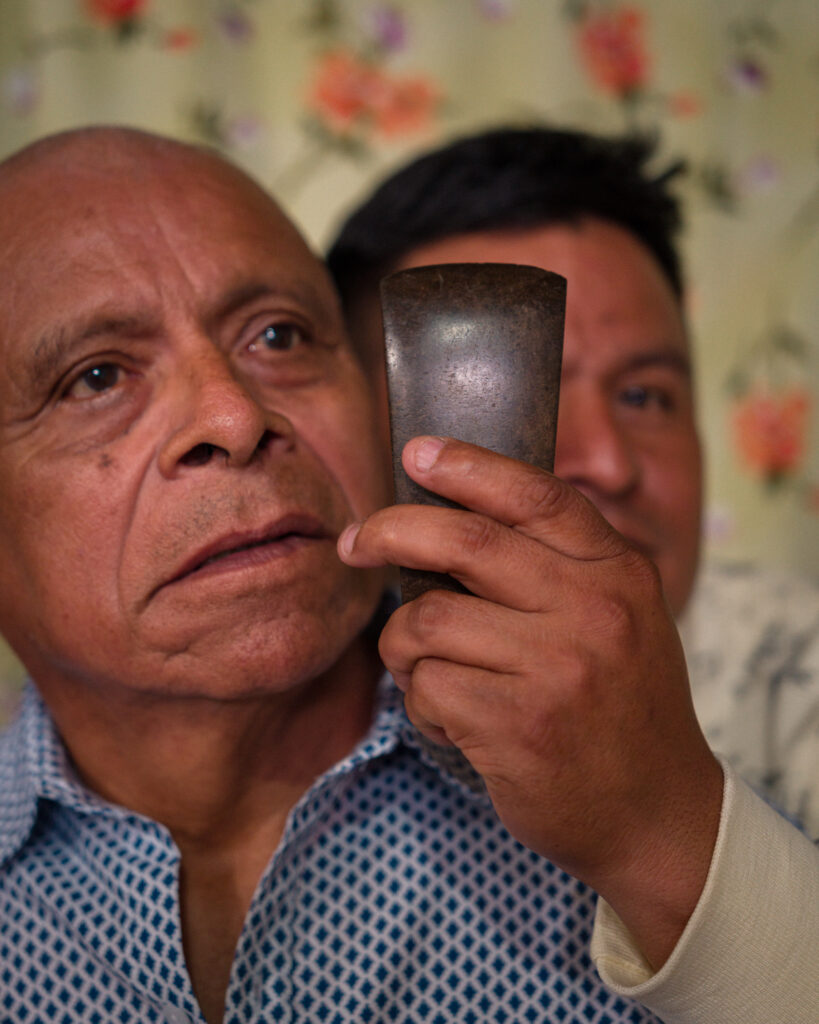
Marcos Pantoja Jiménez’s father, Hilario Pantoja, holds up a stone axe head. This ancient relic is said to have belonged to an ancestor of the Sochiapam community who was a nahual – a shapeshifter who can take on both human and animal form, or the spirit of person that embodies their deeper, metaphysical and animal self.
Eusebio Roldan Mariscal recalls how the sounds of nature used to dictate the rhythm of farming in his community.
Now 63 and still working the land – weather permitting – Roldan Mariscal grew up listening to the chirping of birds. “We knew how to distinguish the sounds of certain birds that gave us signals about the time of day or even the year.” He says farmers planned planting times based on the particular birdsong that announced the rainy season was coming. There was even a bird that piped up at around five every afternoon – a signal that the day was ending and it was time to head home. “Since I was a small child, I could distinguish the sounds of the birds. I am not sure if someone who does not know how to whistle has the same ear,” he says. Like many of his generation, Roldan Mariscal remembers the names of most of the birds in Chinantec, but not in Spanish. Their grandchildren, meanwhile, may not know what to call them in Chinantec – or know them at all, as their songs are no longer heard in the village.
President of the secretariat of communal resources Marcos Pantoja Jiménez says biodiversity is also being lost from the territory’s waterways: “There used to be certain species of fish and a freshwater shrimp that you cannot find now,” he says, suggesting that chemicals used in agriculture may be to blame.
And as modern farming practices harm nature, so losing the language may also mean losing ways of using natural resources sustainably. “When we are in the fields and my father tells me to cut down a certain tree, how do I do it if I do not know which tree he is talking about?” Rigoberto Mariscal Perez asks rhetorically. “We would have to search for information elsewhere – but then we would learn the names in Spanish. It would be from books that are from outside, that are not based in the context here. They cannot teach what is around you.”
On the verge of silence: Why Oaxaca’s biodiversity needs Indigenous languages to survive
We are facing a global crisis of biodiversity loss that has been called planet Earth’s sixth mass extinction. At the same time, it is estimated that a language goes extinct every two weeks. These two processes are intertwined.
Capulálpam de Méndez: A struggle for land and memory
After a Canadian mining company challenged a Zapotec community’s Indigenous identity, recalling the ancestral names of sacred landmarks helped reinvigorate their connection to the land – and defend it from extractive industries.
Sierra Mixe: A conversation with Mother Nature
Medicinal wisdom is embedded in Indigenous Mixe languages. By sustaining their mother tongue and practices involving herbs and healing rituals, Mixe people keep alive a cosmovision in which they speak to Mother Earth.
San Pedro Sochiapam: First the birdsong, then the whistles
In a remote community enveloped in cloudforest, a whistled form of the Indigenous Chinantec language is perfectly adapted to the land and its weather. But who needs whistles when you can use WhatsApp?