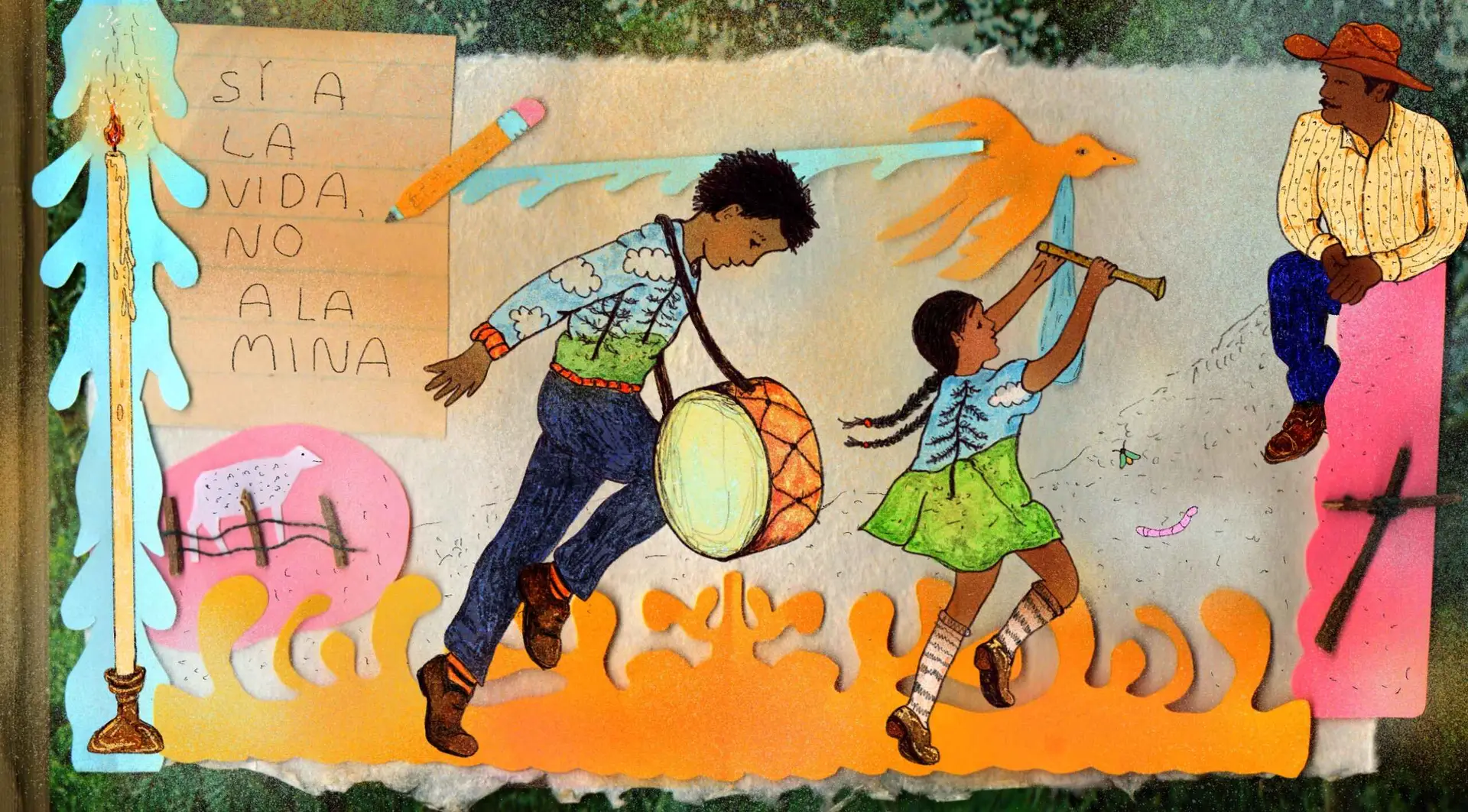
At nine in the morning, a crowd begins to gather around the church of San Mateo in Capulálpam de Méndez, in Oaxaca’s Sierra Norte. The village priest watches patiently as locals mingle with representatives from other Oaxacan communities. Community leaders have come carrying wooden crosses. Hats pulled low and water bottles in hands, they brace for the heat of the day. Youths from the local band wait with their instruments, before climbing one-by-one onto a waiting bus. Their destination is Tierra Caliente – the Hot Land – a meeting point where the territories of three neighboring communities converge. Each year, right before the rainy season, they come together to celebrate Mother Earth.
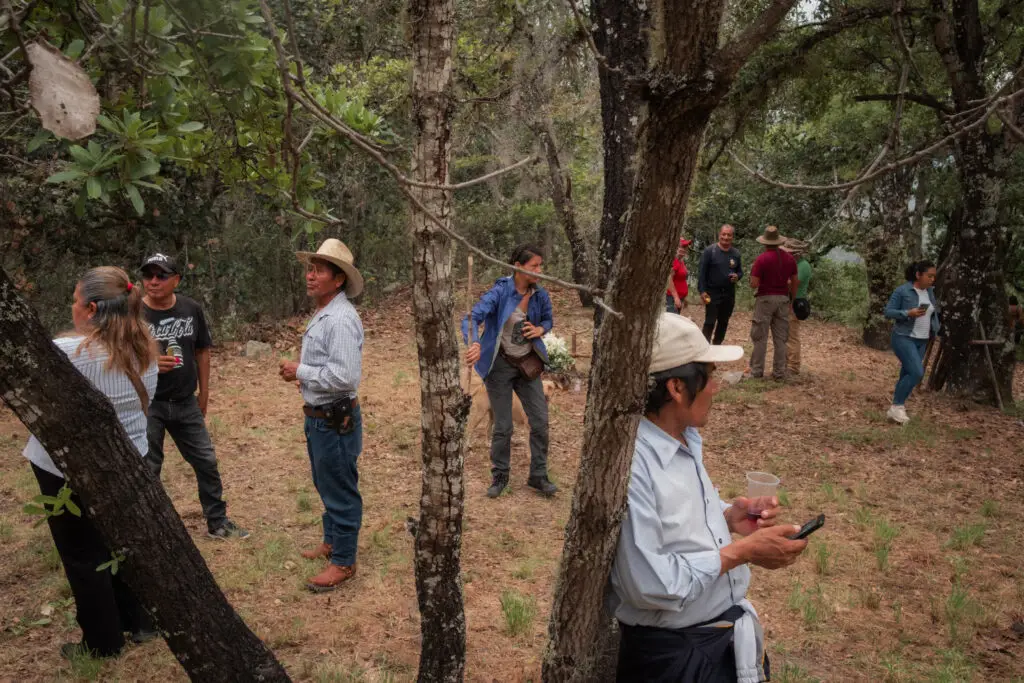
Dozens of people of all ages trek through the pine and oak forest that covers much of Capulálpam’s territory. The air is filled with the intense scent of pine and the sound of birdsong. Myriad bird species are at home in these forests – including woodpeckers, brightly plumed hummingbirds and the elusive ornate hawk-eagle. Somewhere in their depths, foxes, white-tailed deer and maybe even pumas hide. Through it all, cuts the steep incline of a newly built road, which we follow to where an open truck waits by the river. After an hour on our feet, everyone rests and refreshes themselves before beginning the climb. As we emerge from the forest, surrounding hills appear, lightening the hikers’ steps even as noon approaches and the sun grows stronger. At the hill’s peak, people from neighboring communities are already waiting.
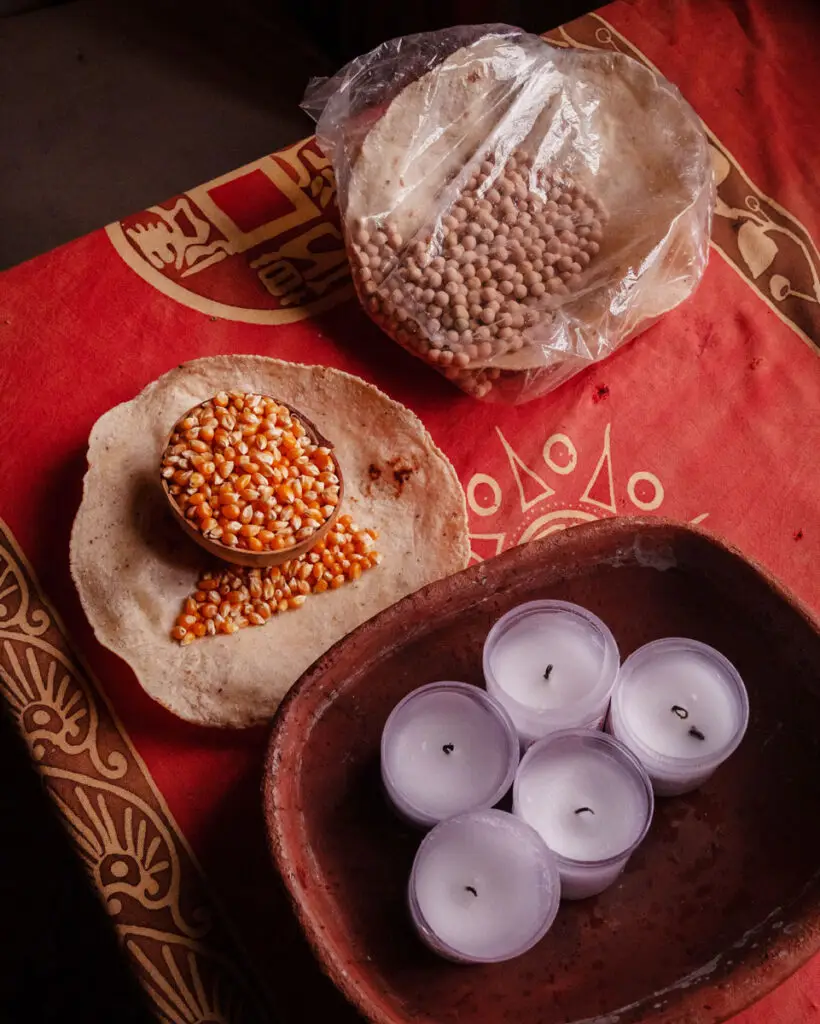
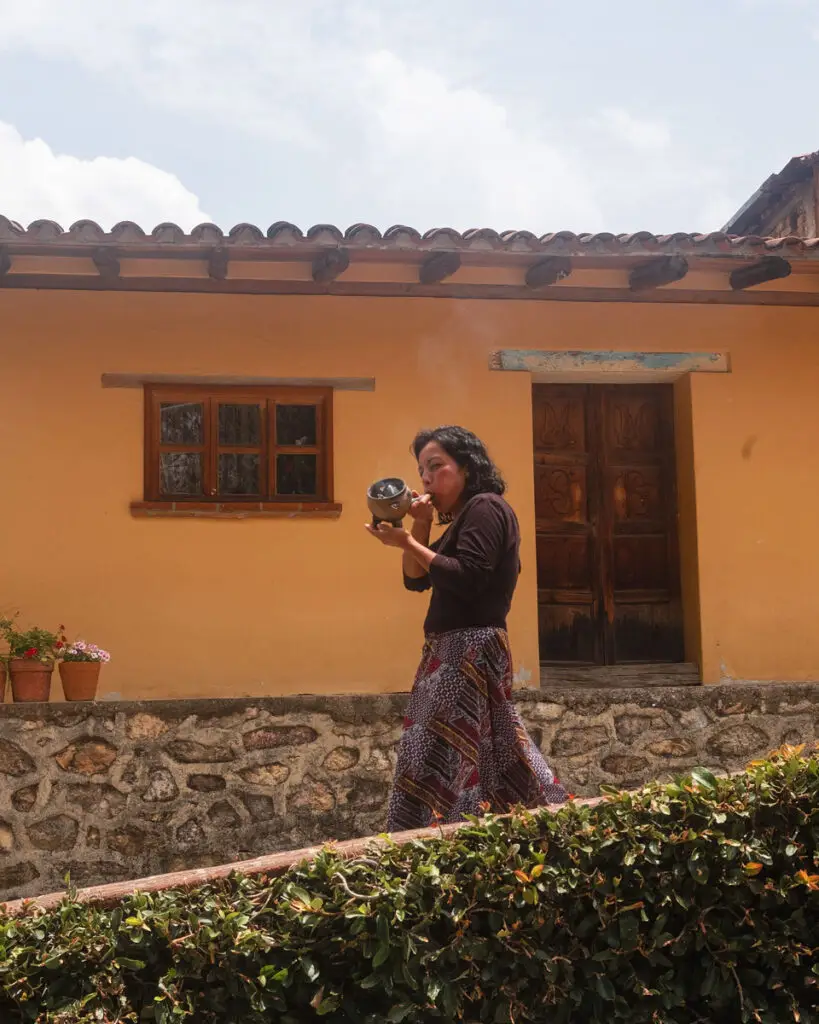
The community leaders and a respected healer open the celebration with short speeches and then the brass band begins to play. Resin from the copal tree is burned, its earthy scented smoke ritually cleansing the air. The crowd follows the young musicians to a pond in the center of a meadow surrounded by forest. Heads are bowed as the healer, a gray-haired woman in white, speaks and plays drums. She invokes the ancestors and the elements – especially water – to give them thanks. Then she asks representatives from other communities and from environmental organizations to return water to the earth. They each repeat the act of pouring water from a small container onto the ground before crossing the meadow to a spot at the forest’s edge. A small, freshly dug hole serves as the place where people return food and flowers to the earth. The community leaders place their wooden crosses around the circle and cover the hole with soil.
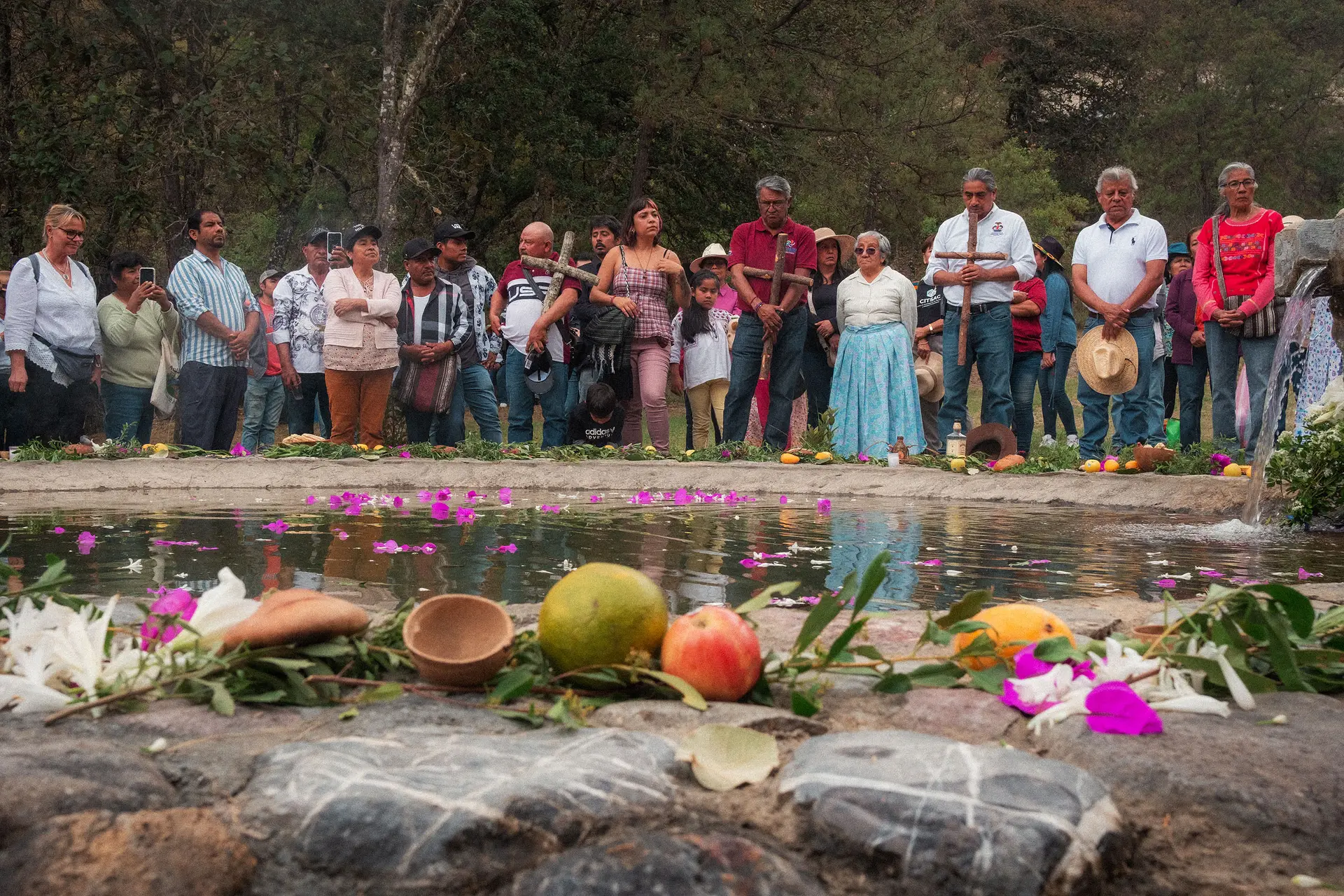
The mixing of Indigenous symbols, beliefs and spirituality with those of Catholicism is common to many communities of Oaxaca. At ceremonies like this, they ask Mother Earth for and pray to the Catholic saints at the same time. This syncretism has allowed Indigenous communities to preserve ancestral practices while adopting Catholic ones, and it reflects the broader commingling of Indigenous and colonial worldviews that continues to shape cultures across the region.
Once again, the scent of copal drifts on the air and it is time for the community leaders to speak. A man in jeans and a button-down shirt, his long graying hair tied back in a ponytail, takes the microphone first. This is Francisco García López, president of Capulálpam’s secretariat of communal resources, which organized today’s ceremony. García López’s office also held a workshop the previous day, where the community representatives met to discuss water issues. He reads aloud from a manifesto that all the workshop participants signed. It affirms the connection between social and environmental justice, declaring that “water should not have a price, it is not a commodity; it should flow and be respected.” In Capulálpam de Méndez, this vision has shaped decades of resistance against mining and deforestation on communal land – a fight that remains ongoing.
The ceremony and García López’s speech are given in Spanish. A few of the leaders from other Oaxacan communities switch to Zapotec for their speeches. “Many years ago, people also did the ritual in Zapotec,” says Eleazar Pérez Cosmes. “They prayed in Zapotec. It gave the ceremony a different tone.” Over time, the local Zapotec variant became all but extinct in Capulálpam de Méndez. The villagers no longer speak it at home and community matters are conducted in Spanish. But Pérez Cosmes, a 72-year-old veteran of the struggle against mining, is among those working to bring Capulálpam’s Zapotec back to life.
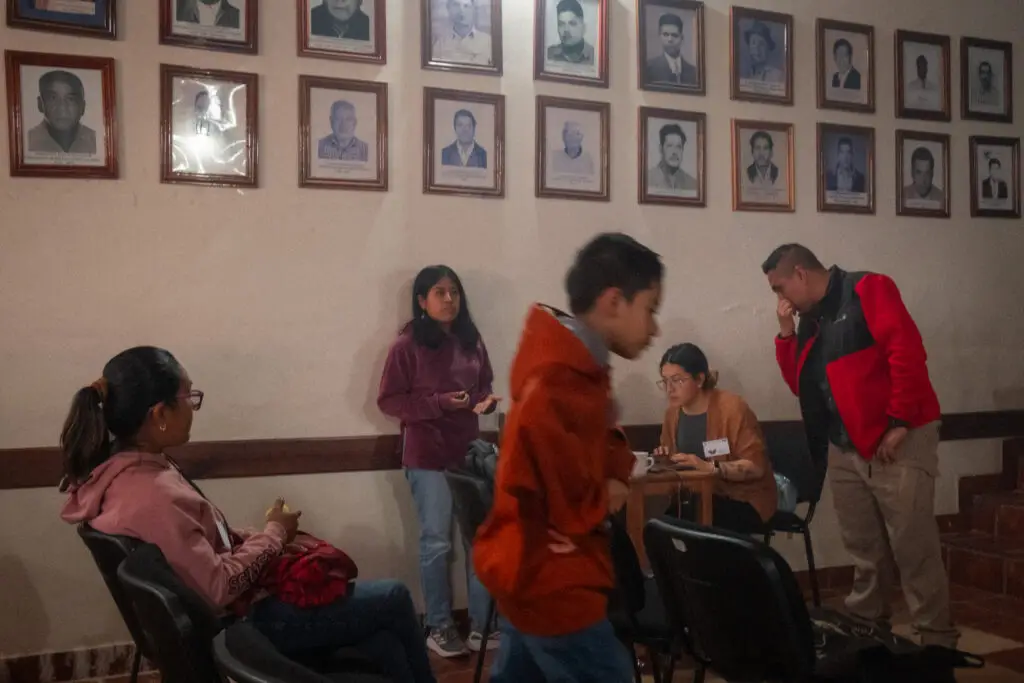
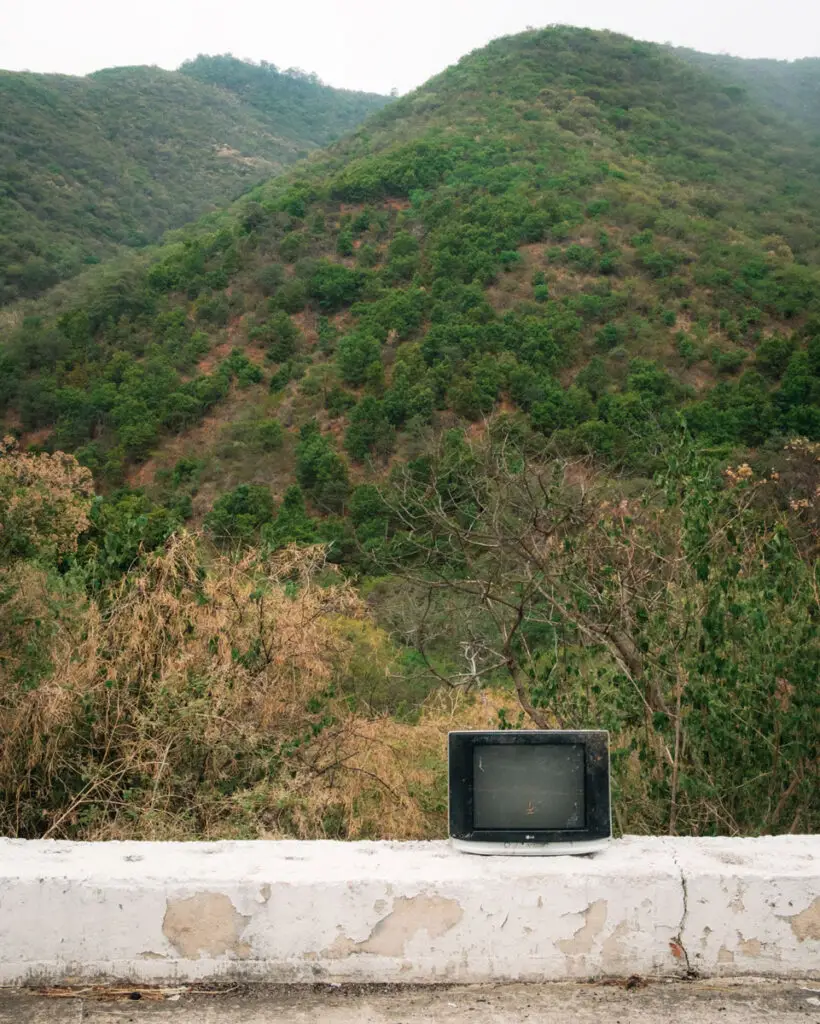
Until the 1990s, many men here worked in the mine at Natividad, the neighboring village to Capulálpam, whose gold and silver reserves have been exploited by foreign operations for centuries. Locals says workers died of respiratory illnesses and the mine poisoned their sacred water sources. And it changed how people speak. “The bosses of the mine came from other states – from Sonora, Chihuahua, Michoacan – and they brought other ways of expressing themselves, of naming things, of dressing, of dancing, which had impact on the community,” García López says. Inside the mine, Spanish was also imposed as the language of communication.
Natividad’s mining operations went into decline and largely shut down in the early 1990s. But in 2002, the Mexican government granted Canadian company Continuum Resources new concessions to restart operations, threatening Capulálpam’s last remaining spring. The community took Continuum to court, arguing they had not been consulted nor given the permission required to exploit resources on Indigenous land. The company hit back by challenging their Indigenous identity.
“The mining company, their lawyers – even the federal government – argued we couldn’t be protected under international laws and treaties because we were no longer Indigenous,” García López explains. The people of Capulálpam de Méndez found themselves having to prove that enough of their ancestral culture had survived a colonial culture of extractivism to secure the right to protect their ancestral lands.
Historically, the state has seen languages as an important marker of Indigeneity – but it is not the only one. “We also have history, we have a form of organization, we have customs. And above all, we self-identify as Indigenous,” says García López.
As for most Oaxacan municipalities, Capulálpam’s communal life stands on four pillars: connection to the land, self-governance, collective work and festivities. The land is collectively owned by its 1,600 inhabitants. Community members take on temporary, unpaid roles – or cargos – as police, say, or administrators, and work for the community is carried out by tequio – collective labor. The main decision-making body is a general assembly of representatives from each family, which works alongside a council of distinguished community members. Capulálpam’s lawyers cited these traditions of communal ownership and governance as evidence of their ancestral right to the land, and in 2019 a federal court ruled in their favor, ordering Continuum Resources’ concessions to be cancelled. But the fight isn’t over since the company appealed ruling. García López says the community currently has two legal battles ongoing: one against the Canadian company, and one against the government over damage done to their land and water by previous mining operations.
Appointed by the general assembly as president of the secretariat of communal resources, García López is on the frontlines of the struggle to protect the territory – one that has proved inextricably entwined with rediscovering their community’s lost language. Next door to his office is a meeting room whose walls are covered in maps. There is one in particular he wants to show us. “We believe that if people are to protect their territory, they need to know it. Part of our strategy for defending the land was to first understand it,” he explains, pointing to areas of the map picked out in different colors and the locations of parajes – traditional lookout points that serve as spatial markers imbued with ritual significance. “We started to organize walks in the forests, and as we walked with the elderly, they were naming the parajes in our territory in Zapotec.” It was a surprise. Though the local variant was lost in town, the elderly only had names for these important sites in Zapotec.
In the first half of the 20th century, the state was still actively suppressing Indigenous languages in an effort to erase ethnic differences between Mexican peoples. “My mom is 80 years old,” García López says. “She does not speak Zapotec and tells me stories about how her parents spoke it secretly at home.” This process of ‘Castilianization’ happened largely through schools, where Indigenous languages were forbidden. García López says the schools in Capulálpam were more formal than those in other villages, making it easier to establish Spanish as the dominant language. “Some of the surrounding communities didn’t even have schools,” he says. Yet now, schools – and support from other villages – are helping reverse this erasure of local identity.

On Capulálpam de Méndez’s main plaza the lampposts are decorated with animals wrought in green metal. Trees and shrubs provide shade for public benches: Eleazar Pérez Cosmes chooses one, makes himself comfortable, and pulls a book from a plastic bag he’s carrying. He explains that in 2017, while the community was fighting its original case against the mine, he was part of a group of volunteers to whom the general assembly assigned the task of stepping up efforts to recover their lost tongue.
Juan Carlos Sanchez, Capulálpam’s municipal president, says he is building on the work of previous administrations, which have consistently supported efforts to recover the local variant of Zapotec – even though language revival is an expensive undertaking, especially here, where it had vanished almost completely. “Just as we did not have a community band and now we have it, in the same way we can recover the language,” Sanchez says. But some traditions are easier to revive than others. Oaxaca’s Indigenous languages make up complex map of different variants – Zapotec has 62 – that have developed in isolation. Even people from neighboring villages in the same region may not understand one another’s mother tongue. “Recovering the language is like trying to resurrect a person who’s been dead for days,” Pérez Cosmes says. There were just eight speakers left when he began the seemingly impossible journey. “Their Zapotec was mixed with Spanish words, and it was hard to interview them because of their age.”
But, working with professional linguists, Pérez Cosmes and his colleagues found an outpost where Capulálpam’s Zapotec had survived. “We went back to the history and the mine,” Pérez Cosmes explains. “When our people went to work in the mine, they abandoned the fields. People who came to work the fields were from a nearby municipality called Santa María Jaltianguis. The variants of the two villages were the same and while Capulálpam lost the language, Jaltianguis still has some speakers.” Jaltianguis sent one of its Zapotec speakers to teach in Capulálpam. “The people of the mountains are united – through mutual work, cooperation, solidarity,” Pérez Cosmes says. “Now that we have this battle against the mining company, the people of the mountains have joined us. Now that we’re asking for help to rescue our language, people from Jaltianguis want to help us.”
Capulálpam is also cooperating with the National Institute for Indigenous Languages (INALI), which was created by to help conserve Mexico’s Indigenous languages. INALI provided funding to raise awareness of Capulálpam’s Zapotec variant and produce teaching materials. Pérez Cosmes and his colleagues recorded a CD with songs in Zapotec. “The national anthem is now sung in Zapotec on important dates,” he says. The next step was to make the book he now holds in his hands. “It’s more of a manual. To create it, we held constant meetings and panel discussions with Zapotec speakers, linguists and educators to reach an agreement. It’s educational and instructive material,” he explains, leafing through its pages. They are full of references to day-to-day and community life. The book hasn’t been distributed yet since they are waiting for the audio version to be made. “We want anyone who grabs the book to be able to learn from it and for that, they need to know pronunciation.”
Capulálpam’s preschool and primary school both have weekly classes now. “My daughter came to tell me one day that they were starting a group to study Zapotec – it was her idea that she wanted to learn,” says Olivia Pacheco Bautista, a local preschool teacher, remembering how it all started. “She was 10 years old and we used to accompany the children, learning alongside them so that we could help them learn.” More recently, Pacheco Bautista has been using her basic knowledge to support the teacher from Jaltianguis. “We teach through drawings, songs, playing games such as lotería, memory games, or we do roleplays. For example, children play that they are in a store and sell beans and they only speak in Zapotec,” she explains.
Academics say the ideal case for language revitalization involves a crucial tri-part relationship between home, school and community to pass the language on to future generations. And Zapotec is not – so far at least – spoken in Capulpálpam’s homes. “We cannot sustain a proper dialogue, but we have introduced some phrases into our daily life,” Pacheco Bautista says. Yet there is wide agreement within the community that their language is part of their identity. As Pérez Cosmes puts it: “Relearning the language is as if we were recovering our birth certificate.”
Mining is not the only threat to Capulálpam’s ecosystem, and solidarity from the wider Indigenous community has been a feature of the community’s resistance. During the 1980s, the village joined a Sierra Norte-wide struggle against paper companies that were responsible for deforestation of their land. Their campaign resulted in the Mexican government cancelling the paper companies’ concessions across the region. Communities then had to decide what to do with the land that had been returned to their control. Capulálpam explored sustainable ways to make a living from its forests.
This wasn’t easy. Generations of dependence on mining had eroded much of the community’s knowledge of how to manage the forest. The first step was to send young people to study at universities. It took some time, but Capulálpam de Méndez has become a lauded example of sustainable timber production. Under a government program to support tourism, in 2007 it also joined the ‘Magical Town’ network of more than 130 towns and villages around Mexico working to preserve their culture and ecology. Nowadays, the community’s tourism and timber operations, as well as water filtration plant and traditional medicine business, provide jobs and invest all profits back into the community.
Efforts to revive Zapotec, a language that connects the community a history older than the mine, have also strengthened the community’s resolve to protect their natural world. “If you know your language, you also know your history,” Olivia Pacheco Bautista says. “Our parents and grandparents who spoke that language had a lot of ecological wisdom. Our grandparents knew their planting techniques, how to take care of water, how to take care of the forest. If the language is lost, this knowledge is also lost.”
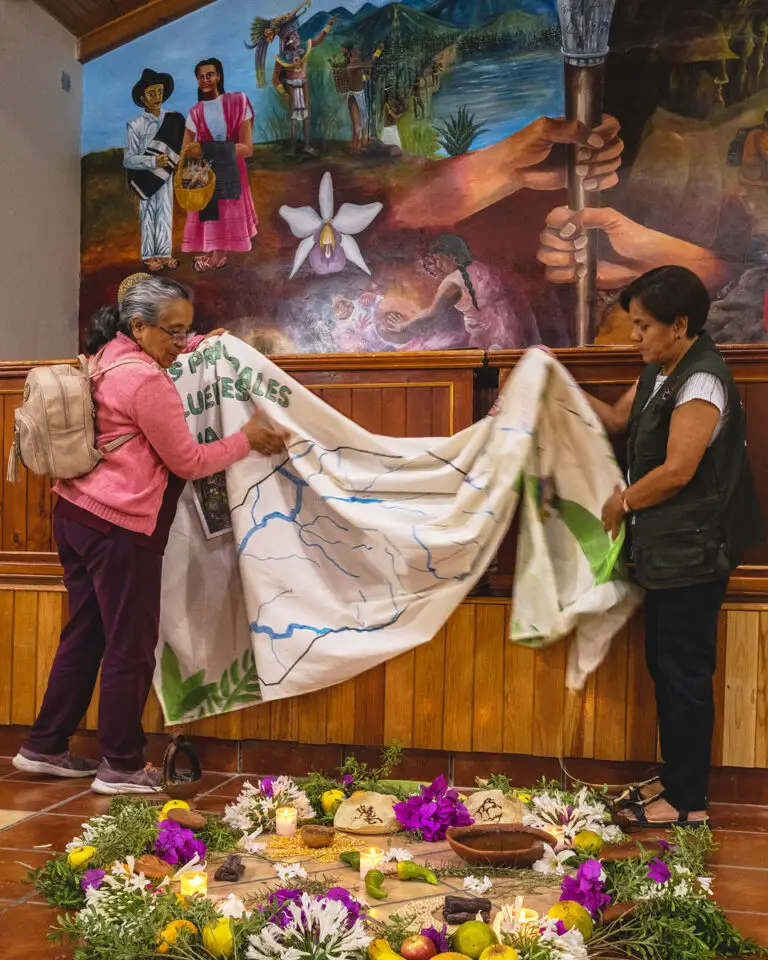
Francisco García López believes reclaiming Zapotec names of the parajes that serve as spatial and ceremonial markers of their communal territory, has already made the community more aware of the importance of protecting it. Recently, they decided to dedicate fewer hectares of forests to sustainable logging. “New territorial planning is now more focused on land protection and on the care of water tributaries. There is a part that will be for forest management, but 60 percent of the territory is now for land protection,” he explains, proud of the new collective agreements drawn up during his presidency.
Magdalena Rojo is a Slovak freelance journalist based in Oaxaca, Mexico. She covers human rights, mostly of women and indigenous people, and global issues such as migration and climate crisis.
Noel Rojo is a Mexican documentary photographer based in Oaxaca, Mexico. He explores environmental and social issues. Together, they founded a documentary project Women Who Stay where they cover stories of women left behind by their migrating husbands.