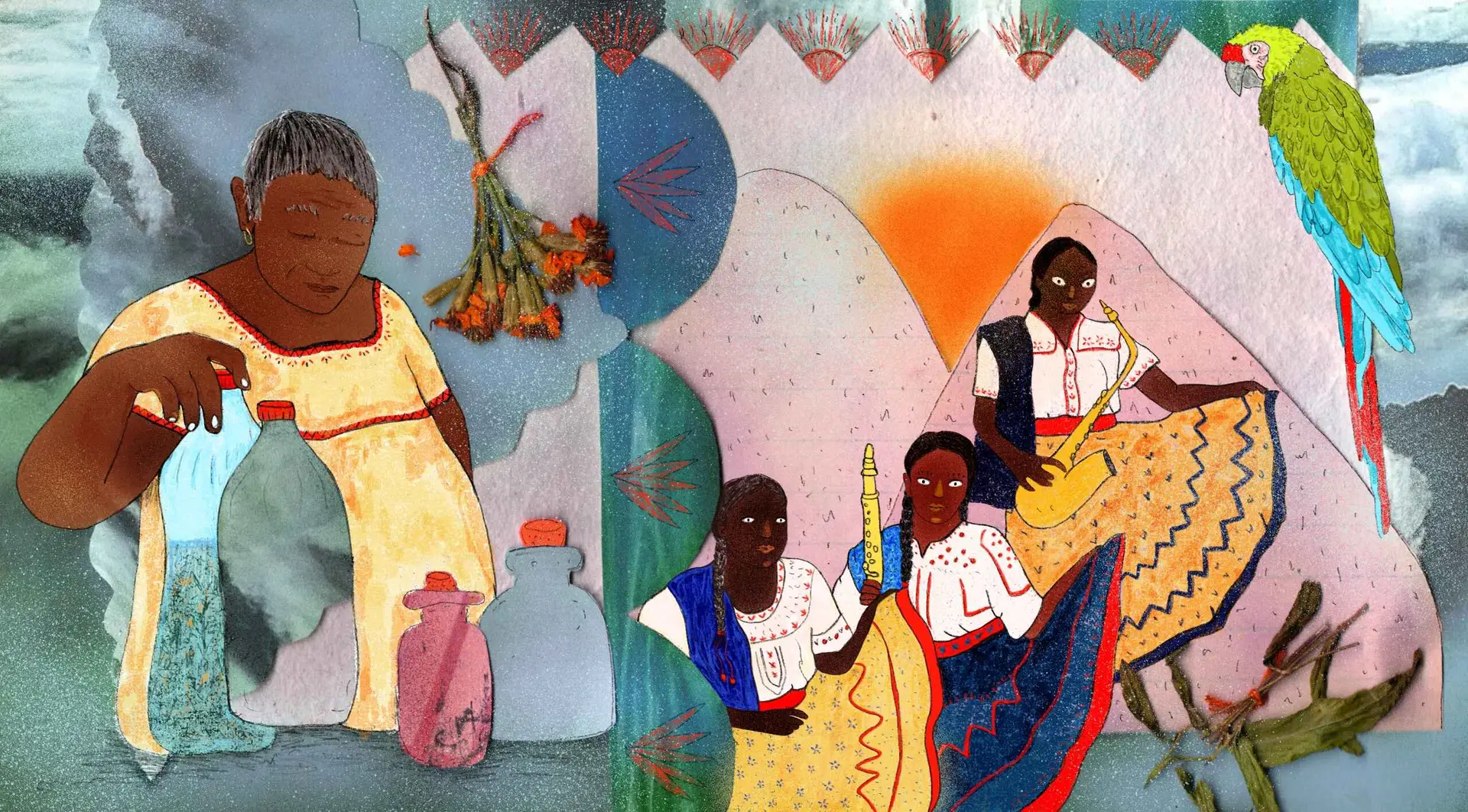
A saying goes that there is a musician under every rock in the Sierra Mixe. Every village has its own philharmonic group, and the village of Santa María Tlahuitoltepec has several. One of best-known is all-female ensemble Ku’Ax, who are challenging the traditional assumption that music is only played by men. Their name caught the attention of a visiting entomologist, Alfonsina Arriaga Jiménez. She writes that ka’ux’s literal meaning is “birds that sprout life in the heart” – which is the Mixe name for the military macaw or Ara militaris – a bird that was once common in this region but is rarely seen now, and listed by the IUCN as vulnerable to extinction.
“This name was suggested by the father of one of the girls,” Arriaga Jiménez told us. “The young girls from the group did not know the word, nor the bird it referred to.” Among their families, only a handful of the elderly remembered seeing the macaws – which they described as noisy birds who helped themselves to the villagers’ corn. “If you are no longer surrounded by it [a species], you have no need to talk about it. If we do not name something, we tend to forget about it,” Arriaga Jiménez says.
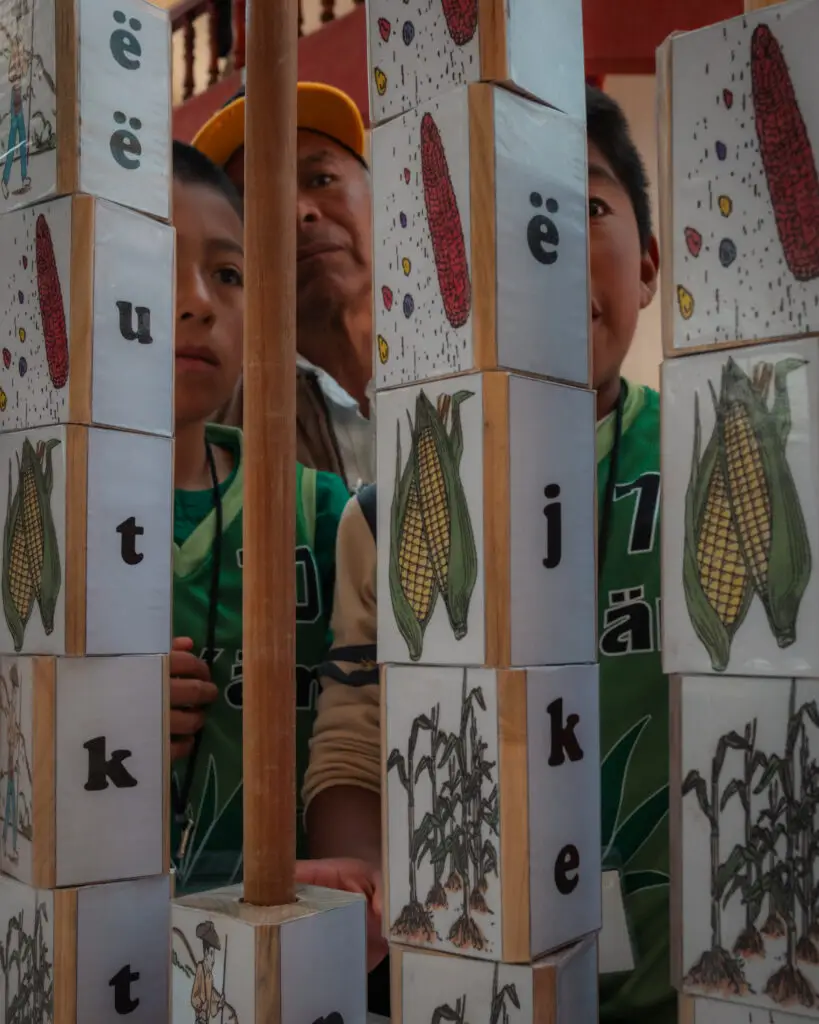
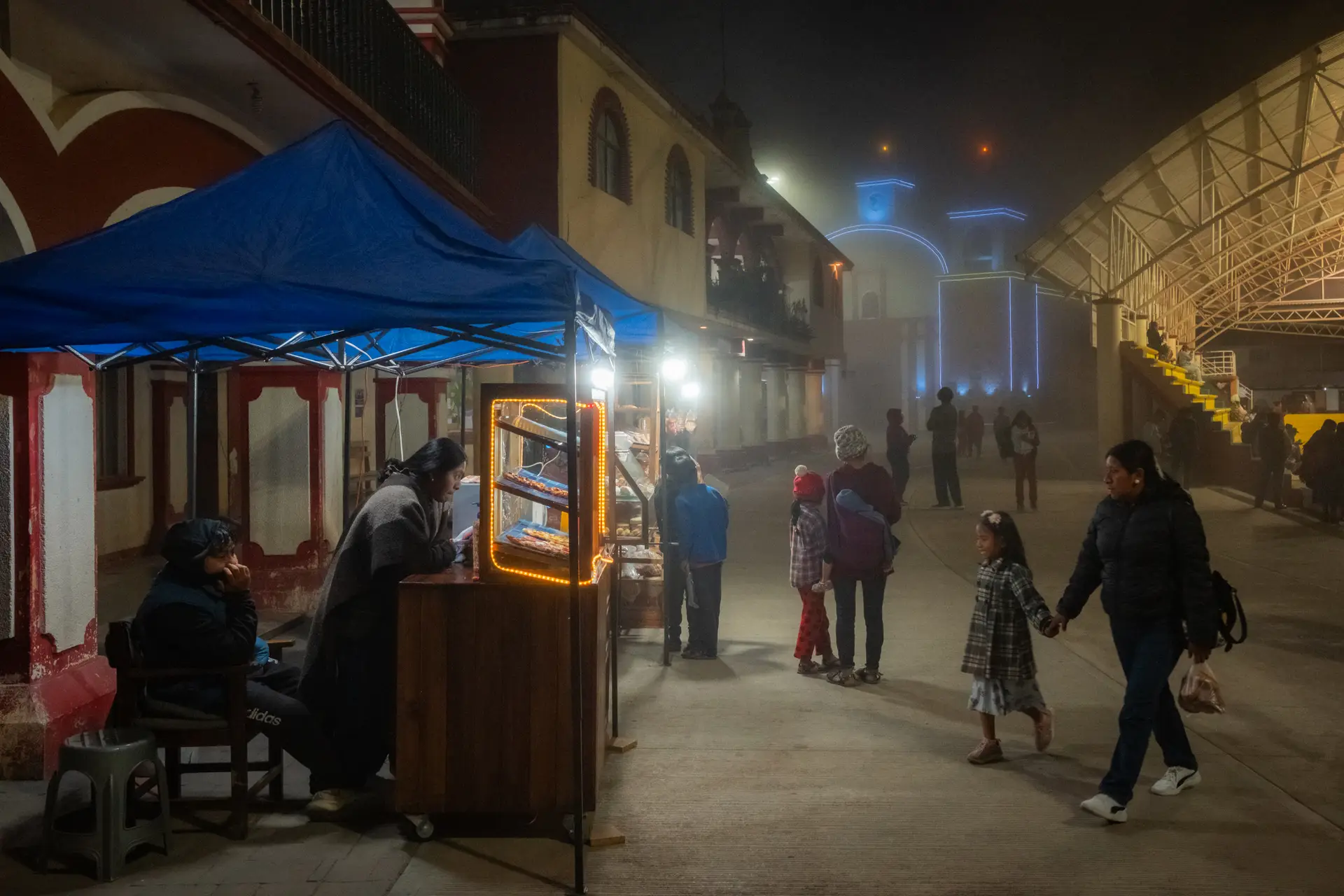
Early on a crisp, cold the morning, local bands march through Santa María Tlahuitoltepec, joined by students and teachers from schools across the municipality.The women wear embroidered white huipiles and long skirts, the men embroidered shirts. On the basketball court in front of the town hall, the teachers present tools they have created with their students to learn Mixe – and to learn through Mixe. Some schools present in Mixe, a few explain in Spanish, and some mix the two languages. Some of the lessons are based on traditional Mexican games. “The teaching materials were created so that students can engage in playful activities, which is the most important part of class,” explains Veronika Jiménez Pérez, a local teacher. “All the education materials are related to community life.” Judging by the brightly colored exercise books, building blocks and flash cards on display, “community” includes not the just human life in these villages, but also plants and animals of the surrounding forests.
The scientist Arriaga Jiménez says that knowledge, practices and beliefs are embedded in languages – especially Indigenous languages – as a natural consequence of having developed within the environment in which they are spoken. “If the younger generations can’t use certain words, the legends and everything associated with those words are lost,” she says.
Mixe culture is rich with myths and legends. People still climb Cerro Zempoaltépetl, 3,200 meters above sea level, to make offerings to King Condoy, the mythical ruler who resides at its peak. He was born from one of a pair of eggs that two peasants found in a cave. They took the eggs home and three days later a boy, Condoy, hatched from one egg and a girl with the appearance of a snake from the other. The boy grew to adulthood in just three days and set off to travel around the state of Oaxaca, bringing back gold and other treasures to his people. He also fought the Aztec emperor Moctezuma. Having been made a king, he ascended Zempoaltépetl one day and never came back.
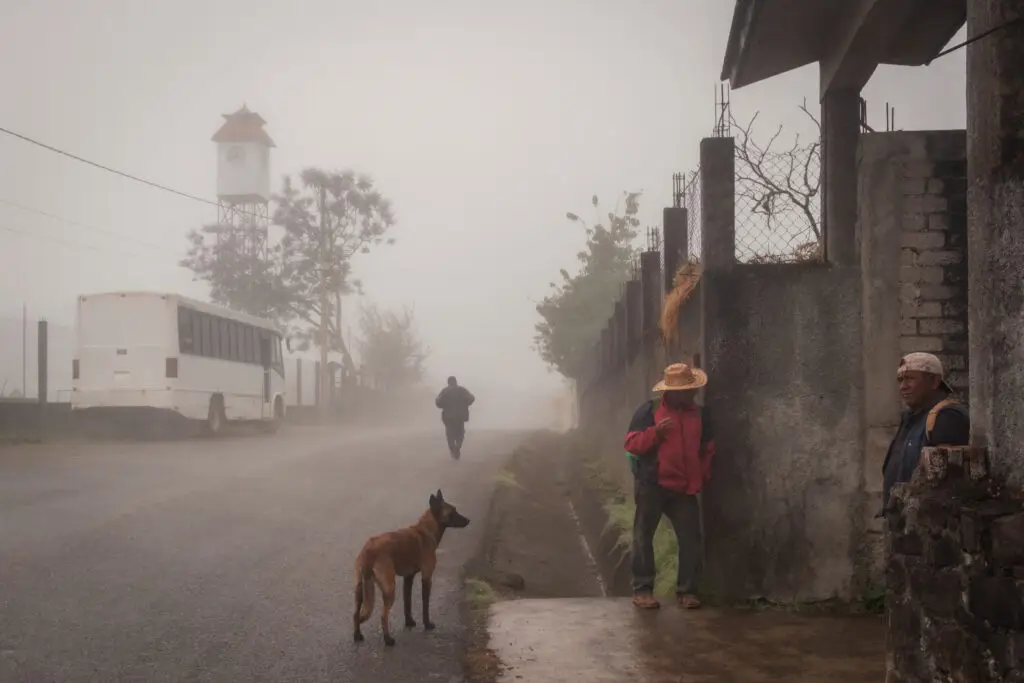
The sacred peak is hidden in clouds as we pass by on our way to Totontepec Villa de Morelos, a municipality about an hour’s drive from Santa María Tlahuitoltepec. Though part of the territory is dedicated to milpa growing corn, beans and squash, most of it is pristine forest. The road is lined with giant ferns as if from a fairytale. The forest is too dense to see into, and the fog doesn’t help. Potholes where the abundant rain has cracked open the road are almost invisible.
It is raining when we arrive at the home of Eugenia Villegas Villegas. A slim woman with graying hair, she welcomes us in with hot coffee and a plate of local sweet bread. For decades she has worked as a schoolteacher and her living room is crowded with books, her cupboards stuffed with materials for teaching Mixe – or Ayuuk, as it is known in Oaxaca by its speakers.
Mixe belongs to the Mixe-Zoqeuan language family and is one of the 15 indigenous languages spoken in Oaxaca. It has approximately 140,000 speakers in Mexico. In some Sierra Mixe communities, older people often speak only Mixe and the National Institute of Indigenous Languages does not consider any of its variants in immediate danger of extinction. But as younger generations turn to Spanish, there is a sense that the language is fading out of use. Villegas Villegas grew up hearing Ayöök, the variant of Ayuuk specific to Totontepec, but her daughter no longer speaks it, though she does still understand. “When she started going to school, she told me she did not want to speak the local language, and I made the mistake of listening to her,” Villegas Villegas says.
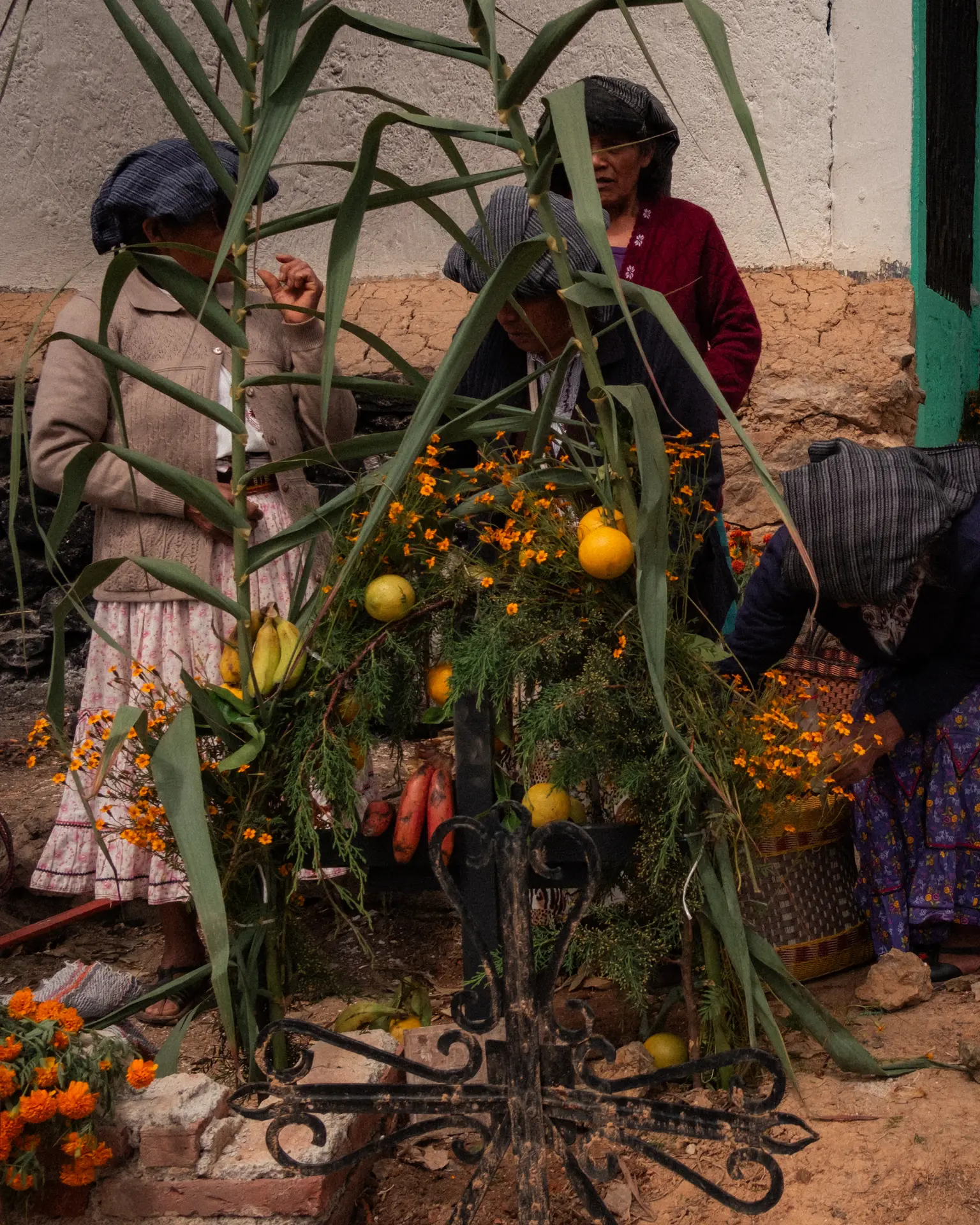
Many Indigenous people in the Sierra Mixe still perform rituals at times of sowing or harvesting, praying in their local language. Villegas Villegas says that when people who do not speak Mixe take part in these ceremonies, they generally don’t speak at all: “They make an offering of a rooster, which is what we usually offer, and maybe in their mind they think of being grateful, but they don’t say it out loud.”
But for Villegas Villegas, speaking Mixe only on special occasions isn’t enough. She is trying to revive the language in homes and daily life. She began with activities in a local private school, but the parents weren’t much interested, so she didn’t persist. Instead, she approached the board of the local public school. “They said they would do it if the teachers agreed. They did. We had to talk to the parents as well, and no one was against it.”
The lessons use games to make learning fun. They aren’t mandatory, but the children are interested, Villegas Villegas says. She is also part of a collective that encourages parents to speak Mixe. “It’s all about raising awareness among adults,” Villegas Villegas says. She believes that while teaching Indigenous languages in school is a big plus, without the language spoken at home, preserving it is impossible. The collective has also offered online classes to Mixe immigrants in the United States, helping them maintain a connection with their land and culture.
Without these efforts, Villegas Villegas believes that it is not only the language that is at risk of extinction, but her people’s relationship with nature. “We never talk to Mother Nature in Spanish,” she says flatly.
A few kilometers from Totontepec, the village of San Marcos Moctum is home to some 160 inhabitants. Saraí Jiménez Orozco grew up in Moctum and learned to speak Ayöök from her parents and grandparents. They also taught her to respect Mother Earth. “Whenever we harvested corn, we threshed it at my grandmother’s house. You were not allowed to step on the grains – not even one grain could fall. You were not allowed to sit down on a corn sack. My grandmother used to say that if you did, the corn would get angry and wouldn’t grow for the next harvest.”
It is women in particular, Jiménez Orozco says, who carry and pass on such wisdom. Mothers are the first to speak native languages to their children. Grandmothers are experts on medicinal plants. When they gather these special herbs, they ask permission from Mother Earth, who heals just as she nourishes. “They cut the plants and make a ritual of it,” she explains.
Jiménez Orozco left San Marcos Moctum for several years to study. Now 26 and mother to a seven-month-old daughter, she is back and dedicates much of her time to keeping Indigenous language and wisdom alive in her community. She organized a participatory research project with local women, who brought their children along. “We worked with medicinal plants,” she says. They went out to collect plants and learn where to find them. “At the end of the day, we all realized that this knowledge is not being passed on to the children, to the young people. I realized that I did not know all the names of the plants,” she confesses. “If you are not educated within this culture – and language is part of this worldview – it is difficult to respect the land, to believe in the land, that we are different living elements,” she says.
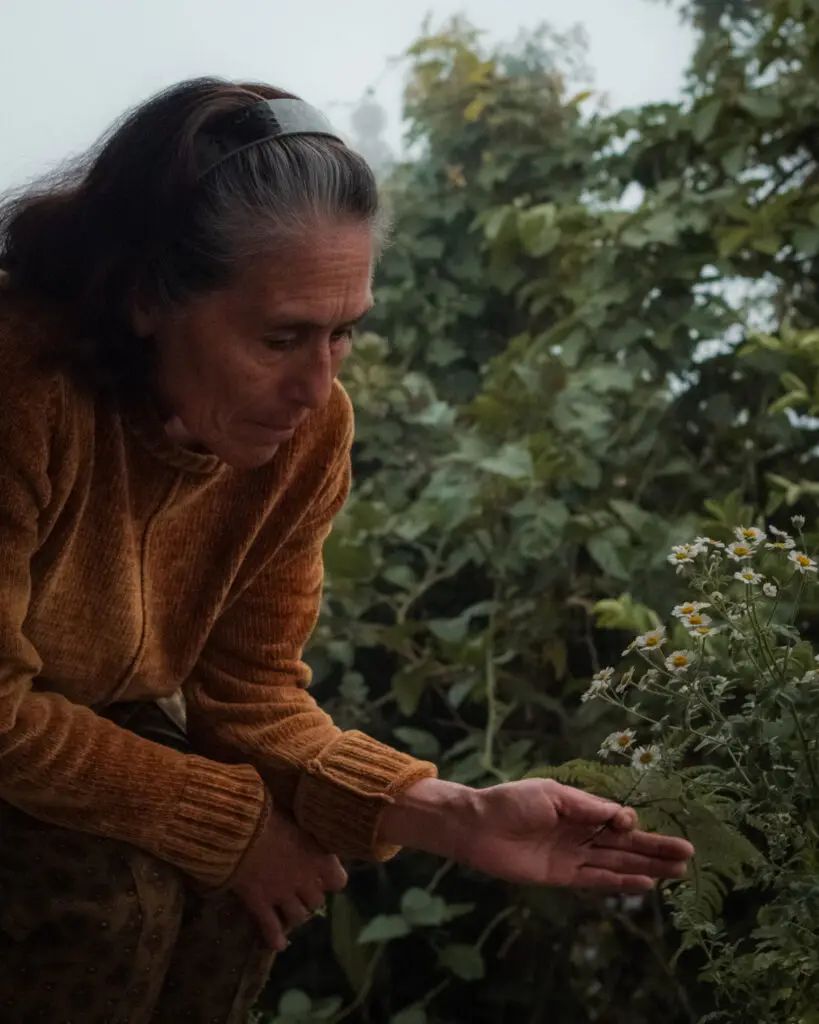
When the rain eases off, Eugenia Villegas Villegas takes us out into her garden, a patch of land walled off by her neighbor’s houses. The 58-year-old has a taste for aguardiente – a strong alcoholic spirit, which she distills from sugar cane she grows herself. She also prepares a drink abuelas use to cleanse people of susto – a kind of shock to the very soul that can cause physical symptoms and what Western medicine might describe as depression, anxiety and PSTD. “The grandmothers selected ten to 12 plants, they boiled them, and the agua del susto was ready. In reality, it’s going to detoxify your body, your liver, your kidneys. I already have my plants here, so I don’t have to go looking for them,” Eugenia says, hunkering down to point out a delicate fern among the herbs. Naming each plant, she gently touches them as she tries to remember what they are called in Spanish, but some she knows only in Mixe.
Saraí Jiménez Orozco also recalls hearing of plants used to wash away the shock. “I heard from my grandmother that they do this ritual with plants to get rid of susto very early in the morning or very late at night. They talk to the earth, to the air, asking for help, asking for forgiveness,” she says. In her community, the dominant Protestant faith suppressed these practices to some extent. Yet Mixe and colonial teaching have also merged at times.
Villegas Villegas recalls that when she was a child, a man from the United States – probably a missionary – translated the Bible into Mixe and went from house to house in her village, asking if people wanted to learn to read the holy book in their own language. Sometime later, Villegas Villegas says, “local intellectuals” realized the text had been written using the Latin alphabet. Mixe was a purely oral language back then, and it uses sounds the Latin letters failed to represent. So, they set about adapting the foreign alphabet into one that better expresses their mother tongue. “We now have one that is shared across the whole region,” she says. The great diversity of Mixe variants made this a challenge: Villegas Villegas gives the example of the double uu that is part of the general Mixe alphabet but is not pronounced in the Totontepec variant.
Yet without the Mixe alphabet, the written materials that communities here are using to preserve their mother tongue would be impossible. “Our parents have a way they communicate with Mother Nature on important days such as their birthdays, the beginning of the year. If we do not write this down, the way to communicate with Mother Nature will disappear,” Villegas Villegas says. “I find it very sad not to be able to communicate with somebody whom we know is listening to us,” she adds.

Magdalena Rojo is a Slovak freelance journalist based in Oaxaca, Mexico. She covers human rights, mostly of women and indigenous people, and global issues such as migration and climate crisis. Noel Rojo is a Mexican documentary photographer based in Oaxaca, Mexico. He explores environmental and social issues. Together, they founded a documentary project Women Who Stay where they cover stories of women left behind by their migrating husbands.