Iran’s internet blackout shows an increasingly powerful tool to reign in democratic movements
- Written by Sabrina Faramarzi
- Illustration by Yorgos Konstantinou
- Edited by Tina Lee
In one of the most sophisticated forms of information control we’ve ever seen from Iran, the government has plunged the country of over 93 million people into a near-total communications blackout.
Iran has always controlled the flow of information. When I would visit my family there as a child during summer holidays, it was still the early days of the country’s access to the internet. You could only browse the web at obscure times, and even when you could, filtering, blocking, and censorship of websites were rife.
Sometimes we could only access the internet for a two-hour window in the middle of the night. My cousins and I would set alarms to wake up so we could use it, but more often than not, we would sleep through. When I missed those nights, I would spend afternoons reading international magazines delivered to my older cousins, though my reading would often be interrupted by entire chunks cut out by the post office’s morality police, physical redactions of anything the regime deemed inappropriate.
Now, they’ve outdone themselves. In one of the most sophisticated forms of information control we’ve ever seen from Iran, the government has plunged the country of over 93 million people into a near-total communications blackout. This is a country one-sixth the size of Europe, about one-fifth the size of Australia, roughly half the size of India and nearly 80 times larger than Israel, currently without any internet or cell service at all.
What began as street marches by small business owners against crippling inflation has swelled into broad anti-regime unrest. It is now Iran’s largest movement since the 2022 “Woman, Life, Freedom” protests. As demonstrations grew, so did the temptation to shut them down. The Iranian regime often relies on shutdowns when facing popular unrest, both to conceal itself from any perceived vulnerability to foreign enemies and to hide the human rights abuses it carries from the rest of the world. It was also a way to limit the ability for protesters to organise amid rising international support since the protests began at the end of December, fanning the flames of Iran’s increasing tensions with the United States and Israel.
The near-total blackout of internet and cell service occurred at approximately 22:15 local time on Thursday, January 8th 2026, on the 12th consecutive day of protests, according to several network monitoring organisations. Cloudflare, an internet infrastructure service, reported that internet traffic in Iran had dropped to “effectively zero“. While communications have been cut, thousands of protesters have been killed.
Due to the blackouts, independent confirmation of how, where and when these events are happening is limited. And it is in this haziness, this uncertainty of facts and evidence being communicated, that democracy dies and autocracy thrives.
Shutdowns as digital warfare
Countries like Libya, Iran, Iraq, Syria, India, Myanmar, Pakistan, and Russia saw shutdowns while African countries experienced record highs in disruptions (especially around elections), despite global pledges to stop them.
Do you believe that access to the internet is a basic human right? Can you imagine going several days at a time without even the slightest bit of connection? While the UN has previously stated that internet access is an enabler for the exercise of human rights, such as the right to freedom of expression, it is up to individual governments to decide whether they deem it so. Like all the best things in life, you don’t know what you’ve got until it’s gone. Authoritarian governments tend to go for the jugular, and a growing favourite in their toolbox when things go south is hitting the kill switch and shutting down the internet.
An internet shutdown is defined as “an intentional disruption of internet or electronic communications, rendering them inaccessible or effectively unusable, for a specific population or within a location, often to exert control over the flow of information.” These are not faulty power trips but intentional power cuts by governments used to suppress information. They can take many forms – whether that’s blocking specific platforms, slowing down speeds (throttling) or full network blackouts.
While data for 2025 is still pending, reports for the first half of 2025 showed around 40 incidents of governments shutting down the internet. Other data sources show there have been 96 shutdowns in the past year alone. Countries like Libya, Iran, Iraq, Syria, India, Myanmar, Pakistan, and Russia saw shutdowns while African countries experienced record highs in disruptions (especially around elections), despite global pledges to stop them.
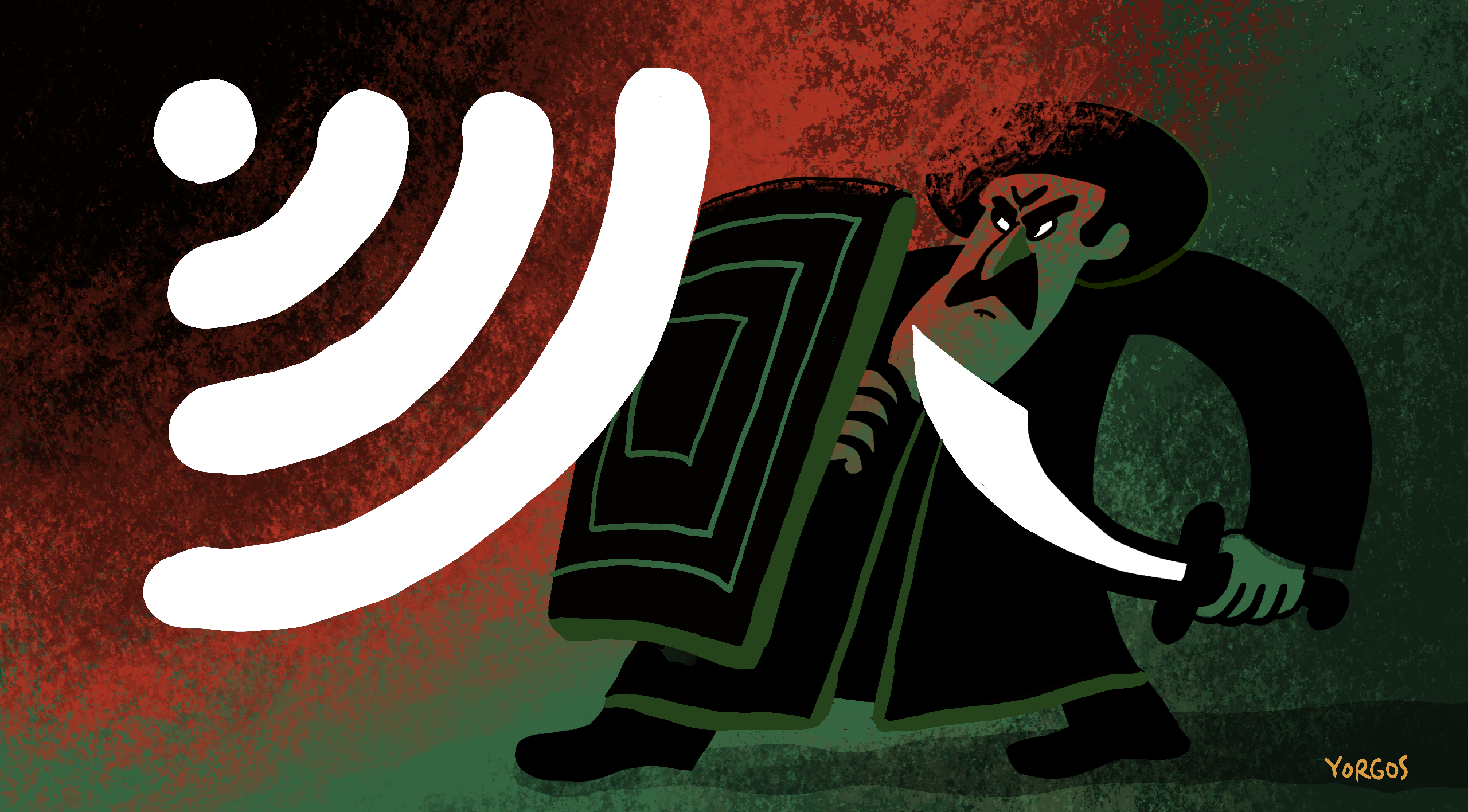
So why all the drama? Instigating an internet shutdown is a powerful way to suppress dissent, control information flow, and undermine democratic processes such as protests and elections. Now, there are reports that the Iranian government plans to sever citizens from the global internet in a bid for ‘absolute digital isolation’. What they are doing is more than just a disruption to connectivity. It’s digital warfare.
Weaponising connectivity
The same legislative offices and officers that exist only due to the votes and taxes of the people, must tangibly show the same transparency they seek from tech companies, other deployers and end-users of AI systems.
While the shutdowns in Iran are being executed to hide the scale of anti-government protests from the global gaze, as well as the lethal force being used on protestors by the security forces, it is also important to understand the severity and sophistication of the blackout. While Iranian citizens have been blocked out of any communications, selected government officials and government-aligned media still can – via Tehran’s “white-list” system.
There are some workarounds for getting information out during an internet blackout. Journalists from around the world often find novel and creative ways to gather information from a country. But the usual go-to workarounds, such as VPNs and satellite access, aren’t accessible in Iran right now. VPNs cannot help people get back online, and Starlink – a satellite internet provider enabling high-speed, low-latency broadband internet in remote and rural locations across the world that is marketed on its very ability to work when everything else doesn’t – was also targeted. It is currently offering a free service inside Iran to help people get back online.
The targetting of this type of critical infrastructure, which journalists and aid workers often rely on, has consequences beyond Iran, as other nations begin cracking down on these alternative solutions. Although Iran is well-versed in the art and science of shutdowns, it is not the prize winner for the biggest kill-switch button pusher: India takes the lead by a substantial margin. In Indian-administered Kashmir, since December 29, the government has now ordered a total ban on the use of VPNs for two months, citing “threats to national security” and alleged “misuse” of the services to “incite unrest”.
Gaza has also had multiple blackouts as the genocide has unfolded since October 7, 2023. Despite likely being the most documented conflict in history and sources continuously being fact-checked, misinformation is rife. Citizens across the world still cannot truly believe the horror livestreamed into their homes, phones and eyes each day.
Meanwhile in the U.S., President Donald Trump claimed that Renee Nicole Good, a woman from Minneapolis whose death was filmed from several angles, was a domestic terrorist who “violently, willfully, and viciously ran over the ICE Officer, who seems to have shot her in self-defence”. This is despite the ample video evidence of the entire scene, showing an agitated federal immigration agent shooting Good from the side of her car. Yet multiple false AI videos circulated online in an attempt to confirm Trump’s narrative. They were all debunked.
The hazy truth
Pics or it didn’t happen - or plenty of videos, and they will be refuted and dismissed, even if they are real.
What we are left with is the double-edged sword of digital evidence. Pics or it didn’t happen – or plenty of videos, and they will be refuted and dismissed, even if they are real. AI has collapsed our trust in what we see online, but if we don’t see what is happening, how can we ever hold power to account? What will be made of our civil liberties then?
First, we should recognize we’re not as good as we think we are. A survey of the US public shows a significant gap between people’s confidence in spotting fake videos versus their actual ability to do so. While around 60% of people believe they can identify a deepfake, studies show human accuracy for high-quality synthetic videos is only about 24.5%. Other surveys put the success rate at just 0.1%.
There is the illusion of control, and then there is the control of illusion. In Iran, the autocratic regime believes that controlling access to communication channels means controlling the narrative. They blame foreign enemies by touting that they brought in terrorists from outside instead of understanding the frustration of the Iranian people with the nearly five decades of the regime. For citizens, protestors and anyone else exercising their fundamental rights, it’s about understanding that access to the internet is not yet considered a human right, nor is the agency it gives you always freely available.
For those of us privileged enough to have never experienced a shutdown, its important to recognize that shutdowns like those taking place in Iran, India and Russia aren’t new, and may be coming soon to a country near you. In this era of technofuedalism – a concept developed by economist Yanis Varoufakis arguing that we are slipping into a system where tech companies function like modern feudal lords – we have to wonder what role we play as users of technology platforms. Have we ever considered that governments – whether autocratic or democratic, while trying to play the whack-a-mole game of keeping up with continuous technology developments, also benefit from our monopolised landscape of technology?
A network of networks
What most citizens don’t understand is that the internet is not a homogeneous entity or a global grid. It is a network of networks. The majority of the technology platforms you perhaps interact with daily are likely to run on internet infrastructure such as Amazon Web Services, Google Cloud Platform, Microsoft Azure or Cloudflare. This is all before we get to see the interfaces we actually use daily. They are both interconnected and interdependent, but can be cut at any time.
The idea of the “splinternet” – that the internet is fragmented into separate, often incompatible digital ecosystems, driven by national policies, geopolitical tensions, and corporate interests – is very much real. Think China’s Great Firewall or Russia’s digital isolation. Iran, known for having one of the world’s most restrictive internet censorship systems, has spent nearly a decade trying to build a domestic intranet, isolated from the global internet. This all challenges the very notion of a single, open global network. While tech monopolies stress democratic governments, they are helpful to autocratic ones because they simplify the kill switchboard.
To participate in democracy and exercise our rights, we must be able to communicate with one another without mediation or manipulation.
Participation as democracy
Being able to access the internet can often be a lifeline, particularly when it comes to political organising. Mass movements like Black Lives Matter or Fridays for Future that went global and mobilised millions of people over the last decade owe a lot of their success to mainstream social media platforms – namely Meta – but also perhaps their failures. Black people continue to be killed in the US at disproportionately high rates and we are still so drastically behind on climate action.
To participate in democracy and exercise our rights, we must be able to communicate with one another without mediation or manipulation. This also includes reducing our reliance on major platforms, developing creative ways to stay in touch with one another, and finding systems, networks, and avenues of connection that are independent and rely on their own sources of access. We found ways to report on large, historical events before the “global” internet, and we will find ways to report without it.
Despite the power of social media to mobilise people across borders, nations and oceans, not all protesting can be done online. These shutdowns should teach us that we cannot rely on digital means to organise. We cannot substitute social media for IRL communities and communication channels. Yes, it is harder without the internet, but what we should learn from the Iranian people is the ability to organise, en masse, and continue demonstrating despite a blackout.
Without information, we can only hope that this is a pivotal, regime-changing moment for the Iranian people fighting for their basic survival. But what is also increasingly prevalent is how our growing suspicion of what we see online, the rise of autocratic government-enforced information-control tactics, and our over-reliance on mainstream digital channels create a heady Molotov cocktail thrown in the face of democracy. We should all be very afraid of this becoming the new normal.
About the Author
Sabrina Faramarzi is a journalist, editor, speaker, and trends analyst on international issues related to data, AI, gender, and digital human rights. Sabrina’s work has been published in The Guardian, Vogue Business, Vice, Wired, and others. She has also consulted on audience development strategies and produced global editorial projects for media organisations across tech, society and culture. She was one of the co-founders of the art-activist collective Feminist Internet, working on digital rights for marginalised communities. Sabrina is currently serving as the Managing Director of Are We Europe, an independent multimedia platform where she leads the Full Stack Journalism project, supporting the technological independence of independent media. Additionally, she works for Seek Initiative, helping journalists and citizens work together on collaborative investigations in the public interest.