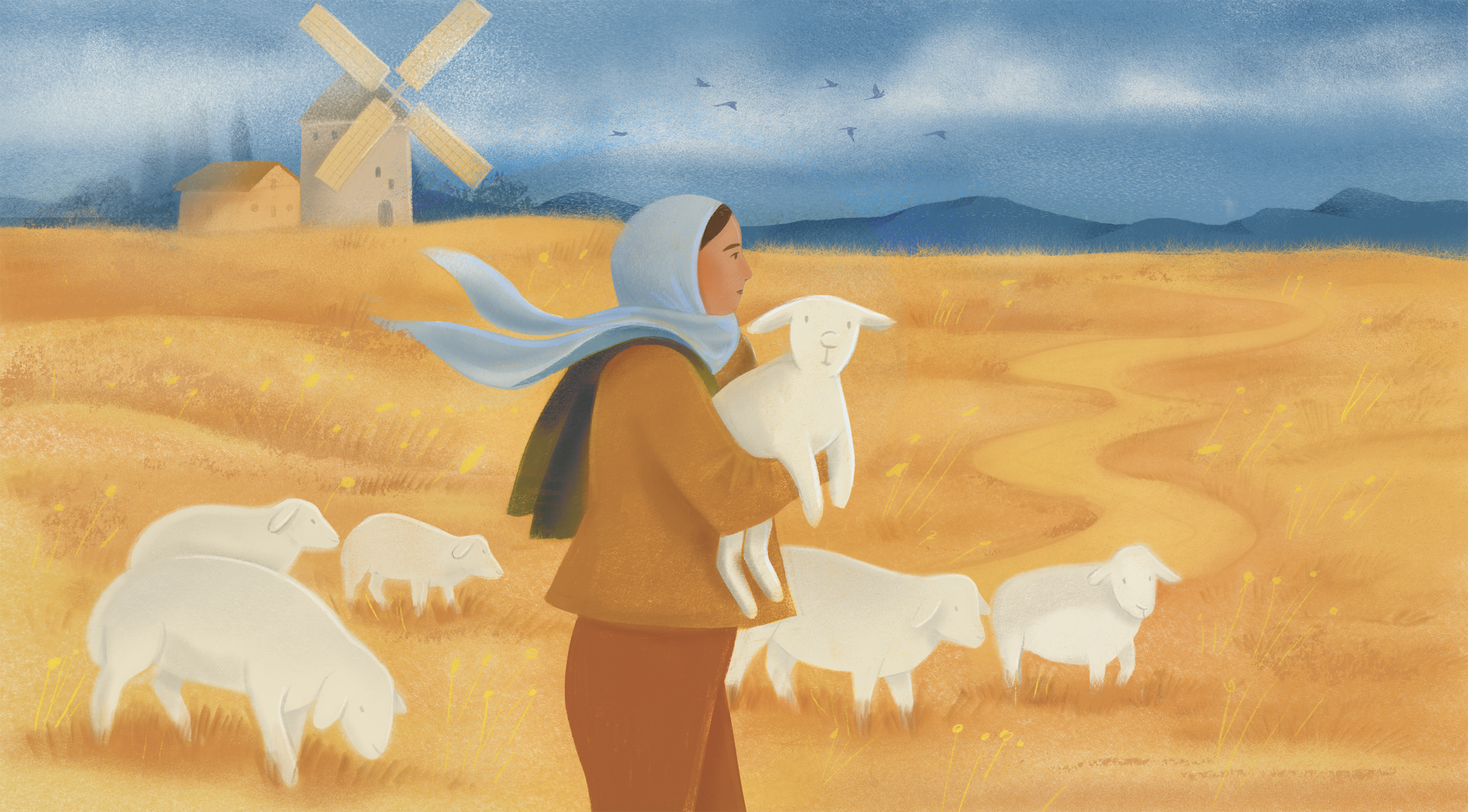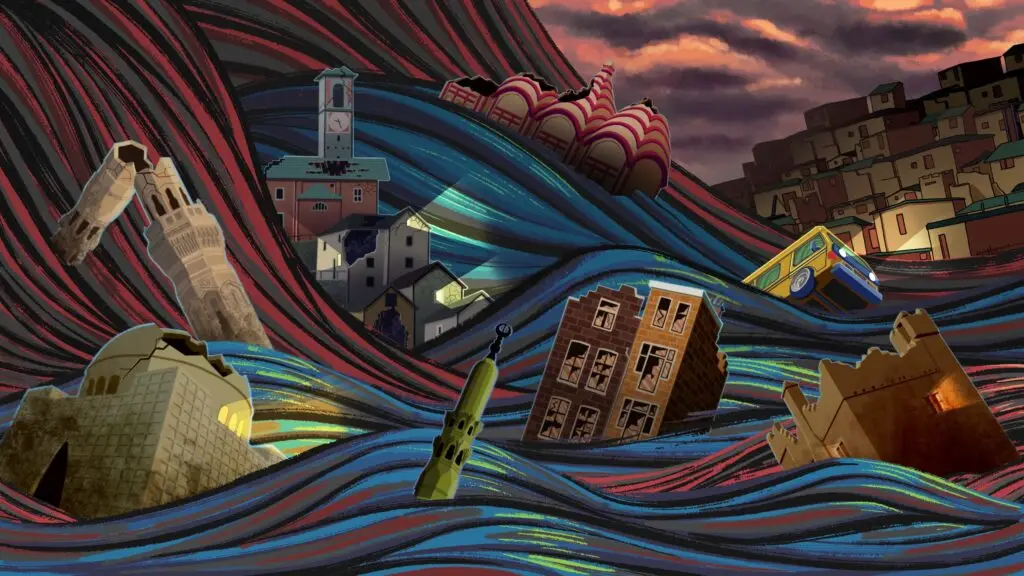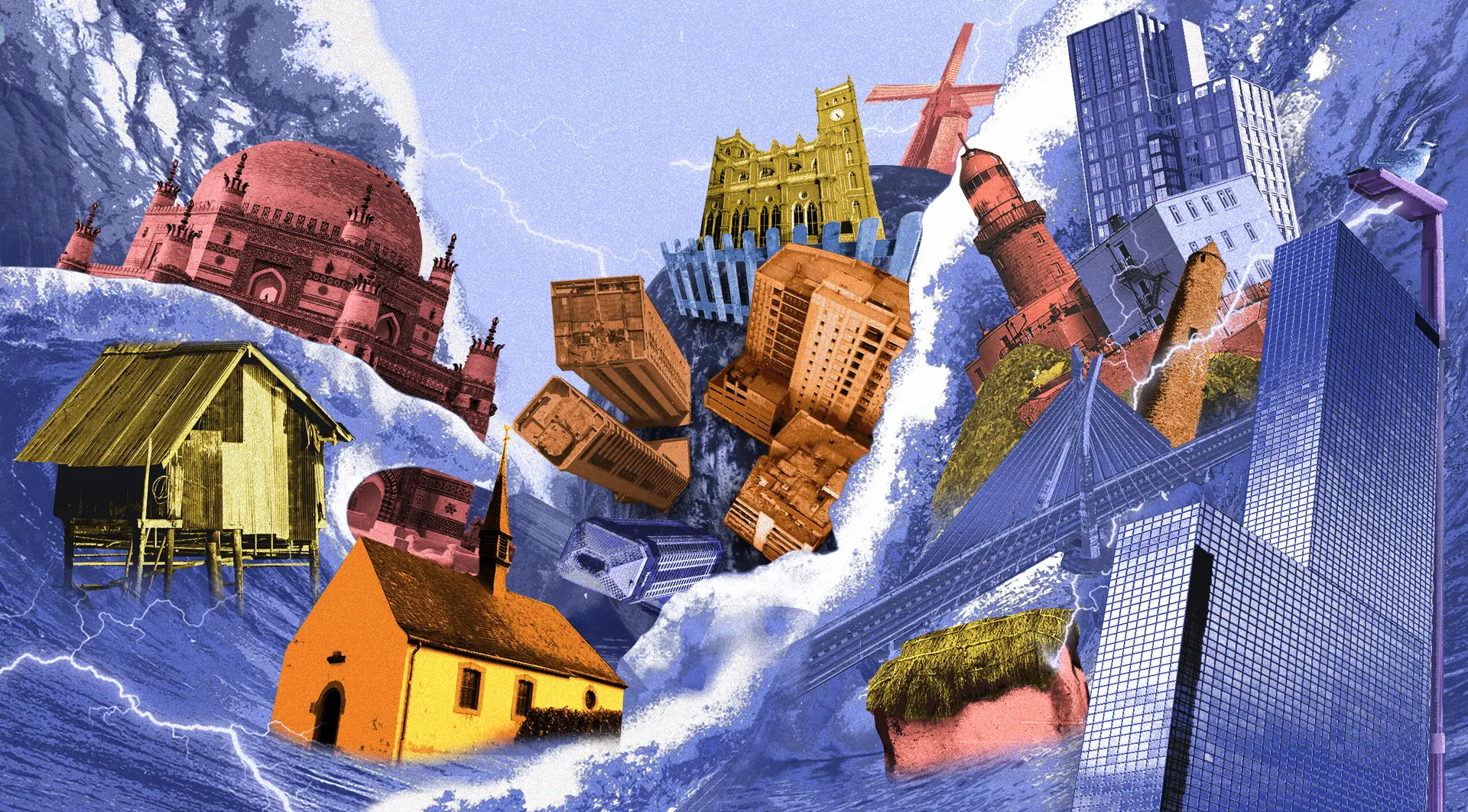






Waves and lightening strikes wash away buildings of all sorts, windmills, churches, bridges, huts in this image by Victoria Shibaeva

Call for Applications: The Sinking Cities Project

International newsroom Unbias the News will connect, train, and publish local journalists covering how rising sea levels and coastal flooding caused by climate change threaten cities. Application deadline extended to April 25.

Rising sea levels, coastal flooding, and changes brought on by ice melt at the earth’s poles is projected to cause major changes to coastal areas in the years to come. Some of the world’s most populous cities could be dramatically affected, but instead of preparing, most appear to be building expensive developments. Why aren’t city governments responding, or if they are, why don’t we hear about it? 

Unbias the News wants to take a deep dive into urban sustainable planning in the face of the massive challenge presented by climate change.

In this cross-border collaboration, we will bring together local reporters and some international newsrooms to publish a dossier of stories explaining how cities are responding to risks from flooding and sea rise, The Sinking Cities Project.

What will it be?

Local reporters from five cities can apply to take part in the investigation. We are looking for one reporter each from Lagos, Nigeria, Rotterdam, Netherlands, Karachi, Pakistan, Alexandria, Egypt and Dhaka, Bangladesh to join our partner journalist from Dublin Inquirer to receive:

  • Funding: Each participating journalist will receive 4,500 euros compensation for their research and publication with Unbias the News.
  • Training: We will provide training modules on cross-border journalism, constructive reporting, environmental reporting, and other issues that arise during research. Journalists will work together with our editorial team and one another to compare notes and push the story forward. 
  • Networking: The Sinking Cities team will work closely together to compare what is happening in their cities, and identify common problems as well as solutions. Unbias the News will promote the authors and their resulting work in syndication with partners all over the world.

Newsrooms that wish to join in the project will be able to send reporters to join trainings and publish together with us as a dossier of reporting from around the world. We will amplify the issue of sea level rise and ask our governments what they are doing to protect citizens and their homes.

How to apply

To apply as a journalist, please submit the following form by April 18, 2022. Please note, for this project we are only taking applications from journalists located in one of the cities mentioned above.

To join as a newsroom, please send an email to Sinkingcities@unbiasthenews.org to set up a virtual meeting to discuss.

Questions? Read more about the project here and get in touch at Sinkingcities@unbiasthenews.org

This project is funded by Journalism Fund and the European Cultural Foundation, as well as core supporters of Unbias the News; the German Lottery fund, Luminate, Democracy and Media foundation and the Adessium Foundation.

Related Posts

Venezuela without Venezuelans

As bombs fall and power shifts, Venezuela is reframed as a geopolitical case study, while the voices of those living through the crisis are pushed aside. The gap between global commentary and lived reality turns human crisis into abstraction and exposes what is lost when journalism explains power while erasing the people who endure it, writes Gabriela Ramirez.

Nigerian women farmers trapped between climate shocks and microfinance debt

Microfinance loans were meant to offer a pathway out of poverty in countries like Nigeria, particularly for women. But as climate change makes weather patterns more unpredictable, the risk of falling into further debt falls onto the shoulders of women farmers who face not just erratic farming conditions but social stigma from default.

Capulálpam de Méndez: A struggle for land and memory

After a Canadian mining company challenged a Zapotec community’s Indigenous identity, recalling the ancestral names of sacred landmarks helped reinvigorate their connection to the land – and defend it from extractive industries.

Help us fight for a more inclusive journalism