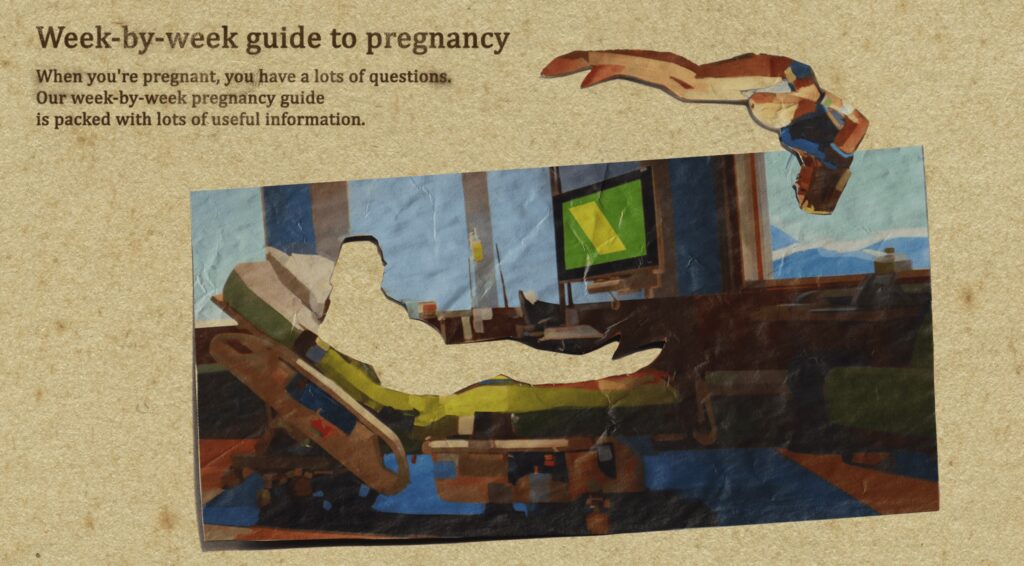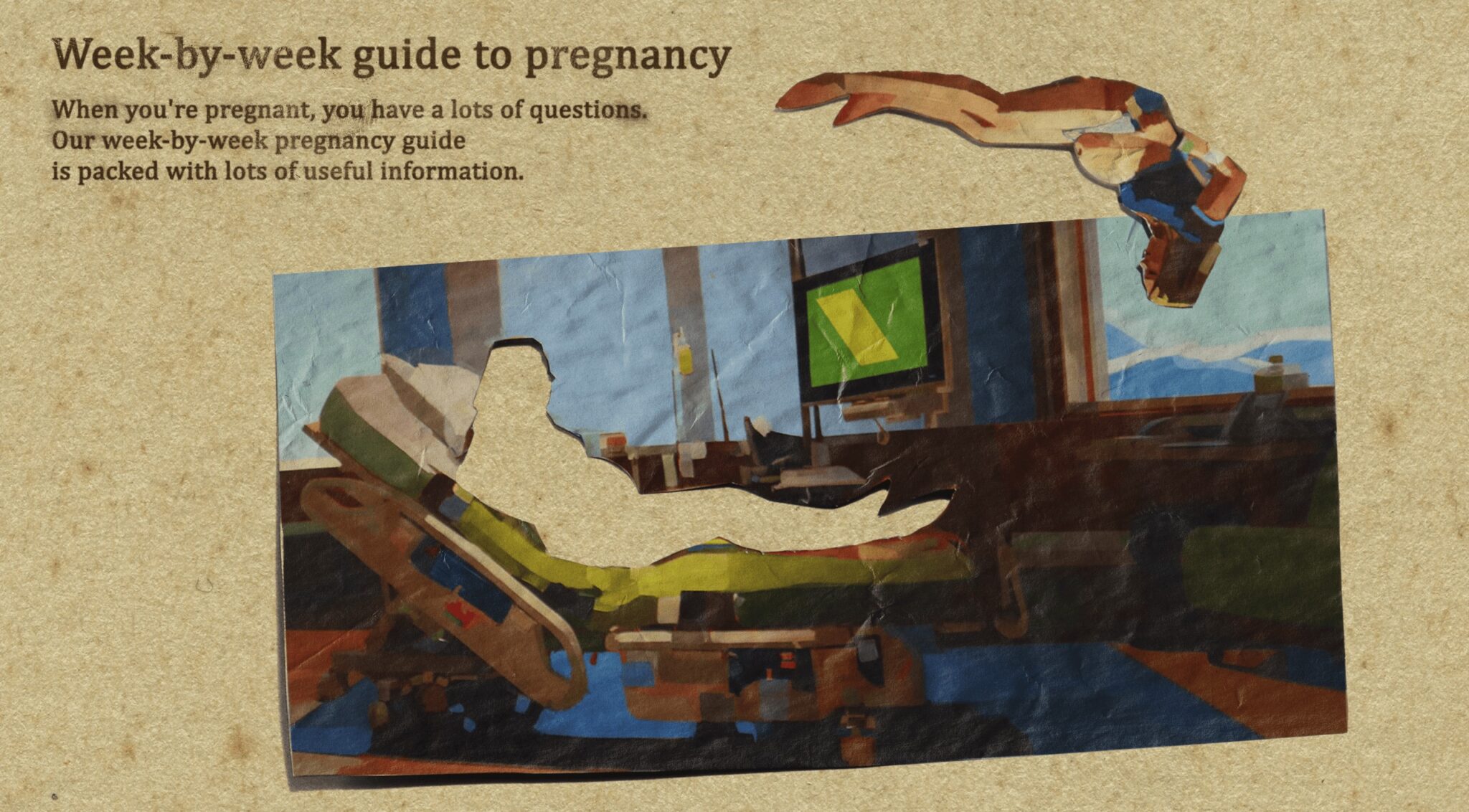


Congratulations on your pregnancy! You must be very excited, and also, perhaps, a little bit nervous. On the one hand, you tell yourself, where better to give birth than Romania, a country that places motherhood on a pedestal? Our politicians fret about falling fertility rates and the priests say women fulfil their destiny by bearing children. Relax, you’re going to be just fine. Then again, Romanian infants have the lowest odds in the EU of reaching their first birthday, and Romanian women are twice as likely to die from pregnancy-related causes, compared to the European average. You’re going to be fine, you tell yourself, just fine.
You could be among those four in every ten Romanian mothers who rated giving birth as a positive experience overall, even a blessing.
“I felt supported and encouraged. I was able to focus on my feelings and my efforts. It was my birth, and the medical staff were there to intervene if necessary. I cannot describe the sense of achievement that I had at the end.”
Or you could be among those unfortunate three out of every ten new mothers who left the hospital deeply traumatized.
“It was hell. I felt like I’d drawn the short straw just for being a woman, I kept wondering if we had done something wrong to deserve this.”
“I was treated as nothing more than a vessel for bringing children into the world. A woman can face violence even from those whom she expects to protect her.”
“They treat you like dumb cattle, as if you don’t have a mind of your own.”
Or you could be among the remaining three in every ten who report a mixed experience, neither wholly traumatic nor entirely joyful.
“It’s like Russian roulette.”
This is the unofficial guide to giving birth in Romanian hospitals, in the words of women who have done it. Their testimonies were collected as part of an investigation into obstetric violence and mistreatment, terms used by global health bodies to describe the ways in which a woman’s rights, dignity and autonomy can be violated by medical workers while she is giving birth.
Obstetric violence and mistreatment are widespread across Romania’s neglected healthcare system, as indicated by the dismal survival rates for mothers and babies. The most dramatic lapses and abuses make it onto the news, but scant attention is paid to the underlying problems. In the few cases that reach the courtroom, trials tend to drag on for years while the accused continue to work. Elsewhere in the world, campaigners for better maternity care have pushed for measures that compel medical workers to take account of their patients’ concerns. With little hope of such reform in Romania, women go online to be heard. For those who share their trauma, there will be sympathy as well as the occasional reproach: stop complaining and be grateful you survived.
I solicited the testimonies here through a public call, shared via Facebook groups, for new and expecting mothers, and via human rights activists and NGOs. The respondents were expected to set aside around half an hour to go through 30 questions. Some 680 women answered the call. They are quoted here anonymously. None of the women in my survey who reported having been mistreated had filed an official complaint. Many looked back on giving birth as an un-healed wound. In their accounts, some revealed things they had not even told their families.
Some accounts were submitted anonymously, others refer to subjective experiences, or to behavior not witnessed by anyone outside the medical teams. They confirm what activists, midwives, and doctors have long argued about the dire state of maternity care in Romania. Their testimonies are also supported by statistical data from a 2024 survey with over 5,600 respondents, conducted by researchers at the University of Bucharest and Nicolae Titulescu University in collaboration with the Association of Independent Midwives in Romania, an NGO that advocates for midwives – largely sidelined by the country’s medical establishment – to play a bigger role in maternity care. Statistics taken from the survey are marked in this text with an asterisk. Where percentages are presented without an asterisk, they are based on my survey of 680 testimonies.
The Romanian ministry of health, as well as its commission on obstetrics and gynecology, refused to comment on the findings of my investigation. The commission also rejected the findings of the 2024 survey by the Association of Independent Midwives, saying these could not be verified. Within the EU, Romania spends the lowest percentage of its GDP on healthcare. It also has the lowest healthcare spending per capita, recorded at less than half the EU average in 2023.
Some kind of heroine
If you are reasonably well-off or if you live in a city, you should get regular check-ups early in the pregnancy. But if you are poor and live in a village, you may not see a doctor until it is time to give birth. A 2023 report by Save the Children found that one in three Romanian women from disadvantaged backgrounds, such as Roma, are not seen by a gynecologist at all during pregnancy. Overall, you have a close-to-20 percent chance that your pregnancy will not be monitored by a doctor, according to the National Institute of Public Health: in other words, nearly one in five babies in Romania are born with their mother only receiving medical attention just prior to giving birth.
Officially, the Romanian state provides free healthcare. In practice, bribery is rife across the public healthcare system. Bribery is less common in private hospitals: there, you pay for the privilege of not paying a bribe.
“I had to bribe the doctor at every single checkup. They were short, each lasting three -to five minutes, with minimal explanations.”
“Fortunately, I had a positive experience but only because I made significant financial sacrifices to give birth in a private hospital, and to have all the pre- and post-natal testing. The Romanian state was entirely absent.”
If you are seen by a doctor early in the pregnancy, you might be pushed to choose a surgical birth even if there is no medical reason. Romania’s C-section rate is among the highest in Europe, and around four times higher than World Health Organization recommendations.
“When I said I wanted to give birth naturally, their first reaction was to scare me off: they said that I could die, that my uterus would rupture, that the baby would go into distress."
“A renowned doctor told me, ‘Why do you want to give birth naturally, do you think you’re some kind of heroine or something?’”
For most of human history, the function of helping women bring life into the world has been performed by midwives – in other words, by specialists of the same gender and the same community, bearing knowledge and expertise passed down through the generations. In the modern era, advances in medicine brought childbirth into hospitals and under the remit of surgeons, who were almost always male. Midwives were often locked out of a new medical establishment that was scornful of their “folk knowledge.” Modern hospital care transformed childbirth, dramatically increasing the survival odds of mothers and babies. But valuable knowledge was also lost in the patriarchal medical establishment’s rejection of midwives, accompanied as it often was by high-handed dismissal of the complaints of women going through labor and giving birth.
Recently, there has been a growing realization that overly “medicalized” births can be bad for mothers and their babies. A handful of north European countries, such as Sweden, have begun promoting midwife-led maternity care. At the same time, maternal mortality is on the rise in developed countries such as the UK.

Every woman has heard terrible stories of labor and childbirth. Not all, however, understand what constitutes obstetric violence or mistreatment. This mistreatment can take a broad variety of forms, from disrespectful language and neglect to forced medical procedures, non-consensual interventions, and discrimination based on factors such as ethnicity or socio-economic status.
In Romania today, there is a 60 percent* chance that women who experience obstetric violence will not have a name for it. Instead, they may describe their experiences with similes – by complaining, for instance, that they were treated like cattle or pigs being readied for slaughter.
“I didn’t even realize I had been physically and verbally abused because I thought that was just how it was supposed to be. They told me I was screaming too loud, that I was acting like an animal, that I was reckless and hurting my baby, and that I was incapable of giving birth.”
“As I write these lines, I still don’t fully realize whether this is a trauma or not – why I am crying, and why, when people ask, I either avoid the subject or sugarcoat it.”
Obstetric violence is a global phenomenon fueled by centuries of medical neglect toward women’s health. “I wouldn’t shy away from saying that we are facing an epidemic of obstetric and gynecological violence,” said Celine Miani, a professor at Bielefeld University who led a study on obstetric violence in Germany. “Most researchers regard it as a form of gender-based violence, to be found in ‘any patriarchal or sexist society’.”
Some of the problems with obstetric care in Romania can be understood as a hangover from totalitarian communism, when women were literally seen as producers of the workforce, and their bodies treated as the property of the state. The communist regime’s decision to ban abortions, for instance, created a population of abandoned children, swelling the country’s notorious orphanages.
No consent, no control
After spending months growing a human life inside your body, you arrive at the hospital, fearful and hopeful. There is a 1.8 percent chance that you will be allowed to give birth according to the rhythm of your body – informed and empowered to own your experience. The overwhelming majority of women, however, report giving birth in a heavily medicalized state, or under constant pressure from medical workers, as if bringing new life into the world were a disease to be treated, quickly.
“A C-section isn’t always about saving a life. It’s painful when it’s the doctors’ choice, when they tell you, even though you have gone into labor, that ‘you’re scheduled for a C-section anyway,’ when side effects go unmentioned. And it’s painful that in the story of my first birth, I only played a supporting role.”
“The doctor was upset [to be at work] because she was missing her husband’s return from the US. She kept me completely naked while I was giving birth. I was so cold! She told me horror stories about babies who almost died while she was breaking my waters. I couldn’t make a sound without her scolding me. It was dehumanizing. They pressed down on my stomach with the elbow, pulling and cracking the skin of my belly.”
There is an 80 percent* chance that you will be left to go through labor without anyone you love by your side. In defiance of international and European standards for maternity care, Romanian hospitals tend not to allow women in labor to have a support person – a partner, family member or close friend – accompanying them. If anything goes wrong, there are no independent witnesses to corroborate the woman’s account of what happened.
“I wish my husband could have held my hand. When I felt like I was dying, I was alone.”
“My husband was chased away by the nurses. They mocked me because I wanted him there, and because I was screaming in pain while the doctor’s hand was inside me, up to the elbow. I didn’t even feel my child coming into the world. It was nothing but agony.”
The World Health Organization says C-sections are only necessary in 10-15 percent of all births; there is no reduction in mortality above this rate. In Romania, C-sections are performed in slightly more than 50 percent of all births. Often, women go through a cascade of procedures without warning or consent. Membranes may be ruptured before your body is ready, or intravenous oxytocin used to speed up labor. You may have elbows pressed on your stomach, a 19th-century manoeuvre now banned in some countries. Or you may undergo an episiotomy – the surgical cutting of your perineum to help deliver the baby.
“The doctor gave me a cocktail of drugs so I would give birth during her shift.”
“They broke my water, they put their elbows on my stomach, they did an episiotomy. Without asking if I was okay, or ready for it. [I was treated] like an animal.”
“No one explains what is about to be done to you or what the implications of the procedures are, neither in a public nor a private hospital.”
“Countless vaginal exams were performed on me by strangers, without my consent. I refused oxytocin, but they forced me until I gave in.”
“I felt like I had absolutely no control over myself or my child.”

Feeling the pain
Going into labor can feel like running a marathon while lying on your back. In Romanian hospitals, there is a 68 percent* chance that you will be allowed to step away from time to time, stretch your legs, even if that means disconnecting you from a drip or a monitor. But there is a 32 percent* chance that you will not be allowed to move at all. You may feel hungry or thirsty, but (as is standard practice everywhere), your food and fluid intake will be restricted if the doctors believe you may be only a few hours away from a C-section. As a high proportion of births are C-sections in Romania, doctors may play it safe and restrict your intake unnecessarily, even though you end up having a vaginal birth.
“In bed, the contractions feel a million times more painful. When you’re moving, your body tells you what to do to lessen the pain. The nurses laughed at me when I asked them to [let me] move. I felt as though I had to treat them like gods so I wouldn’t be subjected to brutal treatment, like I had heard from my friends.”
“In the labor ward, I was made to urinate in a bucket, in front of the other women there, medical staff and visiting students.”
“I wasn’t allowed to drink water. I felt as if my life was ending, that I was literally going to die of thirst.”
As midwives have been sidelined by the medical establishment, maternity wards tend to rely instead on nurses, many of whom lack specialized training in maternal care. The lack of training and resources in public hospitals, coupled with a rigid hierarchy, can create a toxic environment for workers and patients. There is a 30 percent chance you will be the target of abusive language and humiliation.
“The nurses would tell us, the mothers of premature babies, that the state was wasting money on us and our children. They said we don’t have children but ‘abortuses’.”
“I was having frequent contractions and had lost control of my breathing in those final hours. The nurse was screaming at me, telling me that I wasn’t breathing, that I was killing my baby. I wanted to defend myself and speak up, but I was afraid that something would happen to me.”
“The nurse nearly beat me, dragging me around like a sack of potatoes.”
It is not always so bad. In the middle of the storm, you might experience the kindness of a stranger.
“The midwife stroked my back during labor and held me in her arms. She let me walk around the ward.”
“The anesthesiologist explained what was about to happen in terms that I could understand. He brought me the baby as soon as he was cleaned and swaddled, sent photos to my husband and let him know we were okay.”
There is a 75 percent* chance that you will receive an epidural or painkiller. An epidural blocks pain signals from the uterus, birth canal and cervix to the brain, and can provide complete pain relief. However, a shortage of anesthesiologists means epidurals aren’t always available at the right time in public hospitals. Alternative painkillers may also be unavailable because of a lack of funding or because doctors downplay women’s complaints of pain. There is a one in four chance that you will be refused an epidural or a painkiller, even though you are crying out for it.
“I didn’t receive any pain medication. I felt like I was drowning in agony.”
“I was even told the famous line: ‘You enjoyed making it, now you must endure!’”
“There were moments when I wanted to jump out of the window because of the pain, just to make it all end – I actually opened the window to jump. But the hospital building was undergoing thermal insulation, and I thought that if I jumped, I would probably end up caught in the scaffolding and survive, but my baby would die.”
Doctors may make a surgical cut to your perineum to help deliver the baby. According to international guidelines, an episiotomy should only be performed in very specific cases – when time is running out to save a baby. Recent studies discourage routine episiotomies because of risks of infection, post-partum physical trauma and negative mental health impacts. Nonetheless, episiotomy rates vary across the world. Around 8 percent of French babies are delivered via an episiotomy, while the figure in Denmark is just under 5 percent. In Romania, you have a roughly one-in-three chance of undergoing an episiotomy*. If you do get cut, there is a one-in-twenty chance you will feel the incision because you have not been anesthetized enough – or at all.
“They didn’t even check if the anesthesia had taken effect. I felt everything from the beginning. Like in a slaughterhouse.”
“I was stitched raw, without anesthesia. I couldn’t sit down for three weeks, I breastfed standing up, day and night.”
“My self-esteem and my intimate life were affected.”
“I still feel the pain eight years later.”

You summon your last reserves of strength, mounting a superhuman effort to bring a new life into the world.
“I started pushing and screaming; at that point, I felt as though I no longer existed. They were rushing me because they had other women they wanted to see, and they told me I was taking too long. I apologized, I said I wanted to go home. I was grabbed by the hands and two women pushed their elbows into my stomach. I ran out of air. The veins in my face burst.”
“The nurse inserted her hand into my vagina and pushed forcefully against the baby’s head. I was pushing, she was pushing. The contractions stopped and the baby went back up into the uterus. Then the doctor arrived. ‘Push!’ he said. I said, ‘I don’t have contractions…’ I received an elbow to the stomach. I pushed with my entire non-being and my little girl came out.”
“Everything was horrific, they spoke to me horribly, they kept telling me I wasn’t capable of anything. One of them was on top of me, pushing her elbow into my stomach. Another had her hand inside me, up to the elbow. The pain was extraordinary. They cut me, I tore, they stitched me without anesthesia for an hour. I felt the needle going in, coming out, pulling the thread. After I gave birth, she lifted the baby and said, ‘Do you see her?’ Then she took her away.”
Why not me?
Finally, your baby is born . You imagine holding your child, two hearts melting in one big embrace. Studies say mothers should only be separated from their newborns when there is an emergency, and that close, uninterrupted contact is beneficial for the health of both. Yet in Romania, only two out of every five mothers will have their newborns handed to them immediately after birth*. Three out of five* babies born in Romania will be kept apart from their mothers for several hours, even days, simply because this is standard practice in state hospitals. If you can afford to go to a private clinic, you are more likely to be handed your baby as soon as the birth is over. But even there, in two out of five cases, you will be separated for some time.
“I saw my baby, perfectly healthy, for only 30 seconds after the birth. It was another 12 hours before I would see him again. He started school last week, but I still feel like crying when I remember this.”
“I had to go and cry by the door so that they would let me see the baby and breastfeed him. It triggered a horrific depression.”
You may want to breastfeed as you have been told it’s the best way to nourish and bond with your child, and to pass on immunities. There is a 40 percent chance that you will be supported in this wish by healthcare workers. But there is a 60 percent chance that you will find the support lacking. You may even be ridiculed, for instance, being told that your nipples are too small or that your breasts are too heavy. Or, you may find your baby won’t latch as he has been fed with formula milk by the hospital – even though you clearly said you didn’t want that.
“Only one nurse was pro-breastfeeding and helped me with the latch. The rest snapped at me, telling me that the baby was crying because he didn’t like my milk. They literally forced the bottle of formula into my hand.”
“[There was] zero breastfeeding support. My child refused the breast because of the medical staff’s failure to provide proper assistance. Their method for latching: violently shoving the baby’s head toward the breast. It’s unspeakable.”
“No one showed me how to breastfeed, how to hold the baby, how to change him. I went home with a ton of questions, and the thought that my baby has a mother who doesn’t know how to take care of him.”
You might always have hoped for a large family. After giving birth to your first child, there is a 75 percent chance that you will try to conceive again. If you’re successful, you may choose to give birth at home to avoid stepping into a hospital again. But there is also a chance that you may no longer want to go through labor again at all. As you regain your strength, you channel some of it into battling the feelings of depression, anxiety and guilt that you are not good enough for your child.
“At the end of the surgery, I felt like a slab of meat, ready to be cut and cleaned. Something inside me was missing; it had been ‘taken out’. I had postpartum depression for two years.”
“I had countless panic attacks whenever I remembered those moments in hospital, alone, when I had to decide things before I could even think.”
“I feel sick just remembering it. Even now, I have nights where I dream… I never had the courage to get pregnant again. Now I regret it, but it’s too late.”
“I know I am not the only one who has gone through this [ordeal]. This is the reason behind the decline in the birth rate! No woman wants to be mutilated for life!”
“I really want a second baby but the fear of giving birth again is much greater than the desire! Every time I hear about beautiful experiences, I start to cry and think, ‘Why not me?’”

What needs to change
You might wonder if it is the same everywhere. It is not. In Italy, Poland or Germany, you can have your partner by your side during labor. If the baby is born healthy, you will not be separated in the hospital. In Germany or the Netherlands, you can go to a birthing center instead of a hospital. It will have trained midwives so as not to overstretch medical staff – a doctor will be present only when needed. Sometimes, it can be good in Romania as well.
“I gave birth with midwives attending to me. It was empowering to give birth with so many women beside me, encouraging me and holding my hand tight.
“Giving birth was a sublime moment, and I felt as though I was reborn. The pain was unimaginably intense, but the medical staff and I worked as a team.”
“It was uplifting, magical. I stayed at the hospital for five hours after giving birth, with the baby and my husband. No one took the child away from me… I gave birth gently, without interventions, in silence, with the lights off, without rushing, just breathing the baby out.”
But there is a 40 percent chance that you will walk away from the hospital concluding that Romania is not a safe place to give birth.
“Much of what happens in Romania shatters a mother’s confidence in her own body. They tell you that you can’t give birth naturally – your body is defective. You can’t breastfeed – your milk is not good enough. And that you need a handful of drugs. Seriously, if we were that weak, we wouldn’t even exist as a species.”
Ionela Baluta, a professor at the University of Bucharest and the coordinator of Romania’s only master’s program dedicated to gender studies, said the women’s testimonies should not surprise us. “The intersection of the medical system and the patriarchal system leads to the objectification and appropriation of women’s bodies,” she said. The patriarchal nature of medical knowledge and practices leads to the “dismissal of women’s needs during childbirth and infant care, the tendency to ignore – or even deny – their pain, and the disregard for women’s emotions.”
In October 2024, the Romanian Ministry of Health’s Obstetrics and Gynecology Commission issued a rebuttal to the study on obstetric violence conducted by the Association of Independent Midwives. The members of the Commission, all doctors rather than midwives, cast doubt on the experiences of more than 5,000 women interviewed for the study. “There are no mechanisms to verify all the claims,” they said. I asked them to respond to the findings from my call for testimonies. They declined to comment.
You might be wondering what needs to change so that all women in Romania can give birth in a safe and dignified manner. Researcher Celine Miani believes obstetric violence is linked to “an acute lack of investment in maternal care services,” as well as gaps in medical education regarding informed consent. She also links the phenomenon to a broader shortage of trained midwives, citing WHO findings that endorse the role of midwives in maternal care. “They are always a good solution,” she said. Romania has the lowest percentage of working midwives in the European Union. They are still fighting to practice their profession freely, as they are not allowed to assist at any birth without the presence of a doctor.
And what do the women themselves say?
“Every pregnant woman should have a midwife by her side.”
“Allow access for a companion.”
“Doctors must stop performing any procedure without the patient’s consent.”
“People should understand that mothers are not cattle for slaughter.”
“But yes, us mothers have a superpower that allows us to overcome pain with love."
About the author:
What are ultramarins? How many colonies does France have? Do people in French territories have French citizenship or nationality?