Venezuela without Venezuelans

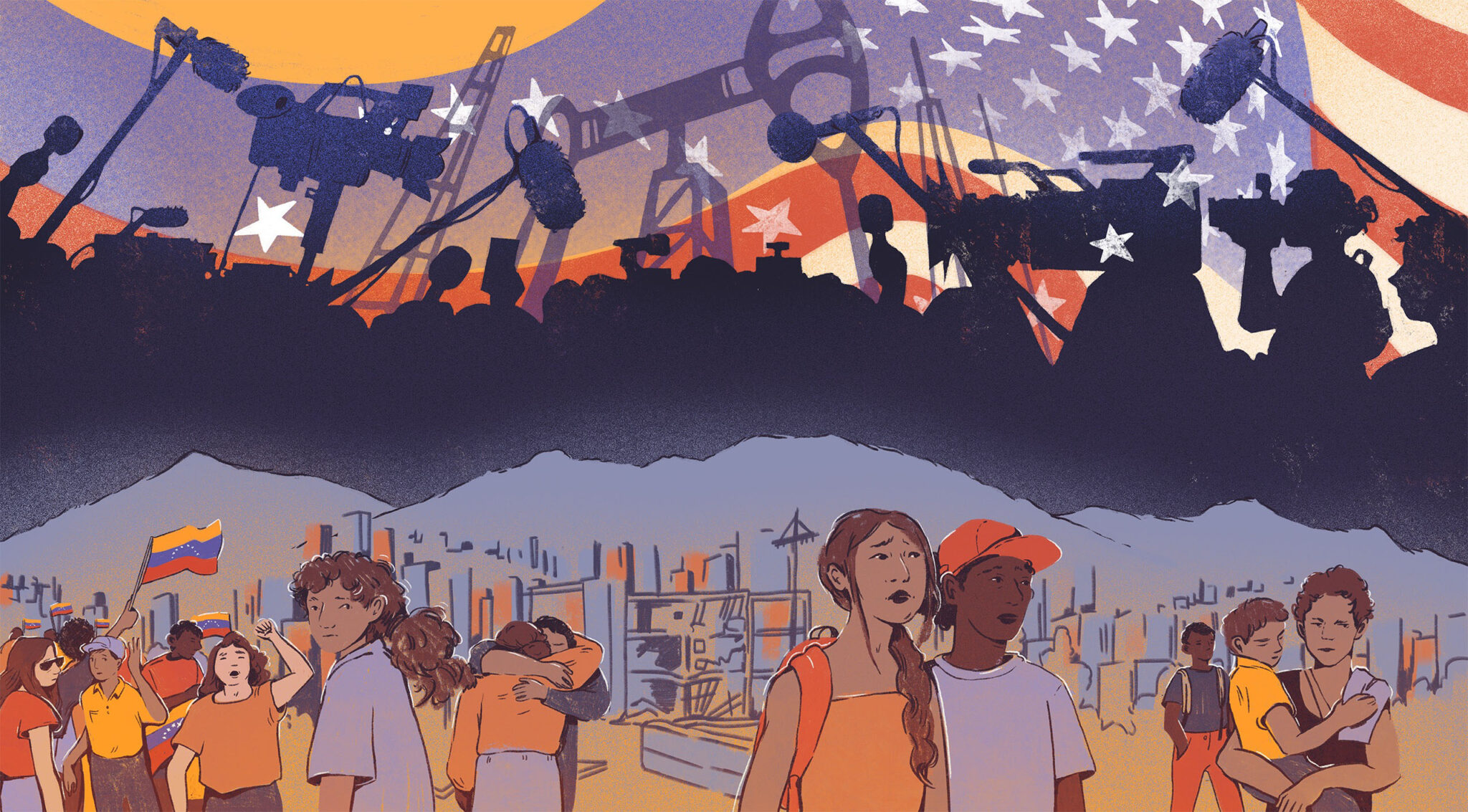
As bombs fall and power shifts, Venezuela is reframed as a geopolitical case study, while the voices of those living through the crisis are pushed aside. The gap between global commentary and lived reality turns human crisis into abstraction and exposes what is lost when journalism explains power while erasing the people who endure it, writes Gabriela Ramirez.
An illustrated woman wearing high heels and a parachute is typing on a laptop

Join our newsletter

Local reporting that challenges global mainstream perspectives

Related Posts

Like all Venezuelans, I have been glued to my phone over the last week following the moment our country is going through and trying to make any sense of the surreal situation of seeing my country bombed by US forces and a years-long dictator removed almost in real time.

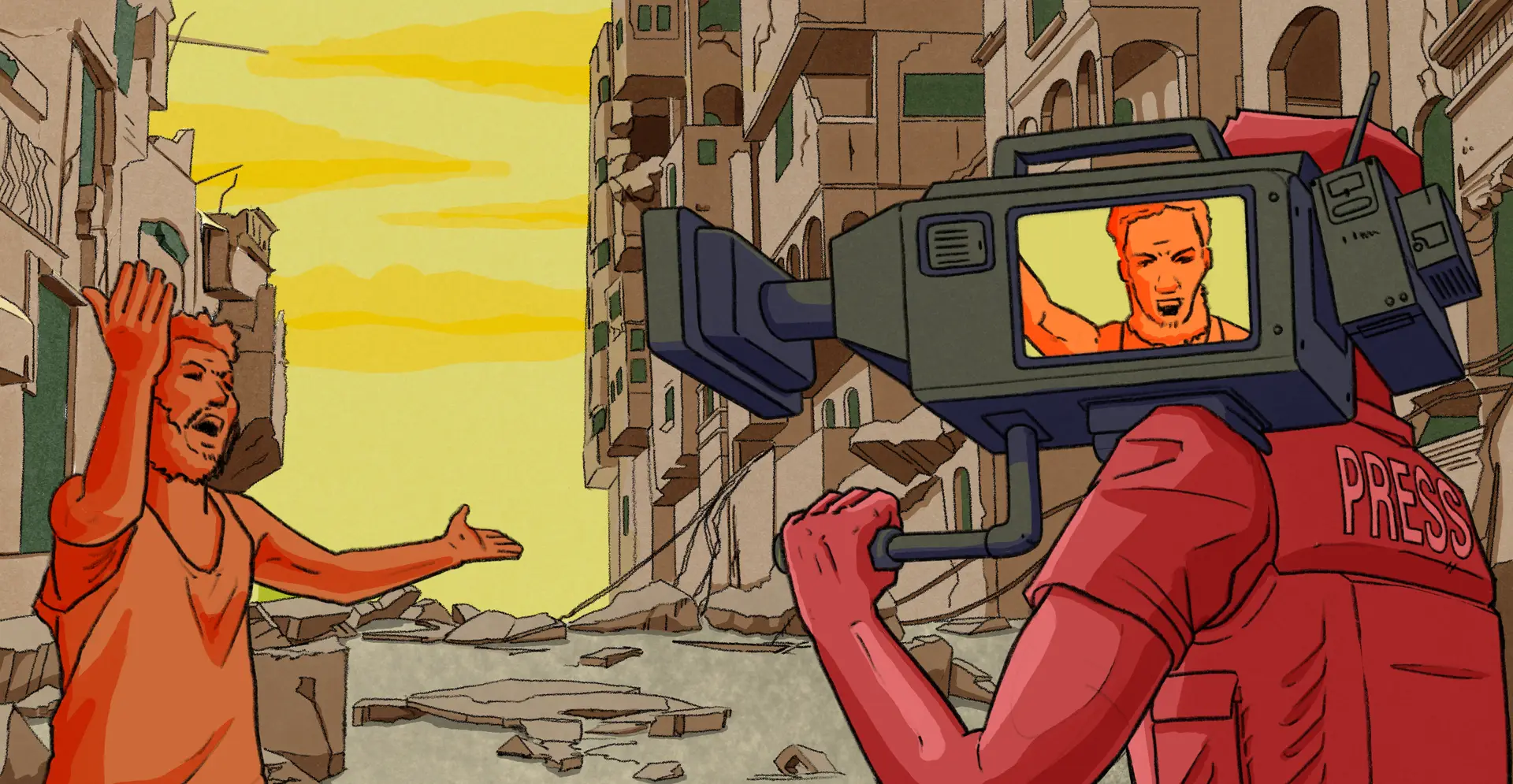
Everything has happened with a speed that borders on the unreal. But as unbelievable and shocking as the events themselves are, what has unsettled me more is how quickly Venezuelans ceased to be the subject of the story at all.

Almost immediately, the media coverage migrated elsewhere toward abstractions of power and sovereignty, international law, toward oil, precedent, and geopolitics.

In the rush to condemn Washington's power, the violence and repression Venezuelans have endured for years were relegated to a footnote.


The conversation was loud and relentless. On social media, debates exploded: outrage at Trump, questions about whether his actions are legal. Others asked whether this set a precedent for Putin and Ukraine. Oil markets have been analyzed, and strategic and economic interests mapped. There is even speculation about whether Marco Rubio’s performance in this chaos might help him become the next US president.

At some point, absurdly, I watched – with a mixture of astonishment and weariness – as the athleisure outfit Nicolás Maduro was wearing on the night of his fall started trending, as if the dictator were an unwitting influencer. As if that mattered.

The suffering of Venezuelans did not fit neatly into dominant narratives, and so it was sidelined. When Venezuela challenges other people’s frameworks, it doesn’t matter if Venezuelans lose their rights, their freedom, or their lives.

You get my point. Very quickly, the conversation stopped being about Venezuelans and became a test case for other people’s political positions and impact. 

While this unfolded, my WhatsApp chats looked very different.

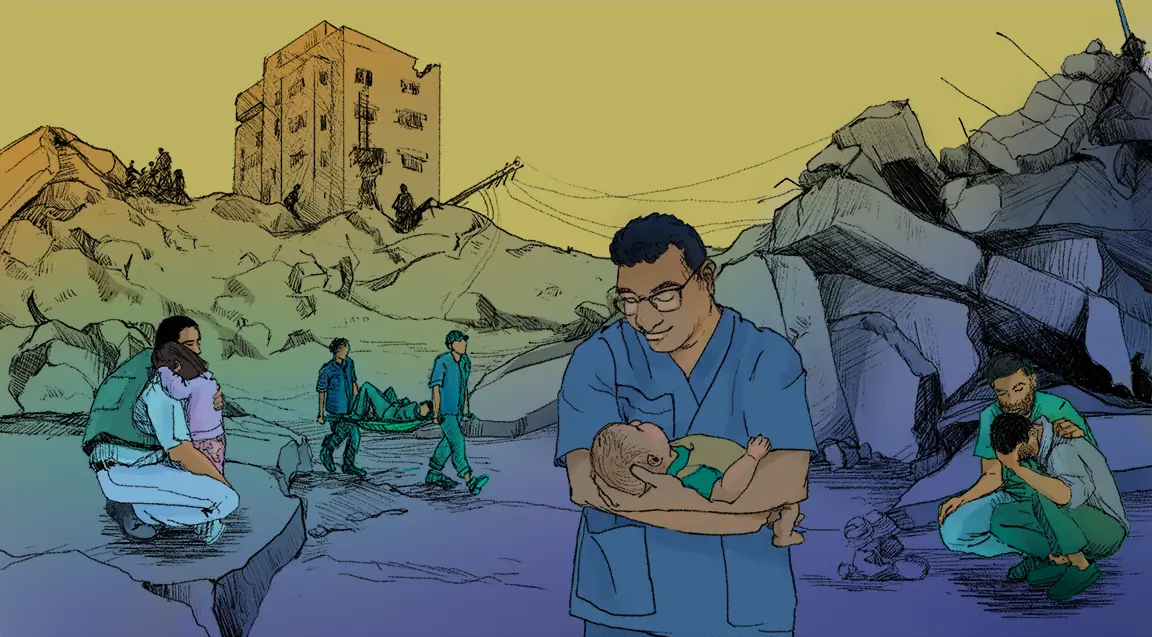
A 46-year-old woman from Caracas, whom I met in July 2024, texted me to ask whether I thought this intervention might help secure the release of her 24-year-old son. He was arbitrarily detained for protesting the rigged presidential elections that year.

An hour later, I received a voice note from another friend, Leidy. She had left her children to care for one another in their home in the mountains of Mérida and traveled to the capital to be with her husband, who is undergoing cancer treatment. Her voice breaking, she described the morning of January 3rd, after the military attack: the fear, the chaos, the checkpoints, lack of transport and the hours it took to bring her husband to the hospital as he writhed in unbearable pain. She wonders if the hospital will finally provide the medications he requires.  Questions that no geopolitical analysis seems prepared to address.

That gap – between what’s being debated abroad and what’s happening at home – has been constant. And it’s not new.

Our reactions are filtered through suspicion or relief, and hope is read as naive, fear as instability, distrust as ingratitude, and celebration as ideological alignment.

Amid the international noise, Maduro began to shift in the narrative. In certain circles, he ceased to be the man who dismantled democratic institutions, stole elections, imprisoned opponents, persecuted journalists, and ruled through fear. He became, rather, a victim of US aggression. In the rush to condemn Washington’s power, the violence and repression Venezuelans have endured for years were relegated to a footnote.

For the first time, many people who had never spoken about Venezuela, never followed its elections, never reacted to the imprisonment of journalists or the killing of protesters, are suddenly expressing strong and confident opinions about what should or should not have happened. 

This is why ‘#FreeVenezuela’ has appeared everywhere, often paired less with concern for Venezuelans than with anxiety over American economic interests, geopolitical alignment, or abstract principles of sovereignty. These opinions are delivered confidently, from positions of safety, and they travel much farther than the voices of Venezuelans themselves. Venezuelans are expected to validate other people’s arguments. Our reactions are filtered through suspicion or relief, and hope is read as naive, fear as instability, distrust as ingratitude, and celebration as ideological alignment.

This raises an uncomfortable but necessary question: why now? Why does Venezuela become urgent only when US power is involved, and not during the many years when Venezuelan oil revenues were redirected to Russia, Iran or China, when institutions were dismantled and when repression was carried out under the banner of a left-wing government that conveniently aligned with certain ideological worldviews?

For a long time, Venezuela’s collapse was tolerated, relativized, or explained away because acknowledging it would have complicated ideological loyalties. A dictatorship cloaked in anti-imperialist language was easier to ignore than to confront. The suffering of Venezuelans did not fit neatly into dominant narratives, and so it was sidelined. When Venezuela challenges other people’s frameworks, it doesn’t matter if Venezuelans lose their rights, their freedom, or their lives.

In a country where courts do not function, elections are staged, and independent media is persecuted, lived experience is not a weakness: it is one of the few reliable sources of truth left.

As international debates harden into positions, I have been speaking almost constantly with friends, family and sources in Venezuela. What they describe bears little resemblance to the dominant coverage, not because they are ignorant, but because their reality is fragmented, contradictory, and shaped by years of repression that do not resolve neatly into ideological categories. 

This moment is hard to cover honestly because it does not offer a clear moral position that feels comfortable. On the one hand, there is a corrupt, dictatorial regime responsible for countless human rights violations. On the other hand, there is foreign intervention led by a bold US president many Venezuelans deeply distrust, someone whose disregard for democratic norms and human consequences is not theoretical, but something Venezuelans have already felt through deportation and hate speech. There are two bad actors. That reality is inconvenient, and it resists simple storytelling.

Too often, journalism responds to that discomfort by creating distance. Lived experience is treated as biased, emotional, or unreliable, while commentary from afar is treated as neutral and authoritative. But in a country where courts do not function, elections are staged, and independent media is persecuted, lived experience is not a weakness: it is one of the few reliable sources of truth left.

When my aunt says she does not care who governs next as long as the left armed groups, “colectivos,” disappear from her neighborhood, she is not expressing political indifference. She is describing what survival looks like after years of fear. When a human rights activist friend sends me autodelete voice notes, he is not being overly cautious, he is responding to a long history of retaliation that people outside the country rarely have to factor into their calculations.

As the story grows larger, these very personal realities are pushed aside. Venezuela becomes a symbol, a lesson, a warning, or a precedent, rather than a country whose future is still being contested by those who live there. Maduro can be softened into a victim, and Venezuelans become supporting characters in a debate driven by people who have never lived what we have lived – not in Venezuela, nor anywhere else. 

Venezuelans do not need to be rescued by the narrative; we need to be present in it.

If journalism is meant to challenge power rather than orbit it, then it cannot afford to turn societies into terrain, especially at the precise moment when their voices are most inconvenient to the dominant frame. Venezuelans do not need to be rescued by the narrative; we need to be present in it, not as emotional witnesses to someone else’s argument, but as political subjects whose lives, fears, and expectations shape what this moment actually is.

Until that happens, the coverage will continue to tell a story about Venezuela without Venezuelans.

About the author:

Gabriela Ramirez is an investigative and multimedia journalist based in Berlin. She collaborates across borders to tell compelling stories that spotlight underrepresented communities. Covering stories from Venezuela’s political crisis to border violence in Europe and the impacts of climate change and deep-sea mining on coastal communities, she combines data-driven insights with human-centered storytelling, often through a gender lens. She is part of the Border Graves investigation team that uncovered 1015 unidentified migrant graves across Europe. She is also the Multimedia Editor at Unbias The News/Hostwriter, where she has worked on projects like The Sinking Cities Project and the Brain Waste Investigation. Her reporting has earned international recognition, including the European Press Prize, IJ4EU Impact Award, and the Lorenzo Natali Prize.

Read more Unbias viewpoints:

An illustrated woman wearing high heels and a parachute is typing on a laptop

Join our newsletter

Local reporting that challenges global mainstream perspectives

Latest articles

“The people who face the most barriers are often those who need our care the most – and yet their voices are not the ones we hear in maternity care." ​
For decades, Moroccan immigrants have called La Cañada Real home. Now, real estate speculators are closing in on the informal settlement. Authorities are starving the community of basic infrastructure and demolishing homes. But women are pushing back against eviction and uniting against oppression from outside their community and within.
Since the Assad regime fell in December 2024, Europe’s 1.4 million Syrian refugees have been navigating the legal, emotional and security challenges of going back to a country they thought they may never see again.

Help us fight for a more inclusive journalism