Panthers in the promised land: Race, Zionism and the Black Panthers of Israel
- Written by Alissa Brook
- Edited by Ruby Russell
- Illustration by Smaranda Tolosano
Follow us here:
Key tactic: Legislative lobbying
Legislative lobbying is ecompasses activities designed to bring about the passing (or defeat) of a certain law. Providing draft legislation, meeting with elected officials, organizing advertising or informational campaigns about the law or laws are all part of the process. Both civil society organizations and private companies and individuals can engage in lobbying.
Key tactic: Direct action
Direct action refers to political activity that publically leverages economic or physical power to block or disrupt the status quo. Strikes, protests, blockades, and sit-ins are all examples of direct action.
Key tactic: Humor
From satirical poems mocking Roman Emperors to sketches of France’s King Louis-Philippe as la poire (the fruit became an instantly recognisable visual shorthand of the 19th century monarch’s jowly face), the use of memes to ridicule power has a history much older than the internet.
Key tactic: Public spectacle
Often combined with direct action and/or humor, happenings that grab public attention spur public debate. XR’s die-ins, giant puppets at Occupy demos or Pussy Riot’s provocative performances might delight some and anger others, but they get people talking.
On a chilly night in March 1972, a shabby pickup truck pulled up in Rehavia, one of Jerusalem’s poshest neighborhoods. A few shadowy figures might have been spotted slinking through the leafy streets, loading crates into the truck before it sped away. Hours later, when residents rose from their beds and stepped outside to collect their daily milk delivery, the bottles were gone. In their place lay notes that read: “We thank you for giving away your milk to hungry children, instead of to the dogs and cats in your homes. We hope this operation inspires you to contribute to the war on poverty.”
Across the city, residents of Asbestonim, a neighborhood of asbestos shacks built to house impoverished immigrants, also found a note – accompanied by the unexpected gift of fresh milk. “This is a reminder to all citizens, to the government, and especially to you, that we care. The children here don’t have the milk they need. Meanwhile, in the rich neighborhoods, cats and dogs have milk every day,” the note read – and concluded with a call to action: if they wished to continue enjoying milk, they must join the struggle. It was signed by The Black Panthers of Israel.
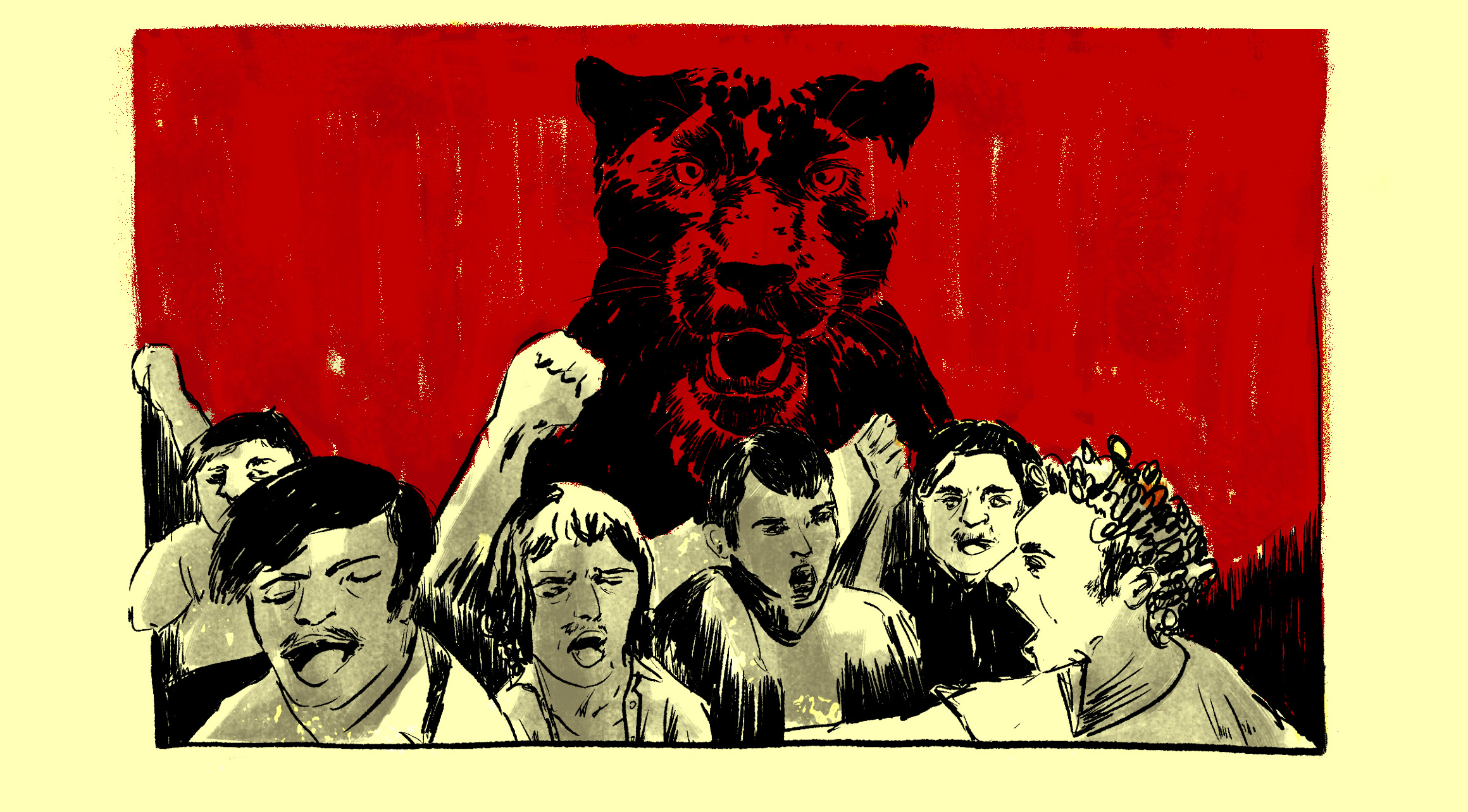
The milk had crossed a line Jerusalem’s residents knew well. In 1970s Israel, Ashkenazim – Jews of European descent – dominated wealthy neighborhoods like Rehavia, while many Mizrahim – Jews from Muslim countries – lived in poverty and systemic exclusion. The Israeli Black Panthers staged protests and provocations that put class and ethnic discrimination in the headlines. Drawing parallels between Mizrahim in Israel and Black US Americans they exposed the betrayal of Zionism’s promise of a homeland where all Jews could live in dignity. By invoking the Black Power movement, they made their struggle a fight against racism, not a plea for charity.
Little more than two years after they catapulted from the Jerusalem slum of Musrara onto the public stage, the movement had all but burned itself out. Yet in that short time, they helped reshape Israeli social policy and raised questions about Zionist identity that remain all too relevant today.
A homeland for all Jews?
Zionism was born in late 19th-century Europe, amid persistent antisemitism and a wave of nationalism sweeping the continent. It envisioned a homeland of Jewish sovereignty. At the same time, the settlement of Palestine was also conceived as an “an outpost of civilization” in the Middle East.
When Israel was founded in 1948, its guiding ideology aimed to bring in enough Jewish immigrants to secure a demographic majority over Arab locals. But by then, the Holocaust had decimated Europe’s Jewish population. Survivors who fled often chose the United States as their destination, and many who remained in Europe were trapped behind the Iron Curtain.
“Although Zionism claims to provide a homeland for all Jews, that homeland was not offered to all with the same largesse.”
Ella Shohat
The Zionist leadership, which had scarcely considered Jews from the Muslim world, now urgently sent Jewish Agency emissaries to recruit hundreds of thousands from Jewish communities that had been established in Morocco, Iraq, Egypt and Syria for centuries. Yet this new wave of immigrants discovered that while their Jewishness mattered for demographics, their cultural heritage marked them out as outsiders representing a ‘backward,’ ‘Levantine’ culture. As postcolonial scholar Ella Shohat observes, “Although Zionism claims to provide a homeland for all Jews, that homeland was not offered to all with the same largesse.”
Reuven Abergel was seven years old when he and his family arrived in Israel from Morocco. Now in his 80s, he lives in a tiny East Jerusalem flat stuffed with books, old newspapers, photographs and sheaves of documents, through which are woven strands of his own story: that of a child of hopeful immigrants, who went on to lead one of Israel’s most misunderstood political movements.
Abergel pulls out a book with a reprint of a 1949 Haaretz article and reads aloud Ashkenazi journalist Aryeh Gelblum’s description of a race “entirely subject to their primitive and savage instincts,” criminal, ignorant and “chronically lazy.” Abergel’s voice quivers with undiminished rage as he sets down the book and declares: “What Gelblum did was take Goebbels’ doctrine and apply it to Moroccan Jews.”
The Israel of 1949 was governed by Mapai – which would later become the Labor party – and saw itself as a Zionist democratic state. Yet it tended to be Ashkenazi immigrants who received tax breaks, housing subsidies and better-located apartments, while Mizrahim were settled in transit camps and makeshift ‘development towns’ in border areas. At a cabinet meeting in 1956, a government official said, “we won’t be able to put the Poles in shacks, for them we need reasonable housing.”
Life in an Israeli ghetto
Sephardim, Edot Ha-Mizrah and Mizrahim are often used interchangeably to describe non-Ashkenazi Jews, but these terms reflect distinct histories and identities.
Sephardim originally referred to Iberian Jews who dispersed across Europe and the Ottoman Empire after being expelled from Catholic Spain in 1492.
In 19th-century Palestine, a Sephardi elite associated with European roots and Ottoman privilege often looked down on local Arabic-speaking Jews. The Ashkenazi-led Israeli state lumped together both
communities, along with jewish immigrants from other Arab-speaking lands, as Edot Ha-Mizrah (Eastern Ethnicities).
Out of this repression and waves of resistance against it, Mizrahi emerged as a political identity. Sephardi, meanwhile, increasingly became a marker of religious and cultural tradition, later mobilized by the orthodox political party Shas.
The Israeli Black Panthers were not the first to protest discrimination against Israel’s ‘Eastern’ Jews.
In July 1959, residents of Haifa’s predominantly Moroccan slum of Wadi Salib took to the streets after police shot and killed a local man. Demonstrators carrying black flags, and an Israeli flag stained with blood, smashed property in Haifa’s wealthier districts and attacked the local Mapai office. Police responded with violence and mass arrests.
Wadi Salib was later evacuated and demolished.
For the generation who raised Panthers, the message was clear: challenging the state risked losing what little they had. As historian Henriette Dahan-Kalev has argued, Wadi Salib became a traumatic memory the state wanted to suppress; when the Panthers rose up in 1971, it hit back with a repeat of 1959’s repression.
Both uprisings erupted after military victories that brought uneven economic gains, emerging from Mizrahi slums that bordered prosperous new developments.
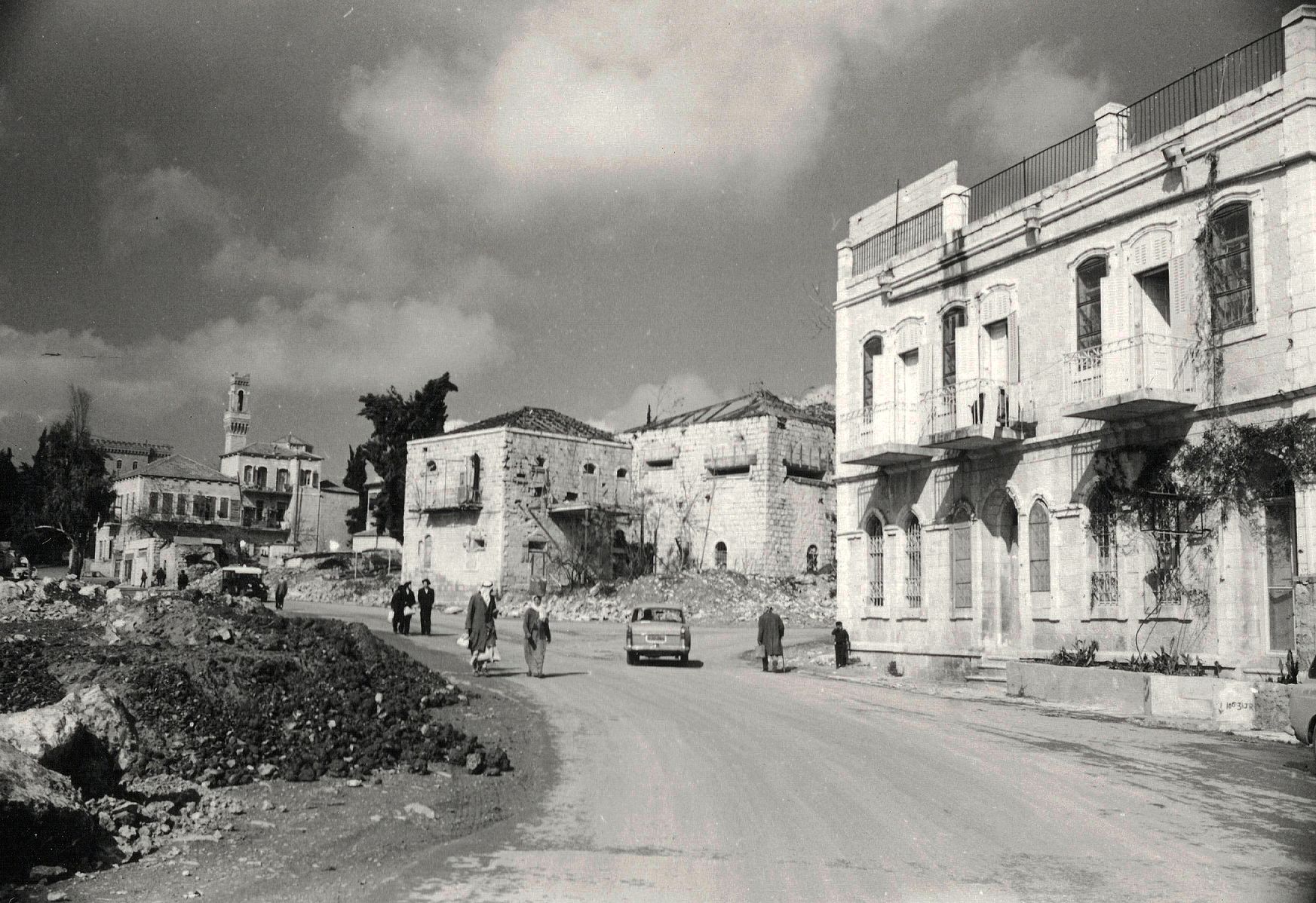
Before the 1948 war – remembered by Palestinians as the Nakba, or catastrophe, which drove more than half their population from Palestine – Musrara had been a prosperous Arab neighborhood of East Jerusalem. With Israeli occupation, it became a no-man’s land between Israel’s new border – the Green Line – and Jordan. Whole families like Abergel’s were crammed into single rooms of the homes Palestinian refugees had been expelled from. Neglected and overcrowded, its Mizrahi residents relegated to poorly paid, low-skilled jobs, Musrara crumbled into disrepair.
Ya’akov “Koko” Der’i was born into this community after his parents arrived from Morocco in 1950, and still lives in the house he grew up in. Today his cozy flat, filled with objects he has crafted himself, blending Eastern patterns with vintage Western styles, occupies the entire upper floor. Its most spacious aspect is a terrace that wraps the entire upper floor, with panoramic views of the neighborhood that birthed the Israeli Black Panthers.
Leading the way up, Der’i recalls how as a child he played in a local “swamp” amid daily sniper fire between Jordanian and Israeli border guards. He looks out over a parking lot where tour buses pull up in front of the Damascus Gate and describes a bygone topography. “You want to know where the swamp came from?” he asks with a westward sweep of his arm toward a knot of alleyways where sprays of blossom rise between stone houses dating back to the Ottoman empire. “Right there. An open sewer flowed down on us – the sewage of the ‘fathers of the nation,’ of Rehavia. The wealthy. They had everything. We lived in desperate poverty. A ghetto.”
Der’i and Abergel attended the impoverished local elementary school. Der’i describes substandard education delivered by religious Ashkenazi schoolmasters who punished Mizrahi pupils for speaking Arabic. “No notebooks, no food,” he says. “You sit there hungry. You get out hungry. You go home, there’s no one there, the house is a wreck, no products, nothing. You go to the street, where there are only others like you: hungry. It’s not ‘nothing’ as you know it. It’s nothing–nothing.”
Like many Musrara boys, Der’i and Abergel dropped out of school early and faced a vicious cycle of street life, delinquency, reform schools, prisons, unemployment, poverty and an ever-present threat of police brutality. But after Israel took the West Bank and East Jerusalem in the 1967 Six Day War, the map was redrawn in ways that both increased pressure on their marginalized community and opened it to new influences, ideas and alliances.
From hinterland to intersection
“Slowly, we began to understand that our enemies were not the Palestinians or the police. Our enemies were the Zionist movement, which supported Mapai and all the Zionist parties, giving them the power to suppress groups that were different from them.”
Reuven Abergel
The war suddenly transformed Musrara from a rundown frontier to a central piece of real estate connecting the Old City and the West Bank to the Jewish-dominated rest of Jerusalem. Israel rapidly constructed Jewish settlements on the newly occupied land, fueling what remains the state’s biggest economic boom to date. But while Ashkenazi investors, contractors and entrepreneurs profited, Mizrahim found themselves competing against Palestinian laborers for work.
Life in Musrara became even harder – and it did so in the shadow of the modern, state-funded apartment blocks being built in occupied East Jerusalem to house Ashkenazi immigrants from the Soviet Union. Property developers began eyeing Mizrahi homes, and residents feared they would be displaced from Musrara by Soviet immigrants, as they had displaced the Palestinians driven out in 1948.
At the same time, Mizrahi youth encountered the newly occupied Old City’s Palestinian residents, with whom they shared both a mother tongue and a sense of exclusion from the Israeli state. “The Palestinians from Ramallah, Nablus, Jenin – these were our friends. We opened businesses together; cafes, bars,” Abergel recalls. “Slowly, we began to understand that our enemies were not the Palestinians or the police. Our enemies were the Zionist movement, which supported Mapai and all the Zionist parties, giving them the power to suppress groups that were different from them.”
Ashkenazim, meanwhile, “lived in the same country as me, but I didn’t know any of them … whenever I was in prison or a juvenile delinquents’ institution, none of them were there,” Abergel says. Yet as their neighborhood became a bustling crossroads between East and West, Arab communities and Israeli settlements, the street boys of Musrara also found themselves breaking bread with Ashkenazi students.
“We had hashish and they didn’t even know what it was!” Der’i laughs. “So we gave them a smoke. They told us that since they were children they’d hear from their parents, ‘God forbid you go into those neighborhoods, meet those primitive Blacks. Stay away from them’ – that’s what they were always told. Suddenly, they saw something completely different.”
Some of these Ashkenazi youths were members of Matzpen, a small, predominantly Ashkenazi socialist and anti-Zionist organization aligned with the international anti-imperialist New Left. Full of revolutionary zeal but comfortably removed from the oppression they wanted to fight, Matzpen were drawn to young Mizrahim as comrades. As allies, Matzpen would offer the Mizrahim media knowhow, strategic connections and experience in political organizing.
Abergel says the authorities were quick to shut down Jewish-Palestinian owned businesses. But they couldn’t shut down the conversations that happened in them. Jewish-owned cafés like the Yellow Tea House and Café Ta’amon in Musrara buzzed with debate between Ashkenazim and Mizrahim, New Leftists and right wingers, Palestinians under occupation and hippies visiting from the United States. Parallels were drawn between the imperialism of the Vietnam War and Israel’s colonization of Palestine.
It was in this melting pot of ideas that a band of neighborhood kids – including Abergel, Der’i and their comrades Sa’adia Marciano, Charlie Biton and Kochavi Shemesh – learned of a movement whose struggles resonated powerfully with their own: the Black Panthers in the United States.
‘The newspaper created us!’
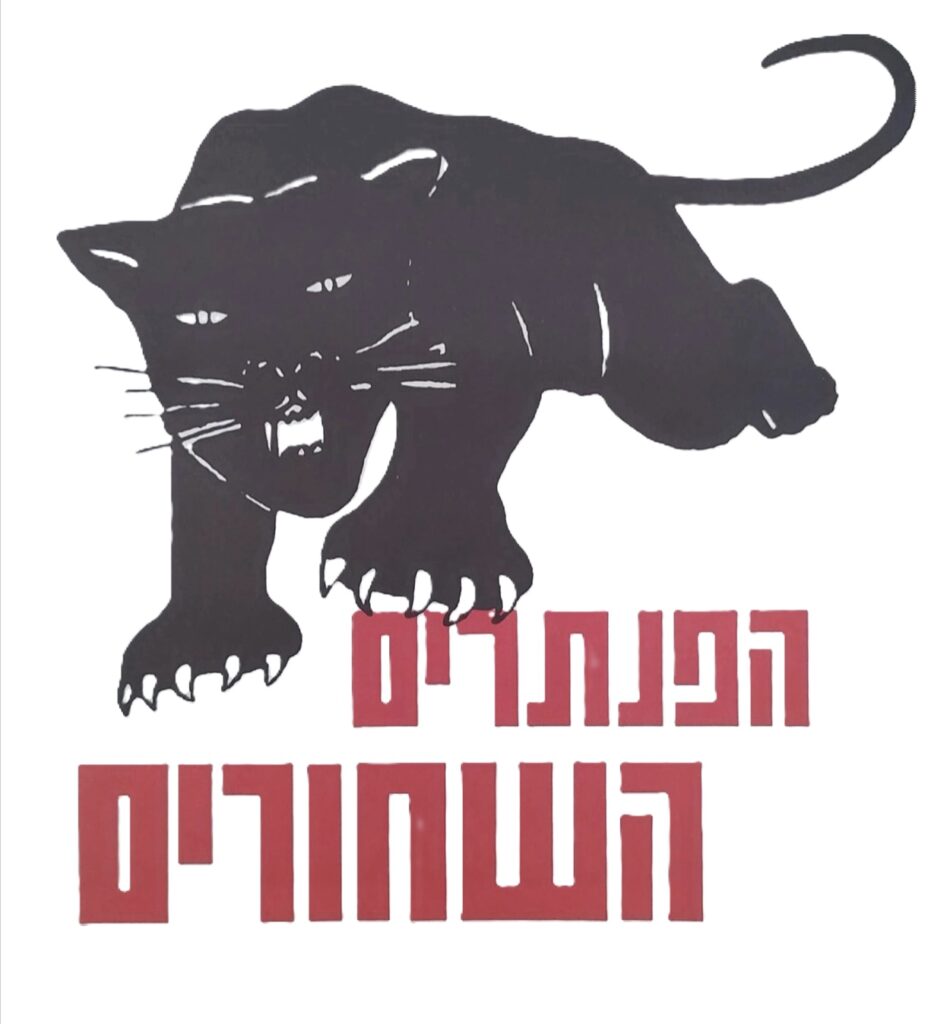
Though I use the contemporary term Mizrahim in this article for expediency, it was only widely adopted in the 1980s. Before that, Edot HaMizrach – meaning Eastern ethnicities – was the collective term that flattened distinct histories of Palestinian, Iraqi, Egyptian, Syrian and Moroccan Jews into a generic oriental identity – despite most coming from countries geographically west of Israel. Shohat calls it an “imagined community” constructed by a Zionist ideology that claimed land in the Levant while maintaining its cultural center of gravity in Europe.
Neither would Mizrahim have been considered ‘Black’ – at least in the United States. But they had experienced the term as a racial slur. Schwartze hayes – black animals – was among the most offensive insults Ashkenazim might sling at them. In the US Black Panthers, they found a movement that turned this insult into a symbol of pride, resistance and international solidarity. Yet as a public-facing movement under the name, the Black Panthers of Israel were born almost by chance.
In January 1971, a journalist came to Musrara to report on the impact of cuts to social services. A social worker told him of a meeting at which one youth yelled in frustration, “If they don’t help us, we will be the Black Panthers of Israel!” Using this quote for a headline, the Al HaMishmar newspaper had a much bigger story – of a rumored movement mobilising “against the Ashkenazi government and the establishment.” It instantly caused a stir. Der’i recalls how even Musrara residents who rarely read the papers heard the news of an uprising emerging in their midst. “The newspaper created us!” he laughs, clapping his hands.
The sudden public interest unleashed by that article had everything to do with the menace in their name. Two years earlier, a US Black Panther leader had made the group’s sympathies clear: “Zionists, wherever they may be, are our enemies. We totally support the armed struggle of the Palestinian people against the watchdogs of imperialism,” Eldridge Cleaver had said in a December 1969 interview. Israeli commentators had branded the US Panthers antisemites.
Kochavi Shemesh later said that from its inception, the movement deliberately capitalized on the shock that Black Panthers emerging within Israel itself struck into the heart of the Israeli establishment – all the way up to Prime Minister Golda Meir. “The idea was to frighten Golda,” he told historian Sami Shalom Chetrit in 2001. “We heard that she couldn’t sleep at night because of this name, so we said, we succeeded, that’s what we wanted to achieve.”
Reclaiming Black identity rooted the Israeli Panthers’ struggle in solidarity with an international movement against racist imperialism. They called gatherings of Mizrahi day laborers “slave markets” and dubbed their neighborhood ‘Harlem–Musrara’. But Der’i insists the Israeli Panthers were never separatists. “We asked to be recognized, we asked for participation, we asked to be together. We wanted education, we wanted culture – we didn’t hate them,” he says of the Ashkenazim. “Our demand was just: include us, we want equality, we want to be like you!”
‘Enough!’
“We are a group of fucked-up youth, calling upon all who are fed up.”
Black Panthers protest flyer
That spring, the Panthers organized their first public protest under the energetic leadership of Sa’adia Marciano. They announced the action with flyers titled Enough! that called for an end to their discrimination and deprivation, to police brutality in Mizrahi neighborhoods, and for housing justice. It asserted “our right to be like all the citizens in the country” and deliberately used street language: “We are a group of fucked-up youth, calling upon all who are fed up.”
On March 2, 1971, the night before the protest, Marciano and other Panther leaders were preemptively arrested. But their march on City Hall went ahead regardless, with Abergel, who had escaped arrest, addressing the crowd. It was small: just a handful of Musrara residents supported by a greater number of Ashkenazi students and intellectuals, whose presence likely shielded the Mizrahi activists and kept the protest peaceful. The closest brush with confrontation came when Mayor Teddy Kollek leaned out of a window to shout, as if at a bunch of unruly children, “Get off the grass!”
Still, politicians and the media reveled in the outrage of unruly gangs or patronized the Mizrahi protestors as “captured infants” under the sway of anti-Zionist New Left groups like Matzpen and the US Black Panthers.
Yet while politicians publicly sneered the Panthers’ antics, behind the scenes there may have been genuine panic. Even before the Panthers’ first protest, in the weeks after rumors of existence were first reported in the Israeli press, Meir had appointed a committee to investigate juvenile delinquency. In April, it was rebranded the Prime Minister’s Committee for Children and Youth in Distress, and its focus broadened to examine root causes of economic inequality.
It would be another two years before the committee published its findings, but just four days after the March protest, Maariv reported that the government had allocated an additional 80 million Israeli pounds to social services in Jerusalem, under the sardonic headline: The Black Panthers Helped the Government ‘Find’ the Budget.
Meeting Mrs Meir
A band of young men who had grown up facing police batons if they dared wander into upper-class Ashkenazi neighborhoods were suddenly making headlines for setting government spending policy. It’s little surprise then, that the Panthers naively believed “all the problems would be solved by the government, if only they were brought to their attention,” as Panther Shalom Cohen recalled in a 1976 interview. The next logical step, they decided, was to sit down and explain things to the prime minister herself.
Their first request for a meeting was met with evasion. So in April 1971 they upped the ante and began a hunger strike at the Western Wall, betting that Jewish protesters starving in full view of tourists – particularly Americans, on whom Israel relied for financial and political support – would pressure the government into action. Abergel later told Davar the impact was like hitting the jackpot at a casino: they quickly received an invitation to Golda Meir’s office.
Until then, the Panthers had dealt with the authorities only in courtrooms and jails. Now they faced a private audience with the pinnacle of state power, and they didn’t take it lightly. Their delegation brought thirty-three proposals for housing, education and welfare reforms, backed by statistical data prepared with help from students at the Hebrew University of Jerusalem.
Meir didn’t want to hear. She demanded to know what connection they had to the US Panthers, whom she described as antisemitic. She brushed aside their claims of systemic inequality, saying she’d heard it all before, and repeatedly interrupted to ask why they didn’t work and whether they had criminal records. “It’s true that there is poverty in Israel,” the prime minister said, “but I do not accept that there is discrimination.”
The delegation found themselves depicted in media reports as the side whose “uncivil” behavior – raising their voices and making themselves too comfortable in her office – clashed with the refined presence of Mrs Meir (one anecdote, repeated often enough to become part of Panther legend, maintained that they had indeed smoked their way through her entire pack of expensive Chesterfields). That Meir had agreed to meet them at all was a major achievement that lent the Panthers a degree of legitimacy. But civilized conversations in secluded offices of power clearly weren’t going to cut it. To be not just heard, but listened to, they had to keep shouting their demands from the streets.
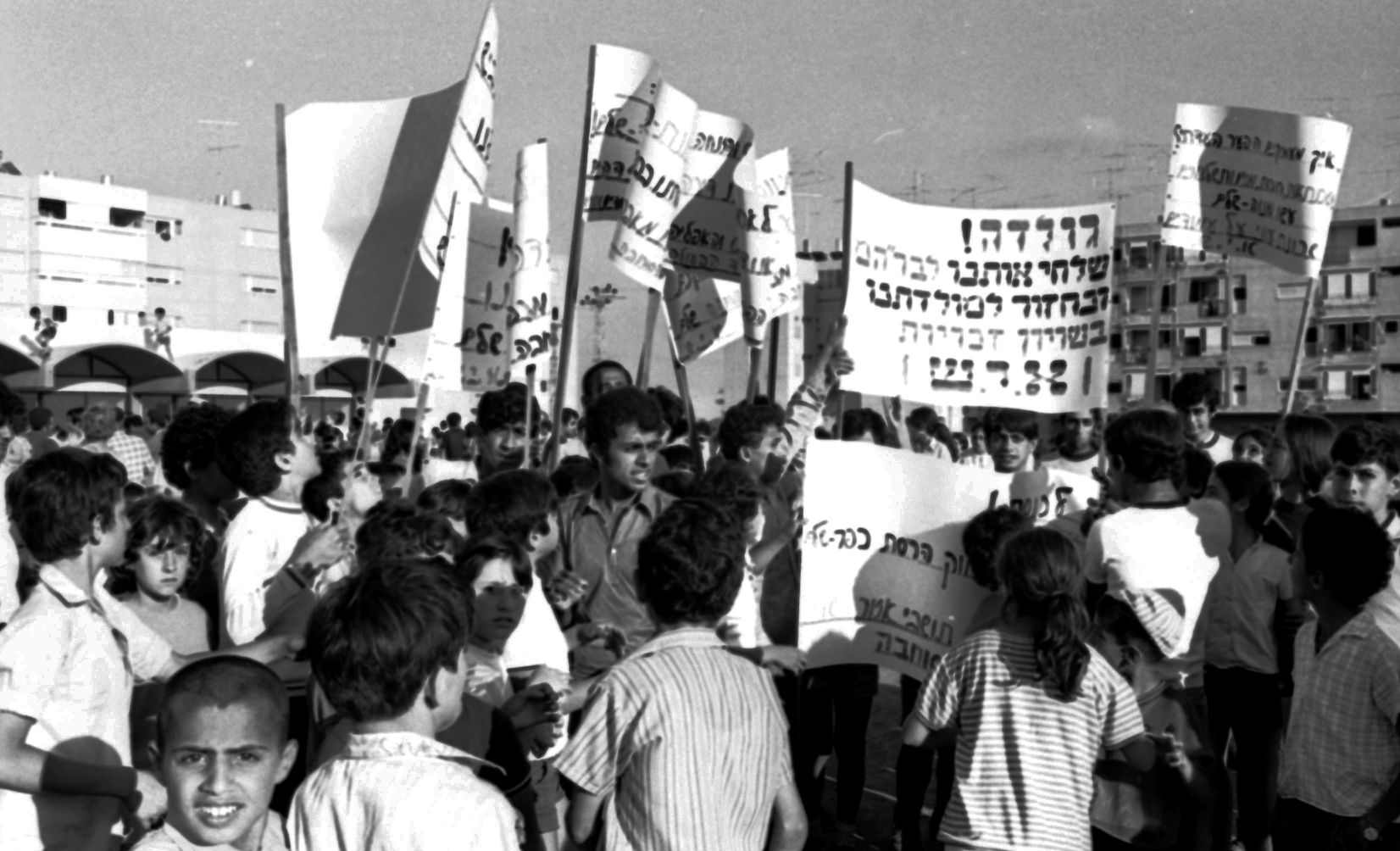
The Night of the Panthers
“How can a Jewish hand throw a Molotov bottle and set buildings on fire? ... They are not nice guys.”
Gold Meir
A few weeks later, on May 18, the Panthers rallied a crowd of 7,000 for what would be remembered as The Night of the Panthers. It was also a night of unprecedented police violence. Chants of “police state!” rang out as cops laid into activists with boots and batons and the Panthers fought back.
At one point, Molotov cocktails were thrown at mounted police. Panther members have since insisted that the makeshift bombs were instigated by Yaakov Elbaz, whom documents released from state archives in 2007 would reveal as a police informant. But in the immediate aftermath of the violence, Meir framed it as a betrayal of natural loyalties: “How can a Jewish hand throw a Molotov bottle and set buildings on fire? … They are not nice guys.”
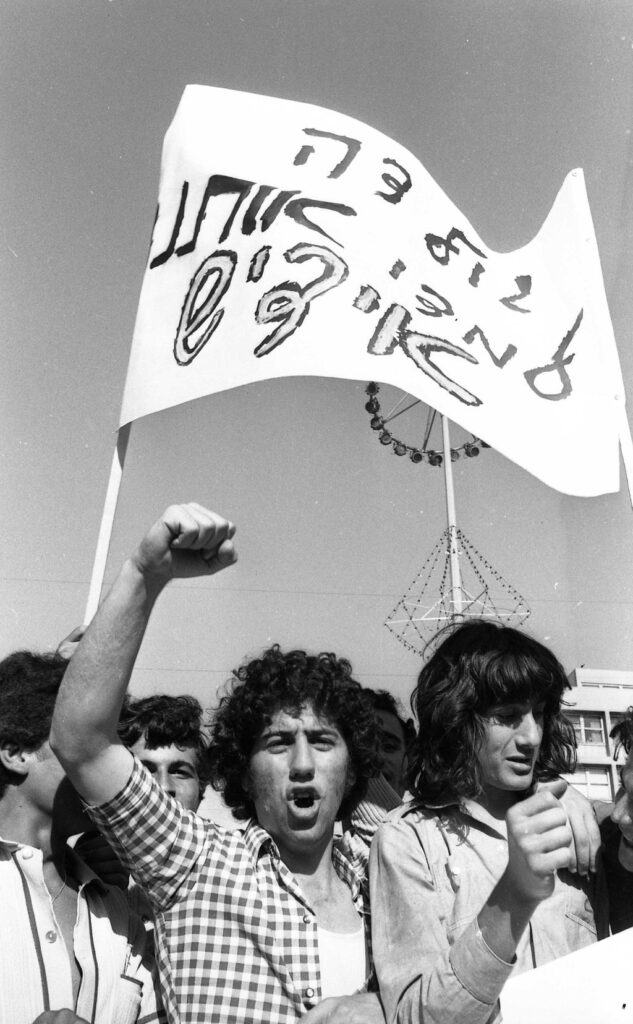
The Israeli media, too, squarely blamed the protesters, not the police, for the violence. Even the New York Times, while radically downplaying the size of the protest, echoed Meir’s insinuation that the Israeli Panthers were un-Israeli, calling them “extremists” whose grievances were not the result of systemic discrimination but their parents’ failure to adapt to Israel’s “Western way of life.” But the exposure made them a household name and the public were enthralled.
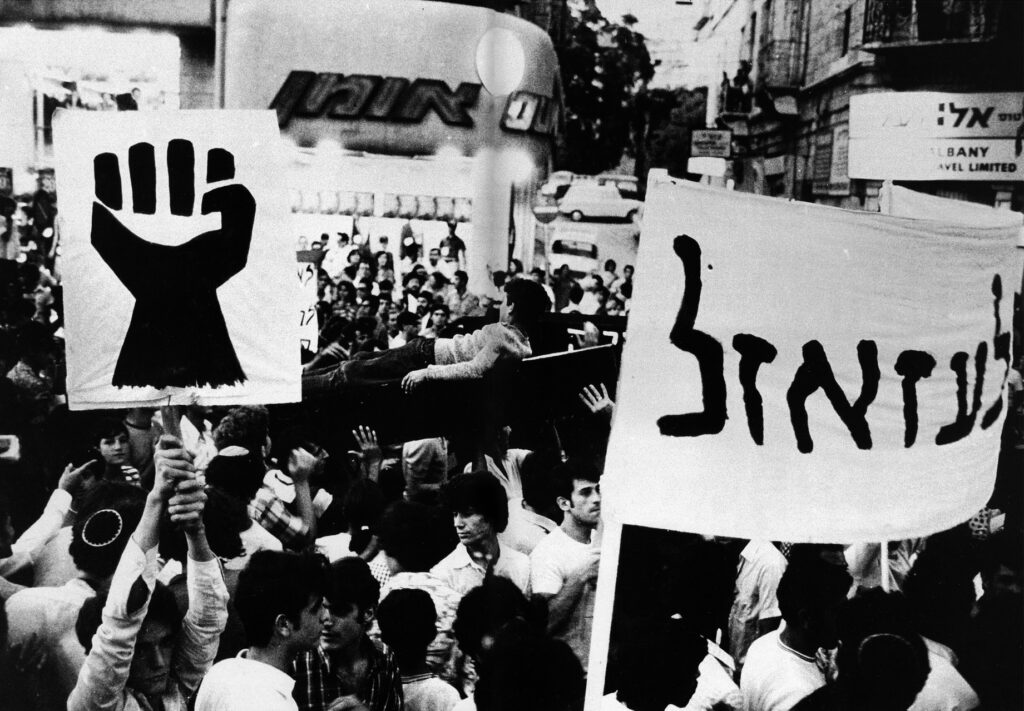
Love them or hate them, the Israeli Black Panthers’ knack for provocation and spectacle made them the best show in town. At one protest they carried a placard mocking Meir, depicted naked with a Pinocchio nose and wings: “Golda, Golda, fly away, everyone is sick of you” (it rhymes in Hebrew). Another action took the form of a mock funeral procession carrying coffins to bury discrimination once and for all. And they were skilled at turning the authorities’ contempt back on itself. Mayor Kollek’s outburst at their first protest became symbolic of an out-of-touch Ashkenazi elite: on subsequent demos the Panthers carried placards reading, “Teddy, we want grass lawns in our neighborhoods too!”
With Operation Milk, and actions to ‘liberate’ food from warehouses to feed struggling families, or to mark down supermarket prices in poor neighborhoods, the Panthers combined headline-grabbing interventions with a form of direct action. And in one (unverified, and variously told) episode of the Panther legend, they released live rabbits into the home of a state official, playing on ‘rabbit’ as slang for coward. “Back then, they were all terrified of Golda – scared to death,” Der’i says.
The Panther press
Yet Der’i stresses that behind the theatrics were visceral pain and anger. Half a century later in his Musrara apartment, we leaf through an album of photos from these days of daring interventions. He is pensive, silently scanning snaps of his younger self and comrades at street protests. “The struggle wasn’t some fun thing,” he says. “Look at us, no smiles, so thin … We came hungry and desperate. We were depressed by the situation, scared from the brutal beatings of the authorities.”
For all the Panthers’ wit and bravado, their demands were profoundly serious – and aligned with a global discourse of left-wing resistance. They produced a pamphlet calling for revolution by the “menial black laborer” against “site managers, factory owners, bosses,” and threatened the Israeli state itself: “A state in which half the population are kings and the other half are treated as exploited slaves – we will burn it down.” Adopting the raised fist and militant slogans of the US Panthers, they signed their fliers, “Command of the Black Panthers in Israel, Jerusalem.”
Releasing rabbits and liberating milk made headlines, but the mainstream media didn’t engage with their radical critique of Israeli inequality. Instead, the Panthers turned to self-published newsletters, where they could set out their politics in their own terms. On a stolen typewriter in his tin shack in Musrara, Abergel and his comrades composed The Israeli Black Panthers Haggadah, a satirical reimagining of the Passover tale of Jewish exodus from Egyptian slavery to liberation in the Promised Land – a foundational narrative for the Zionist project – as a Mizrahi exodus from bondage in Ashkenazi Israel, with Golda Meir cast as the Pharaoh.
The first Panthers’ Word, a newsletter of fiery calls for workers’ solidarity, practical proposals for reform, biting social critiques and deep dives into Mizrahi history, was published in June 1971. The aim was to inform readers and show them they weren’t alone in their struggles, amplifying voices usually unheard, and gathering personal testimonies into collective narratives of resistance. “You have brought hope to me and other friends of mine who ‘work’ and want to break free from this,” read a letter from a sixteen-year-old sex worker published in the second issue of the Panthers’ Word. “We often talk about the ‘Black Panthers’ among ourselves.”
Blood in the cracks
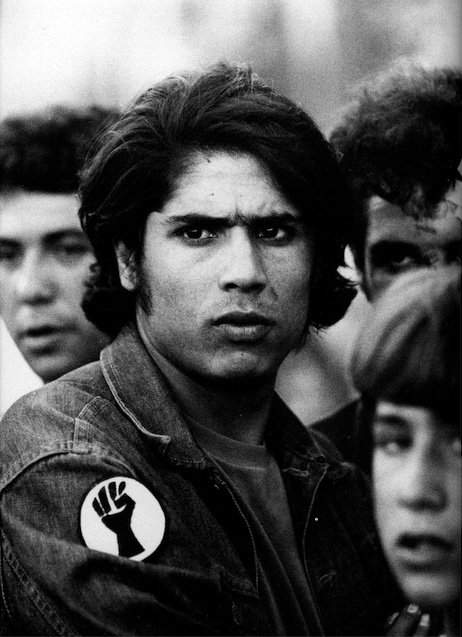
Even as the Panthers’ developed their radical visions for an egalitarian future, their initial policy victories were under threat of being rolled back. By early 1972, the government was debating cuts to areas including welfare and education. Leveraging again the state’s fear of international Jewish scrutiny, the Panthers acted fast. On January 18, as the World Zionist Congress opened in Jerusalem, they joined with Matzpen to picket the convention center and distributed flyers accusing the Zionist leadership of luring Mizrahi immigrants with false promises and turning them into criminals.
The action appeared to pay off. The parliament u-turned on its austerity plans and approved a budget that cut defense spending in favor of welfare. Though the government never admitted the Panthers’ role, it was later dubbed ‘the Black Panthers’ Budget.’
By now, Panther groups were springing up across the country. But their rising star brought bitter irony: the bigger the movement grew, the more its unity fractured. The movement had been built on loose affiliations of street cliques and personal loyalties. As their influence on Israeli politics grew, internal power struggles intensified, at times turning violent. “There were fights between us, brutal beatings,” Der’i says. There was an arson attack on Abergel’s home and Der’i describes a mass brawl erupting between Abergel’s clique and the Biton-Marciano faction: “Cars were flipped over, people were stabbed … There was real hatred between them.”
Deri says that, smelling blood in the cracks, the police planted infiltrators and recruited informants, manipulating Panther members with criminal records into cooperation. “The authorities were vicious – they destroyed us. They used tactics to divide us and tempt us,” he says. Some Panthers were “bought off” though he resisted: “I got so many offers, and I said, I’m not taking anything. Once they offered me a gas station. They offered us motorcycles.”
Public protests had brought the movement together, a shared focus that demanded they put their differences aside – if only temporarily – for galvanising moments of mass collective action. But state intimidation and surveillance began to frighten supporters away. As the crowds at demonstrations dwindled, the Panthers splintered into disarray.
How radical is too radical?
Yet it wasn’t only state infiltration and interference that drove a wedge between Panther factions at what appeared the height of their success. While the movement could unite around public spending and action against discrimination, the ideology underpinning these goals proved more divisive.
One of the movement’s victories – announced days before their 1971 meeting with Meir – came when the state lifted its ban on youths with a criminal record or history of police arrests joining the army. In a state where military service was the gatekeeper to civic life, minor offenses had condemned Mizrahi to a lifetime of marginalization. For the Panthers, the right to enlist was a claim to social equality rather than to Zionism – but it also reflected a tension between their radical anti-imperialist ideology and immediate social demands.
Rooting their struggle in internationalist political consciousness provided a powerful framework to understand their marginalization. But some Panthers increasingly saw the imperative to tear down Zionism’s entire ethnic hierarchy as counterproductive to their calls for Mizrahi inclusion. And again, external events upped the stakes.
On May 30, 1972 the Japanese Red Army, working with the Popular Front for the Liberation of Palestine (PFLP), attacked Lod (now Ben-Gurion) Airport, killing 26 people. Yediot Ahronot reported that three months earlier, a Japanese Red Army member had met with Panthers in Israel, offering them funds and contacts to European militant groups. Abergel and Shemesh told the newspaper this meeting did happen, but insisted the Panthers refused all support and severed contact.
Regardless, the association dealt a blow to the Panthers’ image. A second terrorist attack shook Israel later that year, when the Palestinian Black September Organization murdered eleven Israeli athletes at the Munich Olympics. For factions of the Panther movement, explicit association with the Palestinian cause now looked like political suicide.
Marciano was among those who preferred to keep the Panthers’ focus on Mizrahi rights, shoring up support from its Mizrahi base and other disadvantaged Jewish communities behind targeted goals on social reform. But those like Shemesh and Charlie Biton, for whom Israel’s ethnic inequality was a local symptom of a global system of white dominance – a perspective that inextricably linked the Mizrahi struggle to Palestinian liberation – leaned toward the anti-imperialist agenda of the radical-left. Shemesh continued to openly advocate for alliances with the Palestine Liberation Organization (PLO).
Hoping to regroup around a clear set of principles, the Panthers held their first national conference in Jerusalem in December 1972. It would also be their last. Attendance was sparse and failed to agree on even basic strategy. Yet one plan was initiated: with the movement on the streets in disarray, the Panthers would enter parliamentary politics.
Panthers in the Knesset
The Marciano camp distanced themselves from radical universalist messaging and formed the Black Panthers Party. In February 1973 they took three seats in the Histadrut, Israel’s national labor federation. Encouraged, they began campaigning for the December Knesset elections. As they did so, government policy was already shifting in favor of social reform and greater Mizrahi inclusion.
The Committee for Children and Youth in Distress – which Golda Meir had appointed as the Panthers first made headlines – finally presented its conclusions in June 1973. While avoiding words like ‘racism’ or ‘discrimination’ – or any mention of the Panthers – its findings affirmed their charges of systemic inequality. The committee found that Mizrahim represented over 90% of Jewish children classified as “in distress.”
The committee also exposed the absence of any coherent state social strategy and gave momentum to a wave of reforms modeled on European welfare systems, in which the previous year’s ‘Panther Budget’ had been a major milestone. It called for a social policy planning unit and a Social Services Law to transform welfare from charity into a legal right. That summer, middle schools and tutoring programs opened in Mizrahi neighborhoods.
Yet, as ever, Israeli politics hung in the balance between domestic and foreign policy. Even as a comprehensive welfare framework was taking shape, the pendulum swung dramatically from social security to military security. In October 1973, a coalition of neighboring countries launched an attack to reclaim territories occupied by Israel in 1967. Thousands of Israeli soldiers – and many more Egyptian and Syrian soldiers – lost their lives.
The December election saw Labor cruise to victory as usual. But the shockwaves of the Yom Kippur war would soon unseat the party that had ruled since Israel’s inception. The grim toll of the conflict sparked mass anti-government protests, forcing Golda Meir to resign in 1974.
At the next elections in 1977, the Mizrahi vote was decisive – but it wasn’t the Panthers who benefitted. Biton led a faction that joined forces with the Communist Party on a ticket known as Hadash, while Marciano won a Knesset seat with the left-wing Sheli alliance. But it was populist leader Menachem Begin who scored a shock victory leading the right-wing Likud party.
There had long been tensions within the Mizrahi community between challenging demonization of their Arab heritage and embracing Jewish nationalism to distance themselves from an Arab population who were fundamentally excluded from the Zionist project. Recasting Likud as the voice of the downtrodden, Begin now met Mizrahi grievances not with a post-ethnic Israeli narrative, but hawkish nationalism and retrenching of religious tradition. Campaigning for a second term in 1981, he addressed a cheering crowd with the words: “Ashkenazim? Iraqis? Jews! Brothers! Warriors!”
Shimshon Vigoder, an Ashkenazi member of both Matzpen and the Panthers, would later describe Mapai’s fear of left-wing solidarity as coming back at them like a “boomerang” in the form of the Mizrahi right. “They were not only afraid of a Mizrahi uprising in itself; they were also terrified that it would become connected with the Palestinian struggle,” he told Haaretz in 2023. “Mapai preferred to keep them separate, rather than understand the damage that would be caused by pushing Mizrahim toward the right.”
Panthers untamed
“There will be no equality and no chance for the Mizrahim as long as there is occupation and a national struggle.”
Kochavi Shemesh
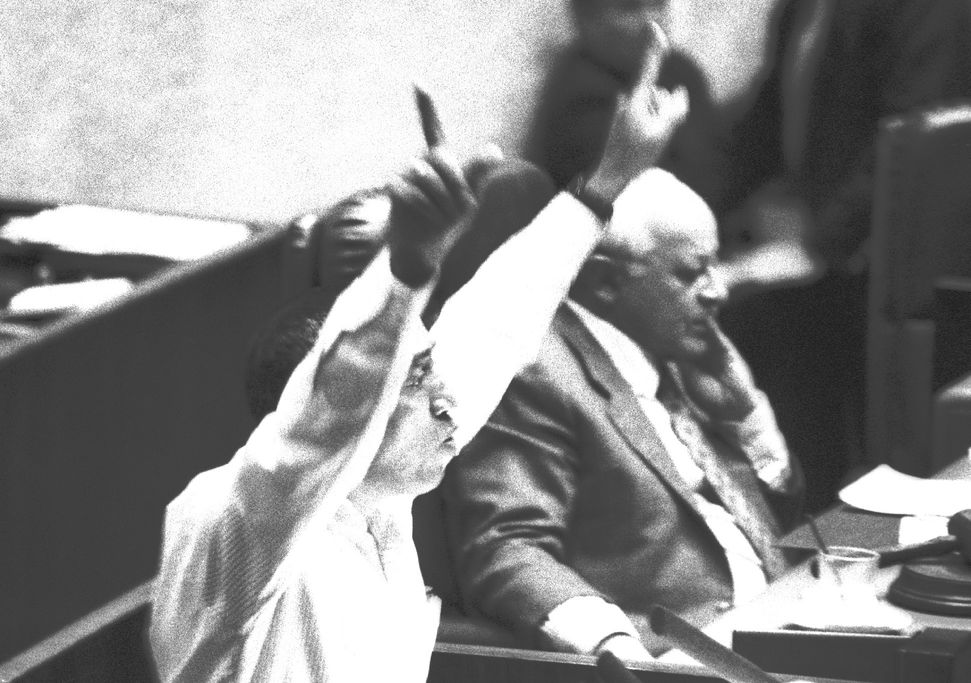
The Israeli Black Panthers dispersed and its leaders went their separate ways. Yet over the next dozen years, Charlie Biton maintained a Pantherish parliamentary presence. He famously attended the Knesset in street clothes, showing he hadn’t been domesticated by the Ashkenazi suit-and-tie establishment, and once chained himself to the podium to protest the neglect of prisoners. On another occasion, he brought a loaf of bread into the plenum to expose the finance minister as unaware of its price.
But it wasn’t just his provocative style that brought Panther politics into the mainstream. At a Knesset Plenum in October 1979, Biton condemned “the fascist gangs” of the Gush Emunim settler movement. After a Likud MK accused him of serving enemy interests, Biton replied that the Israelis of Jerusalem’s slums paid the price for settlements, both on the front lines and through the diversion of social spending to defense: “Every time another settlement is established, it comes at the expense of Katamonim; it comes at the expense of Musrara.”
“It is possible to stop this mad cycle of bloodshed. There is someone to talk to. The PLO is the representative of the Palestinian people,” Biton argued. The following year, he became the first Jewish Knesset member to meet publicly with the PLO, prompting calls for his parliamentary immunity to be revoked.
Kochavi Shemesh became a civil rights attorney and held firm to his anti-imperialist principles, adamant that, “There will be no equality and no chance for the Mizrahim as long as there is occupation and a national struggle.” In the 1980s, Shemesh joined Biton the consciousness-raising Mizrahi Front, and in 1992 he founded a drug rehabilitation center with Marciano, who continued advocating for impoverished neighborhoods until his death in 2007.
Reuven Abergel, meanwhile, had never been in favor of the shift to parliamentary politics and remained a grassroots activist for civil rights and peace initiatives linking Mizrahi marginalization to Palestinian dispossession. In the mid-nineties, he began working with the Democratic Mizrahi Rainbow, a network including the Jewish-Arab solidarity movement Tarabut and feminist Mizrahi group Ahoti.
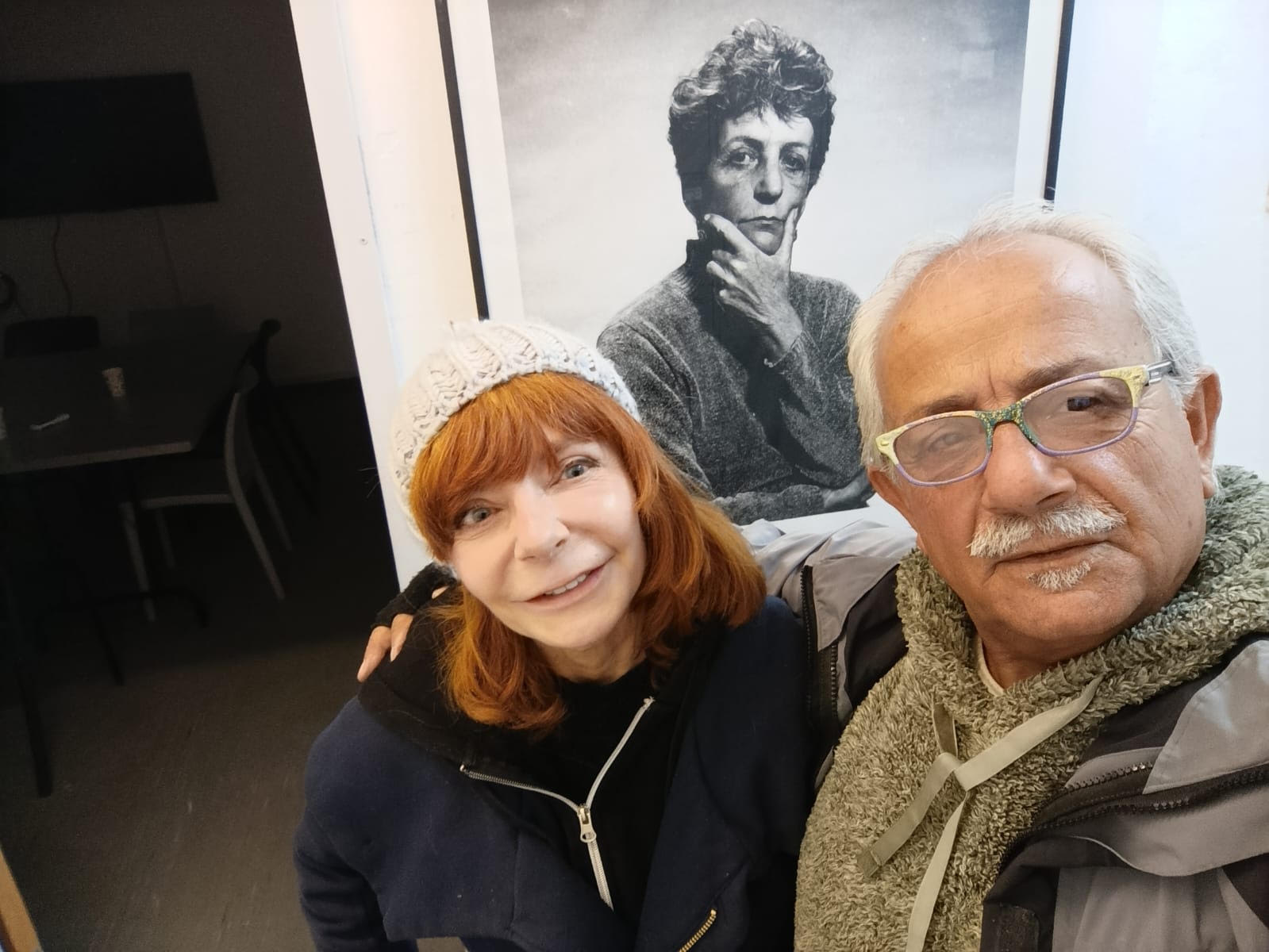
When I asked, at the end of our interview, where Koko Der’i wanted his photograph taken, he chose as a backdrop a large portrait of Hava Fogel, an Ashkenazi member of the Panthers, and one of the few women in movement whose name is remembered – alongside Mazal Moalem and Louise Cohen, both from Tel Aviv, and Ashkenazi sociologist Naomi Kies. Der’i says that in Musrara, women “accepted that we were activists and they stayed home with the children.” Yet alliances with Mizrahi feminists like Vicky Shiran, co-founder of the Democratic Rainbow, have brought a new dimension to former Panthers’ ongoing struggle against systemic injustice in areas such as public housing and land distribution.
Whitewashing the Black Panthers
Der’i never left Musrara. The wealthy Arab community turned Israeli slum, neglected borderland turned cosmopolitan crossroads, is now a middle-class neighborhood dotted with quirky sculptures by local artists. The school where Ashkenazi masters failed to beat the delinquency out of Der’i and Abergel reopened in 1987 as the Naggar Multidisciplinary School of Art and Society, which has welcomed them back as collaborators and guides.
Through the Naggar School, Der’i works with students, local artists and activists. He has organised coexistence projects such as the Between Green and Red initiative, which has created shared community spaces for Jewish and Arab residents, and he serves as the movement’s living archive, leading historical tours of Musrara.
Founder and director Avi Sabag says that by the time the Naggar School opened, the Israeli Black Panthers had all but faded from public consciousness. He was determined to revive their legacy, making it a pillar of the institution’s work. In 1997, the Naggar School held a major exhibition and published a photobook documenting the Panthers’ struggle. “The moment the exhibition broke out, and then the book, the discussion about the Black Panthers as valuable cultural heroes returned,” Sabag says.
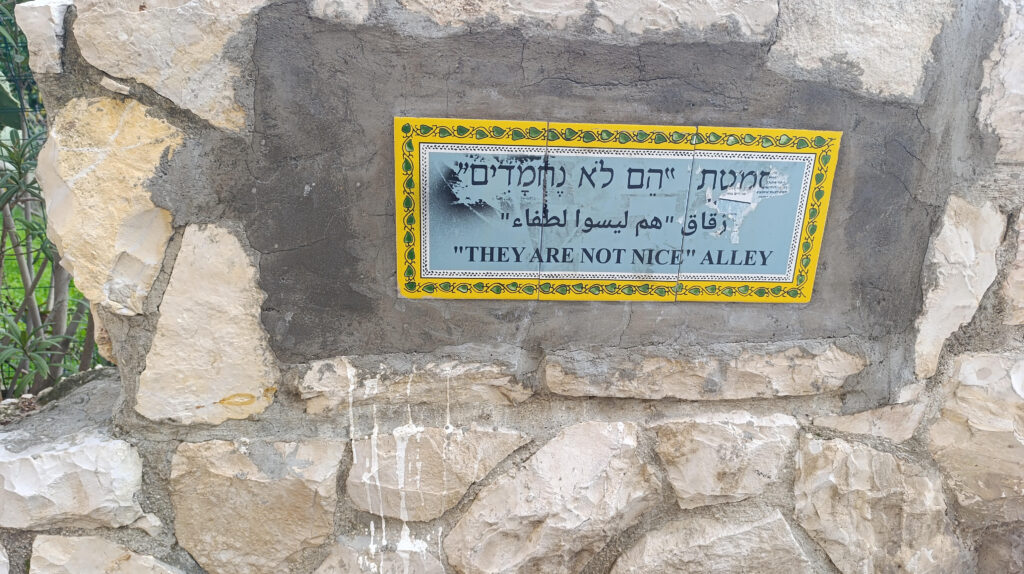
How this complex – and at times contradictory – movement is remembered depends on who you talk to. Conferences to reflect on the Panthers’ legacy were held throughout their 50th anniversary year in 2021. In Musrara, artists and residents named two streets Black Panthers Way and They’re Not Nice Alley. In 2023, Black Panthers Way received official municipal status, memorializing the movement as an integral part of Jerusalem’s heritage. At one anniversary conference, Jerusalem’s Mayor Moshe Lion (Likud) told attendees they were welcome at City Hall and “it’s no problem if you step on the grass.”
Yet Sabag says this institutional embrace has come at the cost of sanitizing the Panthers’ challenge to Israeli racial hierarchy. The establishment that once vilified them as a threat to Israel’s national project now embraces them as a chapter in Zionist history, ignoring their fraught solidarity with Palestine. It is left to projects like the Naggar School to keep alive a more radical history of the rebels Sabag describes as both “naïve” and “very smart street cats” who opened doors for civil rights groups that continue to challenge the status quo.
A cautionary tale
“They left behind a legacy of courage, determination and a willingness to sacrifice themselves for social values and ideas”
Avi Sabag
Sabag believes that if the events of 1973 hadn’t pushed Israeli politics rightwards, the Panthers might have secured a meaningful foothold in parliamentary politics. “I think the failure was the shock of the war – it shook the Panthers’ movement, which could have achieved amazing things,” he says. But he also acknowledges that the Panthers undermined their own parliamentary project by splitting their vote between factions.
As for gains won from outside mainstream politics, we cannot know whether the Knesset would have passed Israel’s 1972 social reforms without pressure from the streets, but scholars have credited the Panthers with forcing inequality among Israeli Jews onto the national agenda.
“The Panthers’ principles were essentially the same as those of the protests of 1968,” Sabag says. “It was based on the same ideas: opposition to conglomerates, opposition to wealthy elites, better social conditions for families and workers, the eight-hour workday, maternity leave – all of these principles were at the core of their movement.”
By 2018, the wage gap between Ashkenazim and Mizrahim men up to the age of 43 stood at around 20%, but there is a greater divide in terms of capital. Assets like land, property and stocks that were distributed along ethnic lines during the state’s founding, remain largely in Ashkenazi hands. And while inclusion of North African and West Asian Jewish history on the school curriculum has been a talking point since 1976, an Ashkenazi-centric narrative still dominates: my own review of textbooks and conversations with teachers suggest Mizrahi history remains a footnote to Israel’s main plot.
Since Likud first appointed Mizrahim to government posts – like David Levy, a Moroccan-born construction worker who became Minister of Immigrant Absorption in 1977 – political representation has continued to grow. Israel has yet to have a Mizrahi prime minister, but Mizrahi representation in the Knesset rose from 5% in 1951 to a third in 2009. The military engine of mobility that the Panthers fought for has lifted several Mizrahi generals to positions as chiefs of staff in the Israeli Defence Forces.
“They left behind a legacy of courage, determination and a willingness to sacrifice themselves for social values and ideas,” Sabag says of the Panthers. Yet as the current far-right government continues to rely on Mizrahi voters for its strongest support, there are grim lessons to be learned, too. Today, more than ever, Sabag believes, the story of the Black Panthers in Israel must stand as a cautionary tale of grievances redirected by populist power. “We’re too complacent now,” he says.
About the author
Alissa Brook is a historian, writer and researcher based in Berlin. Her interests lie in the stories of communities pushed to the margins, whose struggles over identity, belonging and power challenge dominant narratives. She would like to thank Reuven Abergel and Koko (Ya’akov) Der’i for sharing their knowledge and memories, as well as the Naggar Multidisciplinary School of Art and Society in Musrara and its director Avi Sabag for their generous assistance with research for this article, and to Maya Asher, director of the library, archive and Musrara Collection, for her assistance with photographs used in this story.
Selected bibliography
Bernstein, Deborah. The Black Panthers of Israel, 1971–1972: Contradictions and Protest in the Process of Nation-Building. PhD diss., University of Sussex, 1976.
Chetrit, Sami Shalom. Ha-Ma’avak ha-Mizrahi be-Yisrael: Bein Dikui le-Shihrur, Bein Hizdahut le-Alternativa, 1948–2003 [The Mizrahi Struggle in Israel: Between Oppression and Liberation, Between Identification and Alternative, 1948–2003]. Tel Aviv: Am Oved, 2004.
Chetrit, Sami Shalom. Intra-Jewish Conflict in Israel: White Jews, Black Jews. London: Routledge, 2010.
Kalev, Henriette Dahan. “Colorism in Israel: The Construct of a Paradox.” American Behavioral Scientist 62, no. 14 (2018): 2101–2116.
Kalev, Henriette Dahan. “The Big Missed Opportunity of Israeli Democracy: The Traumatic Memory as Legacy of the Wadi Salib Protests.” The Israel Democracy Institute Articles, July 7 (2009).
Elia-Shalev, Asaf. Israel’s Black Panthers: The Radicals Who Punctured a Nation’s Founding Myth. Berkeley: University of California Press, 2024.
Frankel, Oz. “What’s in a Name? The Black Panthers in Israel.” The Sixties: A Journal of History, Politics and Culture 1, no. 1 (2008): 9–26.
Gozansky, Tamar. Komunistim Mizrahim: Ha-ma‘arakha neged aflayah ‘edatit u-le-ma‘an ha-zekhut le-diyur [Mizrahi Communists: The Struggle against Ethnic Discrimination and for Housing Rights]. Haifa: Pardes, 2018.
Hofnung, Menachem. Meḥa’ah ve-Ḥem’ah: Hashpa‘at Hafganot ha-Panterim ha-Sheḥorim al Taktsivei Hevrah u-Revaḥah [Protest and Butter: The Black Panthers Demonstrations and Allocations for Social Needs]. Jerusalem: Nevo, 2006.
Mossek, Nissim (dir.). Shama’ata al ha-Panterim ha-Shehorim? [Have You Heard About the Panthers?]. Documentary film. 2002.
Segev, Tom. 1967: Israel, the War, and the Year That Transformed the Middle East. Translated by Jessica Cohen. New York: Metropolitan Books, 2007.
Shohat, Ella. On the Arab-Jew, Palestine, and Other Displacements: Selected Writings of Ella Shohat. London: Pluto Press, 2017.